


Staring at a wall of Garmin replacement straps can be a bit much, can't it? It feels like there are a million choices, but finding the right one really just comes down to three things: making sure it connects to your specific watch model, picking a material that suits your lifestyle, and getting the size (the lug width) right. Think of this guide as your personal roadmap to getting it sorted, hassle-free.
Table of Contents
- Finding Your Perfect Garmin Watch Strap
- How to Get the Right Fit and Size Every Time
- Choosing a Strap Material That Matches Your Life
- How to Change Your Garmin Watch Strap in Under a Minute
- How to Care for Your Straps and Make Them Last
- Got Questions About Garmin Straps? We’ve Got Answers.
Finding Your Perfect Garmin Watch Strap
Ever found yourself wondering if that cool-looking strap will actually fit your Fenix 7? Or whether a certain material can handle your sweaty gym sessions? And why do the official straps cost a small fortune? You're definitely not the only one. The whole process can feel like a maze of odd sizes, confusing materials, and compatibility claims that don't make sense. But honestly, it's a lot simpler than it looks once you get the basics down.
Your Garmin is a serious piece of kit, and its strap should be just as adaptable as you are. You wouldn't wear your hiking boots to a formal dinner, right? The same idea applies here. The goal is to find a strap that not only looks the part but is also comfortable and tough enough for everything you throw at it.
Why Look Beyond Official Straps
Garmin's own straps are decent, no doubt about it. But they usually come with a hefty price tag and a pretty limited range of styles and colours. This is where third-party alternatives shine, offering fantastic quality, more variety, and a much friendlier price.
In the UK, for instance, official Garmin straps can be 40-60% pricier than high-quality third-party options. That price gap has created a brilliant market for specialists who provide superb alternatives for a fraction of the cost, often with glowing customer reviews to back them up. You can see how different straps can completely change your Garmin's style and explore a whole new world of looks for any occasion.
A Roadmap to Your Ideal Strap
We've designed this guide to take all the guesswork out of the equation. We'll walk you through everything, step-by-step, so you can choose with total confidence.
- Understanding Compatibility: We’ll break down what lug widths and connection types like QuickFit actually mean in simple terms.
- Matching Material to Lifestyle: Figure out which material is your best bet for the gym, the office, or just kicking back on the weekend.
- Simple Installation: We’ll show you how to swap your straps in a matter of seconds, no tools required.
By the time you're done here, you'll know exactly how to pick a strap that's comfortable, stylish, and affordable—a perfect match for both your watch and your life.
How to Get the Right Fit and Size Every Time
Finding the perfect Garmin replacement strap can feel a bit like solving a puzzle, but it all comes down to two simple things: your watch’s lug width and its connection system. Once you’ve got those sorted, you can shop with total confidence, knowing your new strap will click into place perfectly.
Think of the lug width as the specific measurement between the two "horns" on your watch case where the strap attaches. It has to be an exact match. If it's wrong, the strap either won't fit at all, or it'll be loose and wobbly—not something you want for an expensive piece of kit.
This measurement is always in millimetres (mm), and the most common sizes for Garmin watches are 18mm, 20mm, 22mm, and 26mm. As a rule of thumb, a bigger, more rugged watch like a Fenix will have a wider lug width than a sleeker model like a Venu.
Measuring Your Lug Width at Home
You don't need any special equipment to figure this out. If you still have the original strap that came with your Garmin, just flip it over. The size is often stamped right there on the back.
No number? No problem. A simple ruler will get the job done.
- Pop the old strap off: Carefully detach your current strap so you have a clear view of the lugs.
- Measure the space: Place your ruler across the gap between the two lugs and measure the distance in millimetres.
- Check your number: That measurement is your lug width. If it's just over two centimetres, for instance, you're looking at a 22mm strap.
It’s a straightforward measurement, but it’s absolutely critical for a secure fit. For a more detailed walkthrough with pictures, our guide on how to measure your watch strap size for a perfect fit offers extra tips to make sure you get it right the first time.
Understanding Garmin Connection Systems
Okay, so you’ve got the width. The next piece of the puzzle is the connection type. Garmin uses two main proprietary systems, and they are not interchangeable. A QuickFit strap simply won't work on a watch designed for Quick Release, and vice versa.
-
QuickFit System: This is Garmin’s heavy-duty solution. You'll find it on their adventure and multisport watches like the Fenix, Enduro, and Tactix series. It has a chunky latch mechanism that snaps securely into place, built to handle anything you throw at it.
-
Quick Release System: This system is more common on lifestyle and running watches, like the Venu, Forerunner, and Vivoactive models. It uses a tiny, spring-loaded pin that you can slide with your fingernail, making it incredibly easy to swap straps in seconds without any tools.
This flowchart breaks down the simple decision-making process, starting with your connection type.
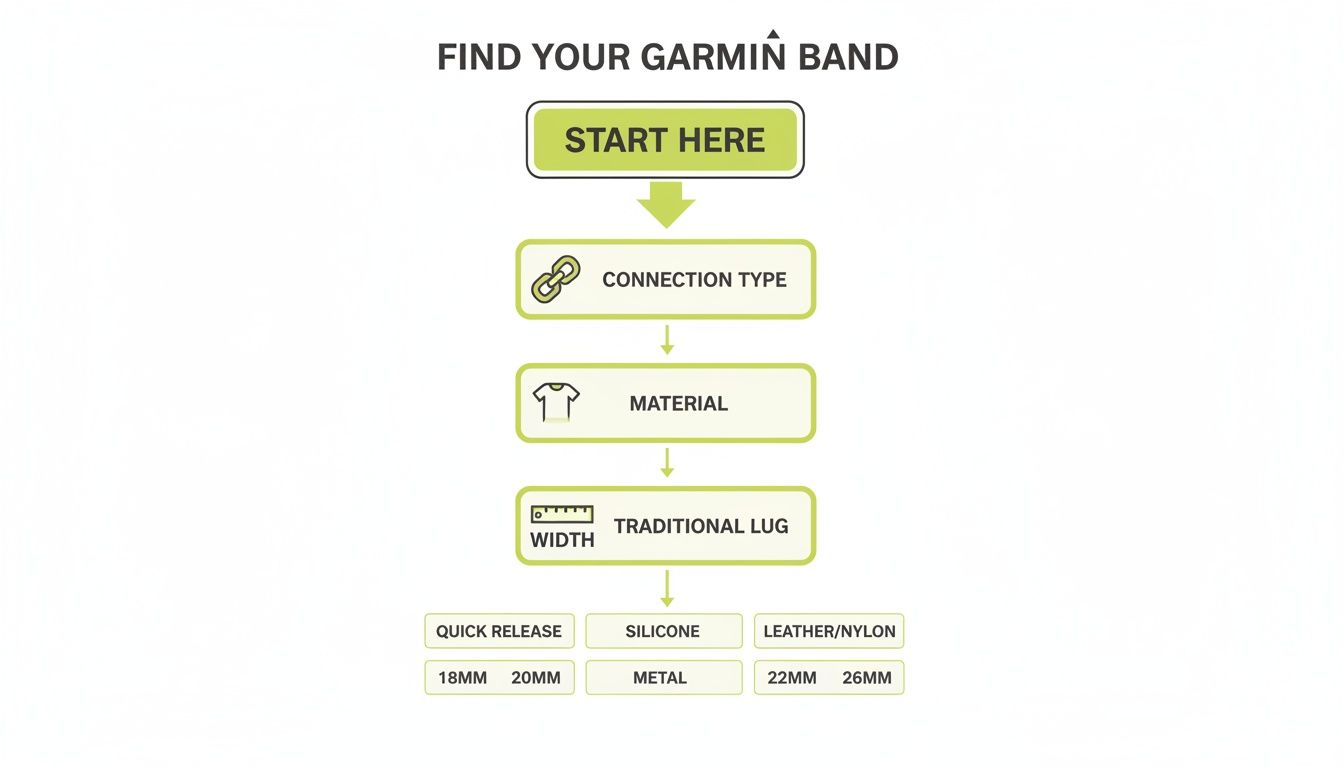
As you can see, figuring out your connection system is the first step. After that, it’s all about picking a material you like and matching the width you measured earlier.
A Quick Reference for Popular Models
To take all the guesswork out of it, we’ve put together a handy table with some of the most popular Garmin models and their compatibility details. This should point you directly to the Garmin replacement straps that will fit your watch.
Here is a quick compatibility guide for some popular Garmin series.
Garmin Model Compatibility Quick Reference Guide
| Garmin Model Series | Common Lug Widths | Connection Type |
|---|---|---|
| Fenix Series | 20mm, 22mm, 26mm | QuickFit |
| Forerunner Series | 18mm, 20mm, 22mm | Quick Release |
| Venu Series | 18mm, 20mm, 22mm | Quick Release |
| Epix (Gen 2) | 22mm | QuickFit |
| Instinct Series | 22mm | QuickFit |
| Vivoactive Series | 18mm, 20mm | Quick Release |
Once you know your lug width, connection type, and watch model, you’ve unlocked the secret to a perfect fit, every time. Now you’re free to explore a whole world of different styles, materials, and colours to match your Garmin to any occasion.
Choosing a Strap Material That Matches Your Life
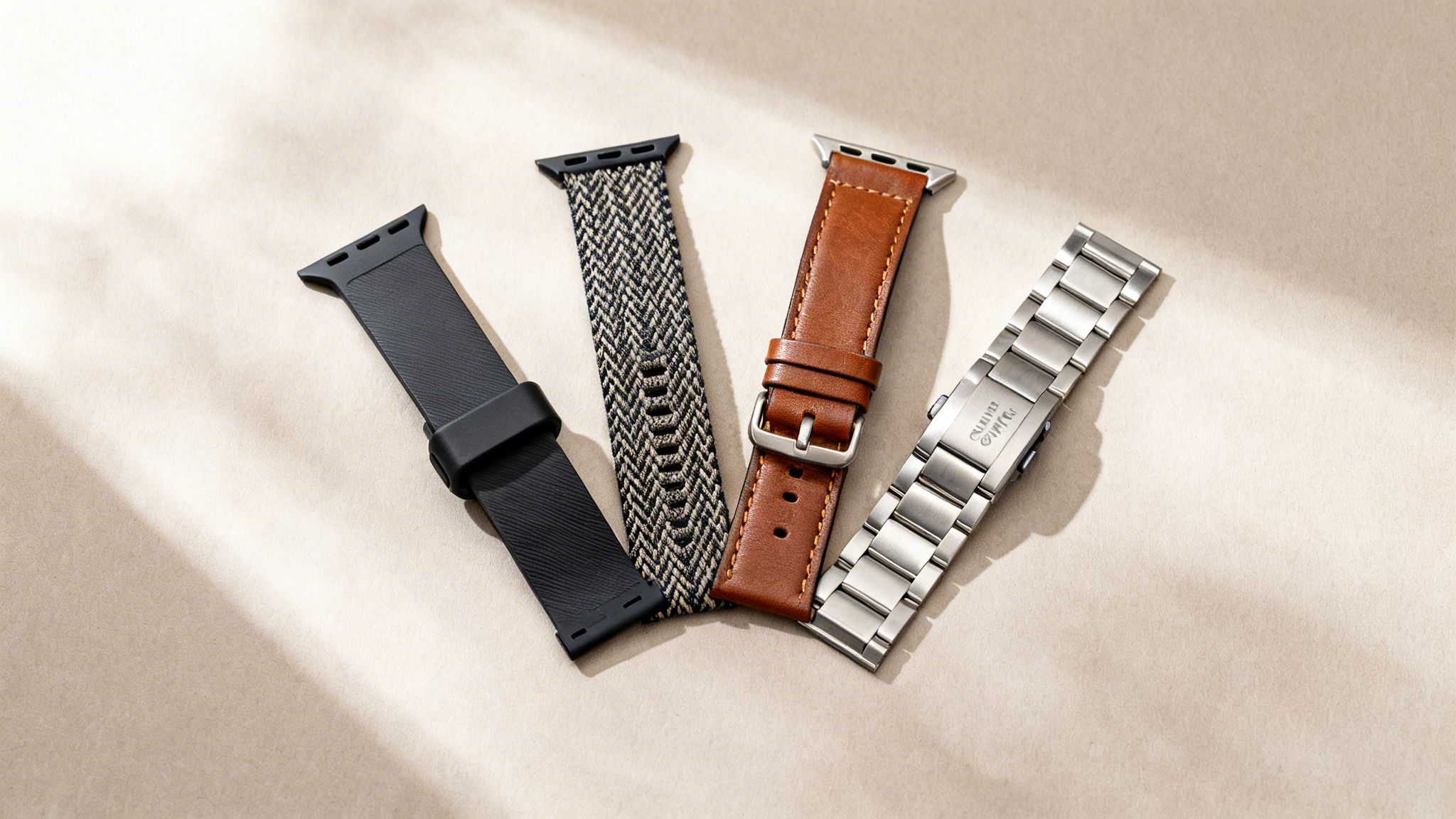
Alright, once you’ve figured out the technical compatibility for your watch, the fun part can begin. Choosing the right material for your Garmin replacement strap is less about specs and much more about your lifestyle and personal taste.
Think of it this way: your watch strap should move with you, feeling just as right on a tough morning workout as it does in an important afternoon meeting. This isn’t just about looks, it’s about function. The right material can make your watch more comfortable, more durable, and feel like a true extension of yourself. Let's walk through the most popular options to find the perfect match for every part of your day.
Silicone: The Ultimate Sport Companion
For anyone leading an active life, a silicone strap is non-negotiable. It’s your ultimate workout partner—tough, completely sweat-proof, and incredibly easy to clean after a muddy trail run or a sweaty gym session.
Silicone is soft and flexible, which means it’s seriously comfortable during high-intensity activities where a more rigid strap might chafe or dig in. Because it's waterproof, you can go straight from a run to the shower or the swimming pool without a second thought.
Key Takeaway: Silicone straps are the go-to for fitness enthusiasts. They offer unmatched durability, comfort, and are a breeze to maintain. Built to handle the elements, they also come in a massive range of colours to match your gear.
This focus on performance is a big reason why the UK wearables market has exploded, reaching a value of USD 6.81 billion. Smartwatches lead the charge with a huge 56.78% share. This growth is fuelled by models like the Garmin Fenix series, where users often swap straps to get the best performance. With UK consumers—especially the 62.21% who use their watches for fitness—looking for durable, customisable straps, the demand for materials like silicone just keeps growing.
Woven Nylon for All-Day Comfort
If silicone is your workout partner, a woven nylon strap is like your favourite weekend hoodie. It’s lightweight, incredibly breathable, and comfortable enough to wear all day, every day.
The woven texture allows air to get to your skin, which really helps prevent sweat and irritation, especially when it’s warm. Nylon straps are a brilliant alternative if you find silicone a bit too ‘rubbery’ for just chilling out. They feel softer on the wrist and come in a huge variety of patterns and colours, from simple, solid tones to vibrant stripes. While they do absorb a bit of moisture, they dry out quickly, making them a great all-rounder for everything from a light jog to a casual day out.
Leather for a Touch of Classic Style
When you need to smarten up your Garmin for the office or a special event, nothing beats the timeless appeal of a leather strap. A quality leather strap instantly elevates your watch, giving it a classic, professional look that pairs perfectly with a sharp suit or smart-casual wear.
Just a few things to keep in mind with leather:
- Avoid Water: Leather and moisture don’t mix. You’ll want to swap it out before hitting the gym or going for a swim to keep it in top condition.
- Develops Character: Over time, genuine leather develops a unique patina—a soft sheen that tells the story of its wear and adds to its character.
- Requires Care: A little bit of leather conditioner now and then will keep the material supple and stop it from drying out or cracking.
A leather strap is a real investment in style, perfect for transforming your rugged sports watch into a sophisticated accessory.
Stainless Steel for a Premium Finish
For the most formal occasions, or when you just want a premium, weighty feel on your wrist, a stainless steel strap is the top choice. It adds a sense of luxury and durability that no other material can quite match, turning your Garmin into a real statement piece.
Metal straps are incredibly tough and resistant to scratches, so they're built to last. They’re perfect for formal dinners, weddings, or any setting where you want your watch to look its absolute best. Whether you prefer a classic link bracelet or a sleek Milanese loop, a metal strap offers a polished, commanding presence. For a deeper dive, you might be interested in our guide that details the benefits of stainless steel watch straps.
How to Change Your Garmin Watch Strap in Under a Minute
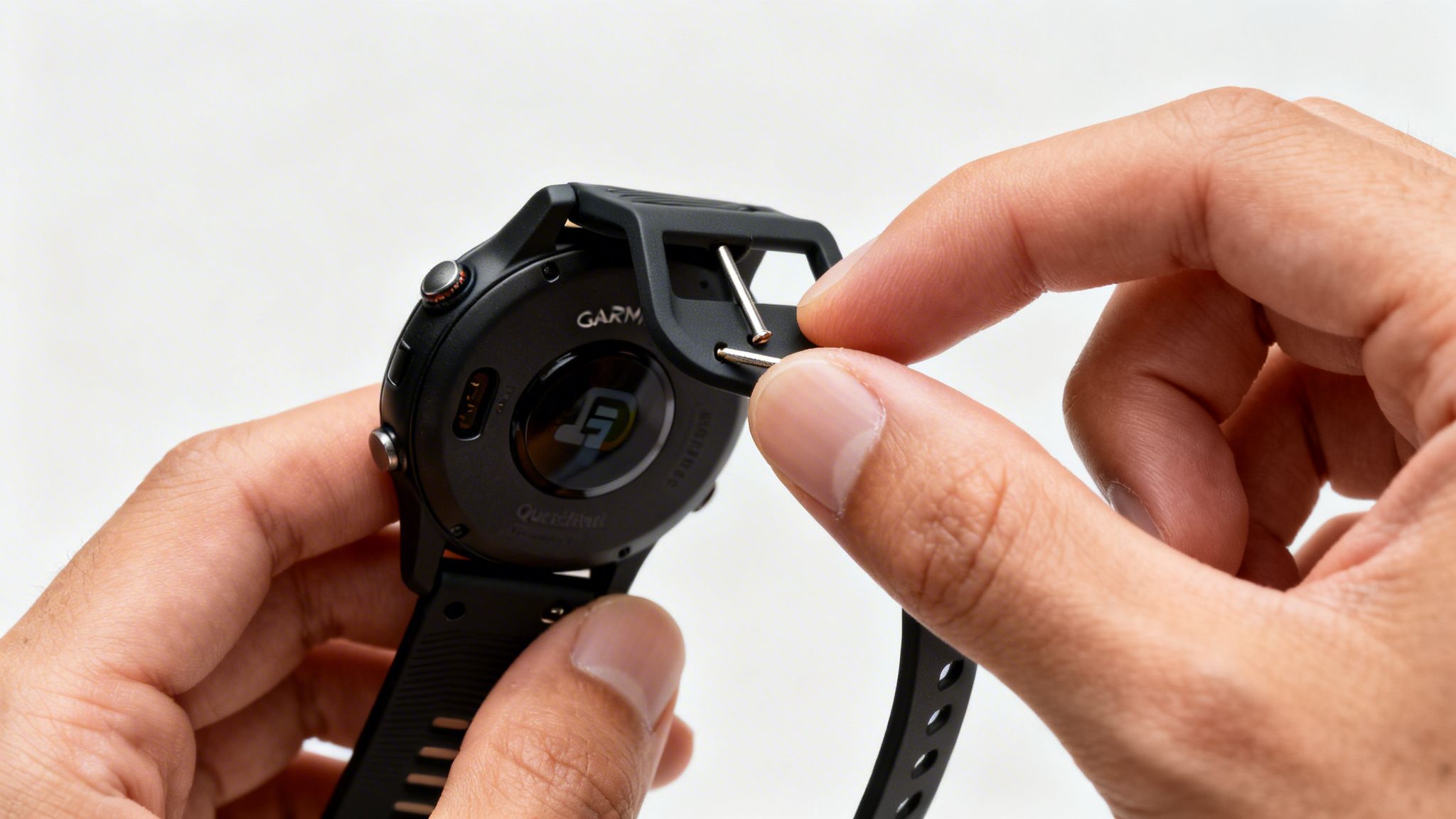
Swapping out your Garmin strap shouldn't be a frustrating puzzle. In fact, it's a process that usually takes less than a minute. Let's walk through the simple steps for Garmin's two main connection types, so you can change your watch's look without any fuss or special tools.
Whether you've got a rugged Fenix or a sleek Venu, the system is designed to be user-friendly. The goal is to get you comfortable enough to switch straps whenever the mood strikes.
Installing a Quick Release Strap
You'll typically find the Quick Release system on models like the Forerunner and Venu series. It's all about speed and convenience, using a tiny, spring-loaded pin. To check if you have one, just flip the strap over and look for a small lever where it connects to the watch.
Here’s the simple two-step process:
- Removing the old strap: Turn your watch face-down. Use your fingernail to slide the tiny lever inward, toward the centre of the strap. This retracts the pin, letting you gently pull the strap free. Do the same for the other side.
- Attaching the new strap: Take one part of your new strap and slide its lever inward. Guide one end of the pin into the lug hole on the watch, then line up the other end and let the lever go. You should hear a soft but definite click.
And that’s it! That click is your confirmation that the strap is locked in securely.
Installing a QuickFit Strap
The QuickFit system is the go-to for Garmin's adventure watches, like the Fenix and Instinct series. It’s built for durability, using a robust latch that keeps your watch secure during intense activity. Don't let its tough appearance fool you; it's just as easy to use.
Here's how to make the swap:
- Release the latch: Find the textured latch on the underside of the strap where it clips onto the watch pin. Press down on it firmly.
- Unhook and remove: While pressing the latch, simply pivot the strap away from the pin to unhook it. It will pop right off.
- Click the new strap on: Line up your new QuickFit strap with the pin and press it down firmly. You’ll hear a loud, satisfying click as the latch snaps into place.
One Final, Essential Check: No matter which type of strap you've just fitted, always give it a gentle tug. Pull lightly but firmly on each side of the strap to make sure it's properly locked in. This two-second test is the best way to ensure your Garmin is safe and sound on your wrist.
How to Care for Your Straps and Make Them Last
Building a collection of Garmin replacement straps is a great way to match your watch to any occasion, but keeping them looking their best is the real secret. Just like you wouldn't wear your gym gear to a wedding, different strap materials need different care routines to go the distance.
Think of it like looking after a good pair of shoes. A quick clean-up after a sweaty run prevents dirt and grime from setting in and helps them last ages longer. Getting into these simple habits will keep every strap you own—from the rugged one you wear hiking to the stylish one for the office—feeling comfortable, hygienic, and ready for whatever's next. It’s a tiny bit of effort that really pays off.
Cleaning Silicone and Nylon Straps
Silicone and nylon straps are the absolute workhorses for anyone with an active lifestyle. The good news? They're also the easiest to clean. They're built to take a beating from sweat, mud, and everyday life, but a little TLC goes a long way.
For your everyday silicone strap, a quick wash is all it needs to look brand new again.
- Rinse Thoroughly: After a workout, just run the strap under some lukewarm water. This gets rid of the initial sweat and dirt right away.
- Use Mild Soap: A little bit of gentle hand soap (nothing with heavy moisturisers) is perfect. Lather it up and give the strap a good clean, especially around the buckle where gunk can build up.
- Dry Completely: Pat it down with a soft, lint-free cloth and let it air dry the rest of the way before putting it back on your watch. This stops any moisture from getting trapped against your skin.
Woven nylon straps need a slightly more delicate approach to keep their colour and texture intact. Hand washing in cool water with a mild detergent is the way to go. Don't scrub too hard, and always let them air dry. Chucking them in a hot dryer can make the fibres shrink or fray, which you definitely want to avoid.
Maintaining Leather and Metal Straps
Leather and metal straps are what you reach for when you want to dress up your Garmin, so their care is all about protecting that premium finish. These materials really aren't meant for sweaty gym sessions or a dip in the pool.
Expert Tip: Never wear your leather or metal straps in water. Moisture can ruin the finish on a metal bracelet and will permanently stain, warp, or weaken a leather strap. Always swap to a silicone strap before swimming or showering.
With leather, a bit of prevention makes all the difference. Give it a gentle wipe with a dry microfibre cloth after you take it off to get rid of any skin oils and dust. To stop it from drying out and cracking over time, rub in a tiny amount of leather conditioner every few months to keep it soft and supple.
Metal straps are even simpler. A quick wipe with a soft, dry cloth is usually all it takes to buff away fingerprints and smudges, keeping that polished look sharp. It's a simple step that keeps your watch looking smart and ready for anything.
Got Questions About Garmin Straps? We’ve Got Answers.
Even with all the details on compatibility and materials, you probably still have a few specific questions bouncing around. That's completely normal. Choosing the right Garmin replacement strap can feel like a bit of a minefield, but it really doesn't have to be. Let's clear up some of the most common queries we get, so you can feel totally confident in your choice.
We’ll tackle the nitty-gritty of sizing, weigh up official vs. third-party options, and explain why using the right connection type is so important. Think of this as your final check-in before you find a strap you'll love.
How Do I Figure Out Which Size Garmin Strap I Need?
Getting the size right is the single most important step, but thankfully, it's also the easiest. What you're looking for is the "lug width" of your watch – that's just the distance between the two little arms where the strap connects to the watch body.
There are two dead-simple ways to find this measurement:
- Check Your Current Strap: Pop your current Garmin strap off and flip it over. Most official straps, and plenty of good-quality third-party ones, have the size stamped right there on the back. You're looking for a number like ‘20’, ‘22’, or ‘26’ – that's your lug width in millimetres.
- Measure It Yourself: If there's no number, no problem. Just grab a ruler and measure the gap between the lugs on the watch case itself. That measurement in millimetres is the size you need to shop for.
Nailing this number means your new strap will click in perfectly, with no annoying gaps or wiggles.
Are Third-Party Garmin Straps Any Good?
This question comes up all the time, and the answer is a definite yes. A good third-party brand can offer incredible quality that easily matches, and sometimes even beats, the official Garmin straps. They often use the exact same top-notch materials, whether it's tough silicone, comfy woven nylon, or smart stainless steel.
The real difference isn't quality – it's variety and price. Third-party sellers open up a whole new world of colours, styles, and unique designs you just won't find in Garmin's own lineup.
The Real Deal: Going with a trusted third-party supplier gives you a much bigger creative palette to play with, usually at a much friendlier price. It means you can build up a great collection of straps for work, the gym, and a night out without breaking the bank.
Plus, any reputable specialist will stand behind their products with solid customer guarantees, so you can be sure you're getting a quality piece of kit.
Can I Put a Regular Watch Strap on My Fenix?
Technically, a standard pin-and-buckle watch strap might fit the lug width of a Fenix, but we’d strongly advise against it. Your Fenix is a heavy-duty, rugged piece of gear designed for demanding situations, and it uses the QuickFit system for a very good reason.
That special locking mechanism is built to keep your watch securely on your wrist, no matter what you throw at it – trail running, climbing, or swimming. A standard watch strap simply doesn't have that security. Using one would be a huge gamble, putting your expensive watch at risk of falling off and getting lost or smashed. It's always best to stick with a strap that has the correct connection type for your model. It’s about protecting your investment.
At Nothing But Bands , we take the guesswork out of finding a brilliant new strap for your Garmin. Our compatibility filters and clear sizing guides make it simple. Explore our full collection of Garmin replacement straps today!
Shop the range: browse our garmin watch straps collection to find your perfect fit.
Related posts

- October 22, 2026
A mixed metal Apple Watch band starts with one rule: keep finishes coherent. Learn how silver, black, rose gold and...

- October 21, 2026
Discover truly nickel free watch straps that won't irritate skin. Compare materials, avoid common myths, and find comfortable hypoallergenic options.

- October 20, 2026
Learn what a watch strap adapter is, how it converts proprietary fittings, and whether your smartwatch actually needs one. Honest...


