You take off your smartwatch and find a red, itchy or sore patch exactly where the strap sat. A rash under a watch strap often comes from trapped sweat, pressure, residue or friction before it comes from an allergy. Stop wearing the watch for now, clean and dry both your wrist and strap, then work through the causes in order.
3 Key Takeaways: Rash Under a Watch Strap
Usually not an allergy: Trapped sweat, a tight fit, residue or friction cause most watch strap rashes.
Quick fixes: Loosen the fit, wash off soap and lotion, and keep the strap and skin dry.
Know when to see a doctor: Get help if a rash persists, blisters, spreads or hurts. A new strap can't treat it.
This isn't medical advice, and a replacement strap can't treat or cure a skin problem. A rash that persists, blisters, spreads or hurts needs a doctor or pharmacist.
The fastest causes to check are the ones created by how the strap sits on your wrist:
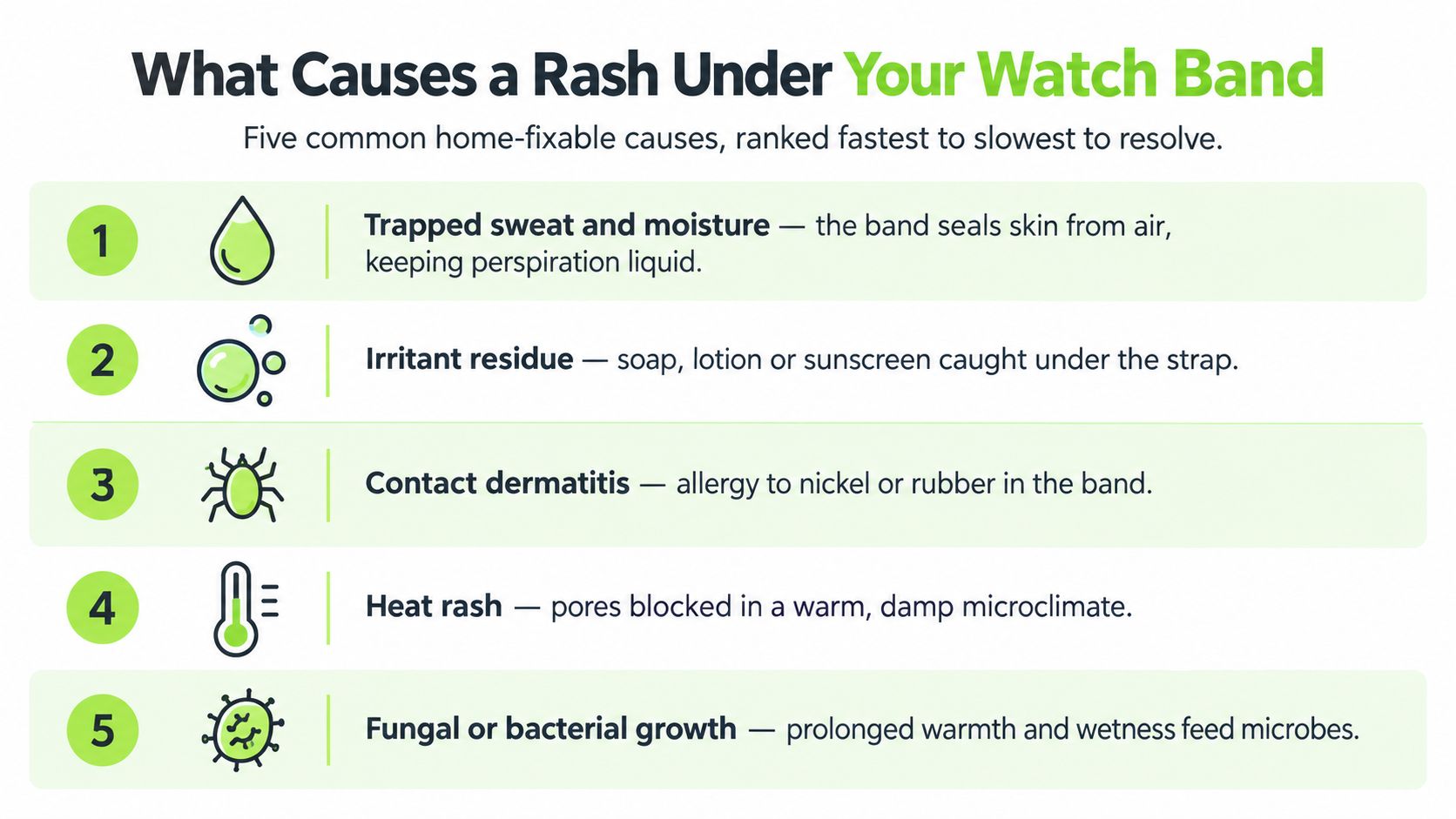
Trapped sweat and moisture. A strap seals warm, damp skin from the air. Sweat, salt and body oils stay against the wrist instead of evaporating.
A strap worn too tight. Pressure reduces airflow and creates a sharp red outline where the strap presses.
Soap, lotion or sunscreen residue. These substances can remain under the strap and irritate the skin for hours.
A friction point. A buckle, keeper loop, hole edge or case edge can rub the same patch repeatedly.
A material reaction. Some people react to a material in the strap, buckle or caseback. Nickel sensitivity is one recognised cause of a contact reaction, and DermNet's nickel allergy page lists the wrist under a watch strap as a common site.
Many watch-band rashes come from moisture, friction or residue rather than an allergy, so those are the first things to rule out. The more useful clue is location: if redness follows the covered strip of skin and spares the uncovered wrist, the strap or the way you wear it is the obvious starting point.
What the rash pattern can tell you
A broad patch under the strap body points toward moisture, residue or the strap surface. A narrow line under the buckle suggests pressure or metal contact. A small sore spot at one edge usually means friction. A reaction that returns whenever the same strap goes back on deserves professional advice rather than endless strap swapping.
Wash away anything that may be sitting on the skin, including sunscreen, lotion and fragranced products. If fragrance or detergent residue may be part of the problem, switching to unscented laundry detergent is a sensible broader step, especially if clothing cuffs also irritate your wrist.
How Trapped Sweat and Moisture Irritate the Skin
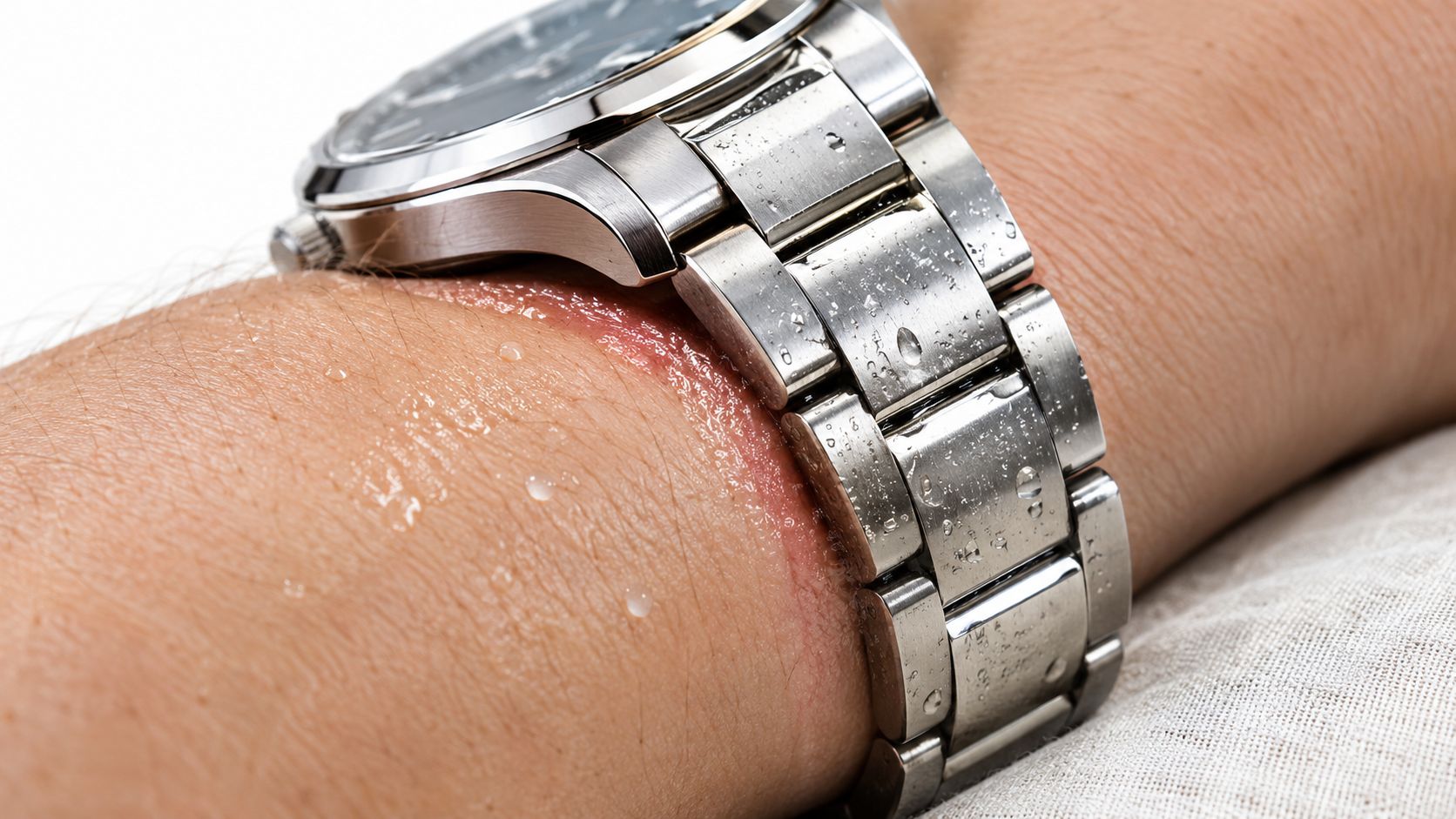
A smartwatch strap creates a small, warm pocket against your wrist. Perspiration that would normally evaporate stays liquid, while salt, urea, soap residue, dye and other substances remain in contact with the skin. Friction makes that exposure worse by repeatedly rubbing the softened surface.
The result can look dramatic even when the trigger is simple. The skin may become pink and pruney, then sting, itch or flake along the exact strap outline. Silicone doesn't absorb moisture, so it rinses clean, but a solid silicone or rubber surface can still hold sweat against the wrist. Woven nylon allows more airflow, yet the weave can stay damp until it dries completely.
Why exercise makes the problem worse
Exercise combines heat, sweat, pressure and movement. A tight strap rubs more as your wrist moves, and a wet strap can keep the area enclosed long after the workout ends. If you sweat heavily even without exercise, that is worth mentioning to a doctor or pharmacist.
Take the watch off after a sweaty session, rinse the strap with plain water and let both the strap and your wrist dry fully before wearing it again. The immediate rule is simple: don't put a damp strap back on irritated skin.
Practical rule: If the rash follows the full strap shape and appeared after heat, exercise or long wear, fix moisture and fit before blaming the material.
Tight Fit, Soap Residue, and Friction Points
A strap worn too tight usually leaves a compressed red line that mirrors the strap edges. You may also see a pale strip where the pressure was highest, followed by redness around it. Move the strap one notch looser, then reposition it slightly so the same patch isn't under pressure all day.
Soap, shampoo, sunscreen, lotion and hand sanitiser create a different pattern. The irritation tends to cover the area beneath the strap rather than one single edge, and it can continue after washing if residue remains in the strap grooves. Rinse your wrist and the strap with plain water, then dry both fully before reattaching the watch.
Friction is more localised. Check the buckle, keeper loop, top hole, clasp and the point where the strap joins the watch case. A rough edge can produce a small sore patch even when the rest of the wrist looks normal. If the irritation sits exactly at one contact point, changing the fit or replacing the strap may help, but don't keep rubbing the area to test it.
Cause
Where the rash shows
What it looks like
Quickest fix
Tight fit
Along the strap edges or pressure points
Compressed red lines or a sharply outlined patch
Loosen the strap by one notch
Residue
Across the covered skin
Stinging, redness, itching or flaking
Rinse the wrist and strap, then dry completely
Friction
Under a buckle, loop, hole or case edge
Small sore or rubbed spot at one repeat-contact point
Reposition the strap and remove the rubbing edge
Measure your wrist and check the strap size before buying a replacement, so you aren't compensating for a poor fit by overtightening the strap.
Could It Be a Reaction to the Strap Material
A contact reaction doesn't always show up straight away; it can appear hours or days after the strap was worn, which makes the link easy to miss. A rash that matches the buckle or caseback exactly is a different pattern from a broad damp patch under the whole strap, but appearance alone can't confirm the cause. A doctor or pharmacist can advise whether any testing makes sense. For general allergy background, Vitamin Planet's allergy advice is a starting point.
Stop wearing the suspected strap first, especially if the reaction returns every time you put it back on. The strap material may be responsible, but so may the buckle, spring bar, caseback or another metal part that you haven't considered.
The Quick Fix Checklist You Can Start Today
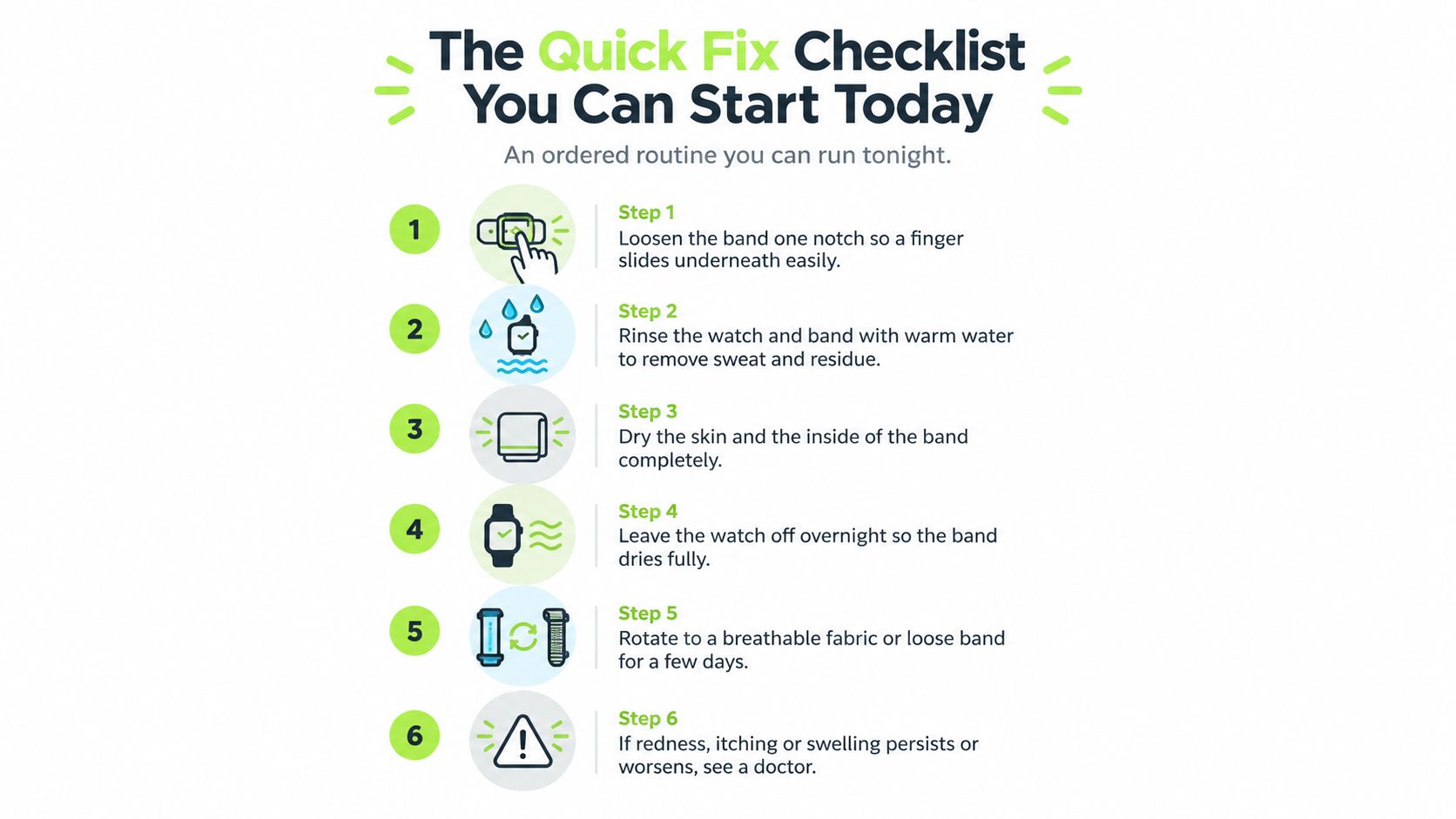
Run this checklist tonight. It targets the common causes without pretending that a new strap can diagnose or fix a medical condition.
Take the watch off. Give the irritated wrist several hours without pressure, sweat or contact.
Loosen the fit. When you wear it again, leave enough room for a finger to slide underneath easily. Secure doesn't mean compressed.
Rinse both surfaces. Remove the strap if possible. Rinse your wrist and the strap with plain water or mild soap, paying attention to grooves, holes, the buckle and the inside surface.
Dry everything completely. Pat the wrist dry and air-dry the strap before rewearing it. A damp strap defeats the cleaning step.
Rotate straps. Don't use the same damp strap every day. Give the strap and your skin time apart, and rest the wrist bare overnight.
Change the material if moisture is the obvious trigger. Woven nylon can improve airflow, while perforated silicone can reduce the amount of solid surface against the wrist. Neither material prevents, treats or cures a rash, and both still need drying.
A maintenance habit that actually helps
Once a week, inspect the inside of the strap, buckle and spring bars for residue. Rinse the strap after heavy sweating, wipe the buckle and let the strap dry fully before storage. If the skin is already sore, don't keep testing the same strap.
If the rash persists, blisters, spreads or hurts, stop experimenting with straps and ask a doctor or pharmacist for advice.
Choosing a Strap Material That Dries Faster
Choose based on your routine, not a marketing label. No strap should be called hypoallergenic, nickel-free, medical-grade or skin-safe without documentation and appropriate testing, and a material that works for one wearer may still irritate another.
Material
Drying Time
Breathability
Warmth
Best For
Woven nylon
Stays damp until fully aired and dried
Good through the weave
Lower than a solid strap
Sweat, travel and daily wear
Perforated silicone
Rinses clean and dries on the surface
Moderate, depending on the vents
Can retain warmth
Water, workouts and durability
Stainless steel mesh
Rinses clean and dries quickly
Good through the mesh
Can trap warmth against the wrist
Dress wear on a settled wrist
Nylon is the practical first look for hot conditions and active days because the weave allows airflow. Remember that nylon can stay damp longer than it appears, so don't put it back on immediately after rinsing. Silicone is convenient around water because it doesn't absorb moisture and rinses clean, but a solid surface can still trap warmth. Stainless mesh rinses clean and looks polished, but it can trap warmth against the wrist.
A breathable strap still needs a full dry. Airflow helps, but damp fabric against irritated skin is still damp fabric.
Leather is better kept for short, dry outings while the wrist is unsettled: it absorbs sweat and should never be soaked.
When to Stop and See a Doctor and What to Wear Next
Stop self-treating and arrange advice from a doctor or pharmacist if the rash spreads beyond the strap line, blisters, oozes, feels hot, becomes painful or keeps returning whenever you wear the watch. Don't wait for a strap swap to solve signs such as yellow crusting, swelling or increasing pain. A rash that persists despite removing the strap and cleaning the area also deserves professional review.
Tell the clinician when the rash began, which strap and watch parts touched the skin, and whether you used soap, lotion, sunscreen or sanitiser that day. A contact reaction can appear hours or days after exposure, so something worn earlier may matter more than the item on your wrist when symptoms first become visible. Only a qualified clinician can decide whether testing for a contact allergen is appropriate.
While you wait for advice, leave the wrist uncovered when practical and keep it dry. Don't apply a barrier, cream or replacement material as a substitute for medical guidance, and don't describe any strap as guaranteed safe for a rash. A strap can reduce moisture, pressure or friction, but it can't treat the underlying skin problem.
For general routing, choose the construction that matches the immediate problem:
Fast drying route: Silicone doesn't absorb moisture and can be rinsed clean, but it can still trap warmth against the wrist. Browse the Silicone Watch Straps collection.
Breathable route: Nylon allows airflow through the weave, but it must be dried fully before reuse. Browse the Nylon Watch Straps collection.
Fit-specific Fitbit route: The Solvia strap fits only Fitbit Versa 1, Versa 2 and Versa Lite. It doesn't fit Versa 3 or Versa 4. See Solvia, Silicone Sport Strap, Fitbit Versa 1/2 and Lite. One verified buyer, Joshua Gonzalez, wrote about the Solvia — Silicone Sport Strap — Fitbit Versa 1/2 & Lite: "This strap is super comfy and doesn't irritate my skin at all—totally thankful for it, makes wearing my Fitbit so much better!" That's one buyer's comfort experience, not evidence that the strap is safe for skin conditions or that it prevents a rash.
Other watches: Check the exact connector and model before ordering. The broader watch straps collection is a starting point, but compatibility still needs to be confirmed for your device.
Nothing but Bands offers silicone and nylon replacement straps across smartwatch categories, along with model-specific options such as the Fitbit Solvia. Visit Nothing but Bands to compare the fast-drying and breathable routes, confirm compatibility, and choose a strap that fits your routine without ignoring what your skin is telling you.
Scratch the card or use the reveal button to uncover your subscriber gift.
Your five-part guide is on its way. Your first emails focus on fit and care; the subscriber gift also returns in email three.
Written by Alex· Published September 30, 2026
· 10 min read
· Updated October 7, 2026
About the author
Alex — Founder, Nothing but Bands
Alex runs Nothing but Bands from Austin, TX. Every fit claim in these guides is verified against manufacturer specs — including the watches our bands don't fit. More about Alex →