


You've bought the nylon strap, removed the old band, and now the watch is sitting on the bench while you wonder which side goes where. How to fit a NATO watch strap is straightforward when the watch has standard spring bars: measure the lug width, feed the strap under both bars, flatten the second layer, then buckle and route the tail through both keepers. The mistakes are equally straightforward, buying the wrong width, forcing a NATO onto a smartwatch with no adapter, or leaving the case resting on only one layer.
3 Key Takeaways: Fitting a NATO Watch Strap
Needs spring bars: A NATO needs removable spring bars and room to pass under the case.
Smartwatches need adapters: Watches with slide-in connectors need a lug adapter first.
Not ideal for heart rate: The extra nylon layer lifts the sensor. A single-pass band tracks better.
A NATO strap is also a poor choice for a smartwatch when heart-rate tracking matters. The extra nylon layer lifts the sensor away from your skin, so a single-pass woven band usually tracks better. Start by checking whether your watch can accept the strap at all.
Table of Contents
- What a NATO Strap Actually Needs to Fit
- Measure Your Lug Width and Identify Your Fitting Type
- Single Pass vs Double Pass vs Zulu vs Two Piece
- Threading the Strap Step by Step
- Dressing the Strap Flat and Getting the Comfort Right
- Common Fitting Mistakes to Avoid
- Care Basics and When to Choose an Alternative Instead
What a NATO Strap Actually Needs to Fit
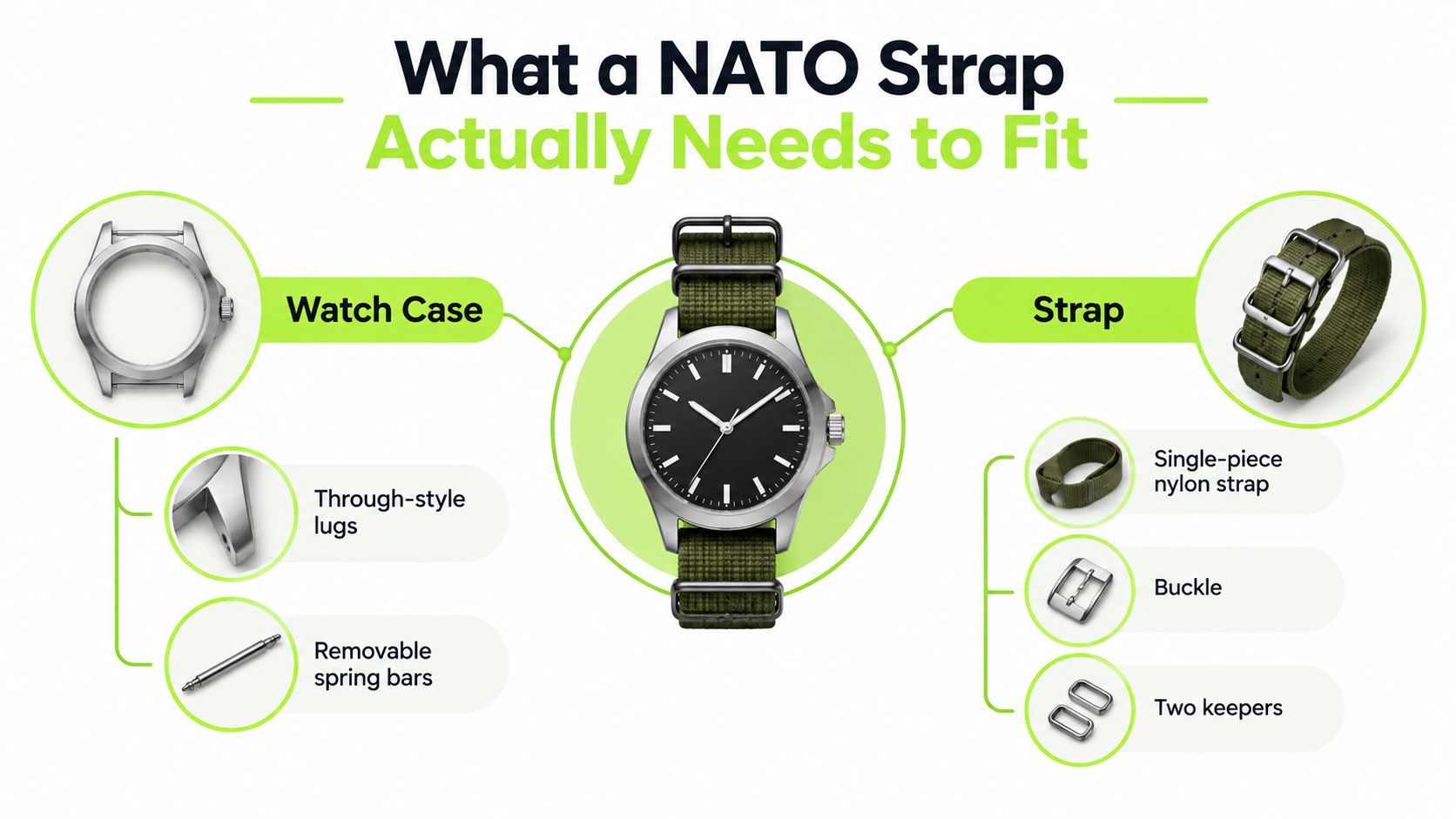
A NATO strap needs a watch case with through-style lugs, removable spring bars, and enough clearance beneath the case for the nylon to pass cleanly. The strap is one continuous piece that runs under the case, so a watch with integrated or side-loading connectors won't accept it without a suitable adapter.
The pattern is military in origin: the British Ministry of Defence issued the original G10 strap in grey nylon in 1973, and NATO's own history of the strap covers that background. The 2001 issue of the UK Defence Standard for the strap (DEF STAN 66-47) sets it at 20 mm wide, 280 mm long and 1.2 mm thick, which is why a traditional NATO has such a long tail and why widths are always quoted as lug widths.
Check the watch before buying
Traditional watches with ordinary spring bars are the easy cases. Remove the existing strap, inspect the bars, and confirm that the nylon can travel between the bar and the case without catching on the caseback or sharp lug edges. A spring-bar tool, a soft work surface, and a steady hand are cheap insurance against scratched lugs and bent bars.
Most Apple Watch, Fitbit, and many Samsung models use proprietary slide-in channels rather than exposed spring bars. They need a brand-specific lug adapter that presents a standard spring bar before a NATO can be installed. Many Garmin, COROS, Suunto, and Samsung Galaxy Watch models from the 4 onward already use standard lugs, so those models generally need only the correctly measured strap width. Samsung is not uniform here, though: the Galaxy Watch 8 and the Galaxy Watch Ultra use Samsung's own Dynamic Lug fitting rather than plain spring bars, so confirm your exact model before ordering.
For a broader explanation of the strap's construction, see what a NATO watch strap is, but don't buy from the appearance alone. The fitting hardware decides whether the job is possible.
Measure Your Lug Width and Identify Your Fitting Type
Measure the gap between the inside edges of the watch lugs, then buy a NATO in that exact width. Use a ruler for a quick check or a digital caliper when the measurement is hard to read. Measure straight across the attachment gap, not along the curve of the case or the old strap.
The standard sizes you'll encounter most often are 18 mm, 20 mm, and 22 mm, with 16 mm and 24 mm turning up less often. A 20 mm NATO is intended for a 20 mm lug span, not a 19 mm or 21 mm guess: a strap a millimetre too wide will not pass between the lugs at all, and one a millimetre too narrow lets the case wander sideways. Every lug-width fitting guide lands on the same rule, and it is worth repeating, the lug measurement comes first.
Workshop rule: Measure the watch, not the strap you're replacing. Old straps can stretch, compress, or carry a misleading width marking.
Next, identify the connector. A standard watch has a spring bar running between the lugs. You compress one end with a spring-bar tool, remove the bar, pass the NATO beneath it, and reseat the bar. A smartwatch with a side-loading channel works differently. Apple Watch, Fitbit, and most Samsung models need a compatible adapter, while many Garmin, COROS, Suunto, and Samsung Galaxy Watch models from the 4 onward use standard lugs directly.
| Watch Lug Width | Recommended NATO Width | Fitting Type | Adapter Needed? |
|---|---|---|---|
| 18 mm | 18 mm | Standard spring bars | No, if the case has through-style lugs |
| 20 mm | 20 mm | Standard spring bars | No, if the case has through-style lugs |
| 22 mm | 22 mm | Standard spring bars | No, if the case has through-style lugs |
| Proprietary smartwatch connector | Match the adapter's stated strap width | Slide-in connector with adapter | Yes |
For a careful measuring method, use how to measure watch lug width. If the measurement comes out at 20 mm, the most common size of all, our 20mm watch bands collection gathers everything we stock in that width. If you own an Apple Watch and want a direct-fit alternative rather than an adapter, the Rovan, Magnetic Silicone Sport Band, Apple Watch connects through the Apple Watch fitting and comes in case-size options covering 38, 40, 41, and 42 mm, or 44, 45, 46, and 49 mm.
Single Pass vs Double Pass vs Zulu vs Two Piece
Choose a single-pass strap for the lowest profile and better smartwatch sensor contact, and choose a double-pass NATO when the extra layer and traditional security matter more. The styles look related, but they don't wear the same way.
A classic one-piece NATO passes beneath the watch case and around the wrist. The case sits on two layers of nylon, and the strap continues to hold the watch if one spring bar releases. A double-pass version adds another under-wrap, which gives a chunkier feel and more material between the case and wrist. That extra material is exactly why I wouldn't use it on a heart-rate smartwatch unless appearance matters more than sensor contact.
A Zulu is generally thicker and stiffer, with heavier hardware and a more substantial buckle and keeper arrangement. It suits a rugged field or dive-watch look, but it can overwhelm a thin dress case. A two-piece nylon strap uses separate upper and lower pieces, so it sits flatter and avoids the under-case threading mechanic. It also loses the pass-through security of a true NATO.
| Style | Passes Under Case | Heart Rate Sensor Friendly | Hardware / Feel | Best For |
|---|---|---|---|---|
| Single pass | One under-case layer | Better choice | Light, cooler, lower profile | Smartwatches and everyday wear |
| Double pass NATO | Extra under-wrap | Poorer contact | More traditional and secure | Conventional watches |
| Zulu | Usually one under-case pass | Usually poor with added bulk | Thicker nylon and heavier hardware | Rugged watches |
| Two piece | No under-case pass | Flatter against the skin | Familiar strap feel | Looks and simple fitting |
Length matters as much as width. The military pattern is deliberately long, and the extra tail is by design, not waste. If the tail creates a thick fold against your wrist or the buckle lands on the wrist bone, choose a different length rather than crushing the strap tighter.
Nothing but Bands sells replacement bands, not watches, and doesn't stock one-piece NATO or Zulu straps or lug adapters. The closest alternatives are nylon watch bands, including two-piece nylon loops and sport loops with a similar military-weave appearance.
Threading the Strap Step by Step
Feed the NATO under the top spring bar, across the back of the case, and under the bottom spring bar so the watch rests on two layers of nylon. Don't stop after the first bar. Single-layer threading is the most common mechanical mistake and defeats the strap's pass-through design.
Remove the existing strap first and place the watch face down on a soft cloth. Keep the dial protected from grit, and position the NATO so the buckle orientation feels natural for your wrist. The neutral setup puts the buckle on the side where you normally fasten a clasp, but left- and right-handed wearers may prefer opposite feed directions for easier fastening.
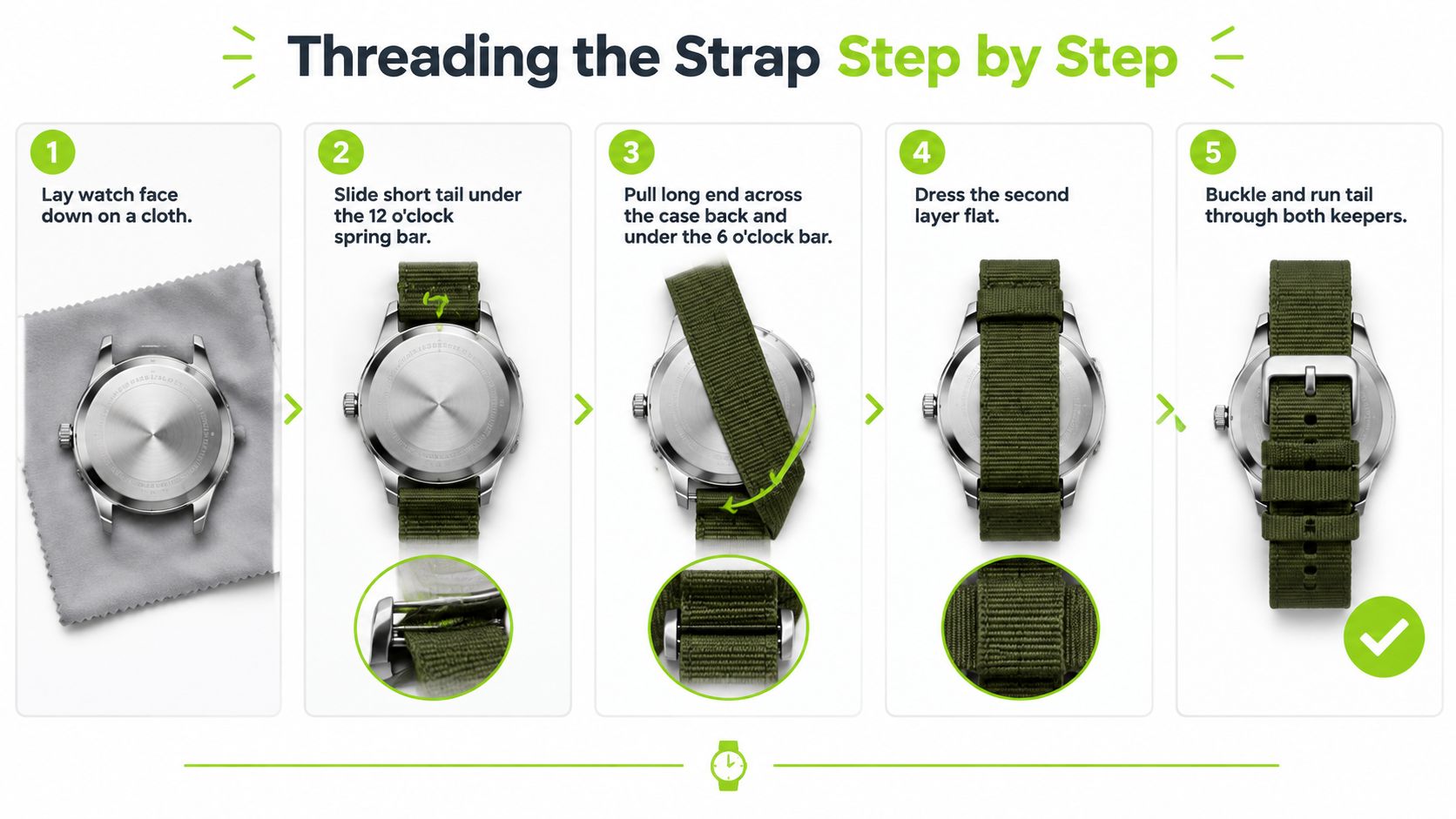
Start at the 12 o'clock side. Feed the long end through the gap beneath the top spring bar, between the bar and the case. Pull enough fabric through to position the buckle and leave the watch head roughly where it will sit on your wrist.
Run the strap across the back of the case, then feed it under the 6 o'clock spring bar and back out. The case should now sit inside the nylon loop, with the strap supporting it from both sides. Keep the fabric centered. If one edge bunches under the case, pull the strap back and correct it now, before tightening.
The watch should sit on the strap, not beside it. If you can see only one layer beneath the case, start again.
Dress the second layer flat with your thumb or thumbnail. Smooth the fabric from one lug to the other, remove twists, and set the case position before you deal with the buckle. Then pass the tail through the buckle, select the hole that allows comfortable wrist movement without case rotation, and run the remaining tail through both keepers.
Quick-release spring bars need extra attention. Seat the bar with the release tab facing the case so the tab doesn't snag the nylon. Press the lever only as needed, slide the strap into position, release it, and confirm that both ends have dropped fully into the lug holes. A standard spring-bar tool is useful when removing the original band, but the NATO itself should thread by hand.
Whatever the watch, keep the focus on its own lug design and the clearance beneath the case, because that is what decides whether the nylon can pass at all.
Dressing the Strap Flat and Getting the Comfort Right
Dress the buckle and the second nylon layer before you tighten the strap. That single habit solves more comfort problems than swapping between buckles or pulling harder on the tail.
Once the watch head is centered, smooth the under-case layer with your thumb. Nylon tightened while it's rucked stays rucked, and every ridge becomes pressure against the wrist. Slide the floating keeper down against the fixed keeper so the tail remains controlled instead of lifting away from the strap.
The case will sit higher than it did on a two-piece band because the NATO places another layer beneath it. On a heart-rate smartwatch, that extra fabric also lifts the optical sensor away from the skin. Use a single-pass setup if tracking matters, or choose a single-layer woven band that keeps the same casual military character without stacking nylon beneath the sensor.
Adjust the buckle without over-tightening
Pull the strap snug through the buckle, but don't clamp the case against your wrist. The watch should stay centered and stable while still allowing comfortable wrist movement. If the buckle pin lands on the edge of a hole, use the next looser hole instead of forcing the pin into an awkward position.
The long tail belongs under the keepers, not loose across the wrist. Fold the excess back neatly, and don't twist it as it enters the keeper. If the strap still produces a large, uncomfortable fold, the problem is length. A shorter strap will sit flatter than repeated folding.
Comfort check: If loosening one hole fixes the pressure, keep the strap. If the buckle still lands on the wrist bone or the tail piles up, change the length.
Common Fitting Mistakes to Avoid
The biggest mistake is assuming the NATO will fit the smartwatch before checking the connector. A single-piece nylon strap needs a gap beneath spring bars. Apple Watch, Fitbit, and many Samsung cases use proprietary slide-in fittings, so they need a compatible lug adapter first. Garmin, COROS, Suunto, and Samsung Galaxy Watch models from the 4 onward often use standard lugs, but you still need to verify the specific case.
The next failures happen during sizing and threading:
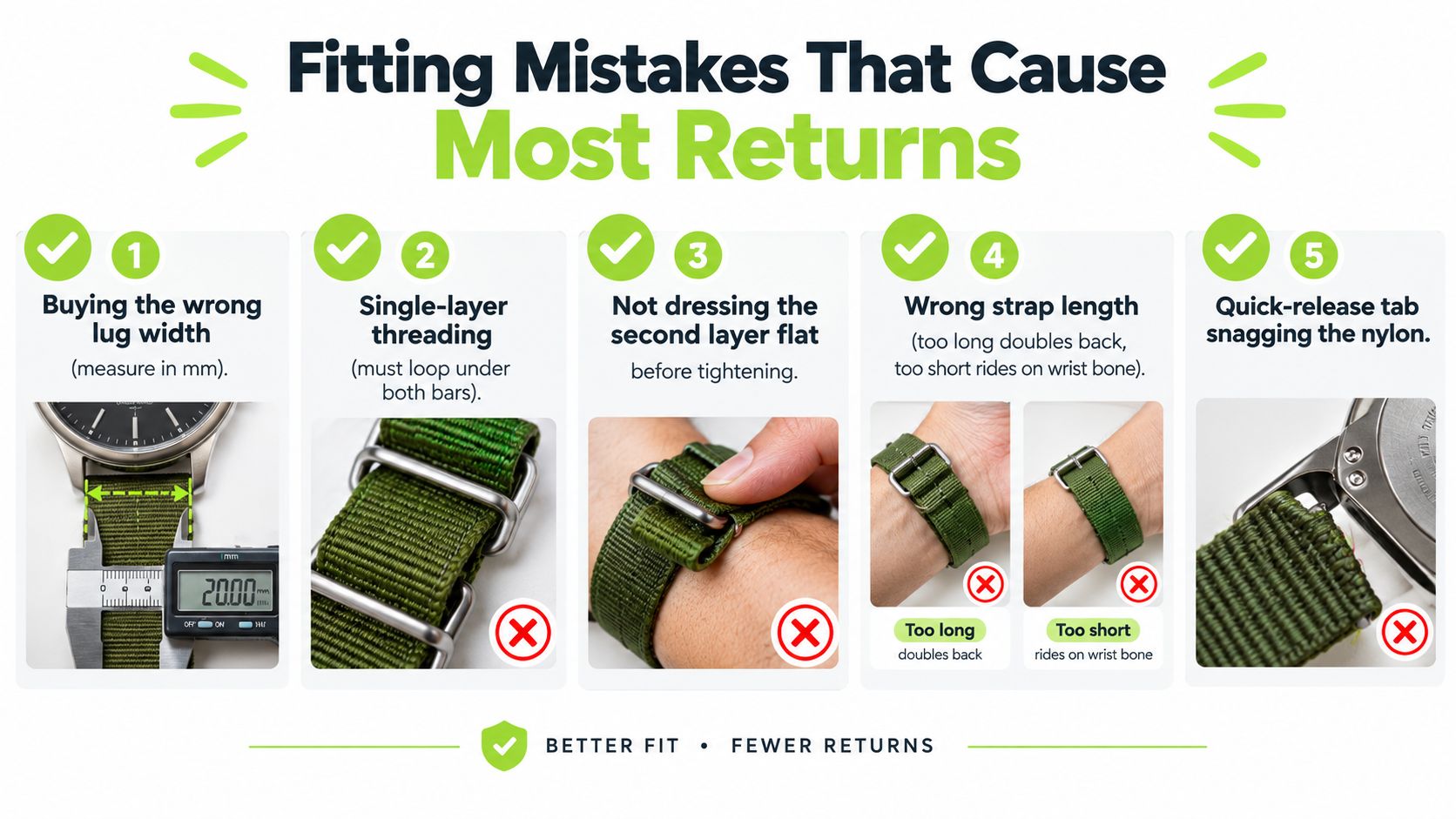
- Wrong width: Measure the inside lug gap in millimetres. A 20 mm strap belongs on a 20 mm lug span: a 22 mm strap simply will not pass between 20 mm lugs, and an 18 mm strap on the same case leaves the head free to wander sideways.
- Single-layer threading: The strap must pass under both spring bars. If the case rests on one layer, you've skipped the defining security feature.
- Unfinished second layer: Flatten the nylon under the case before buckling. A rucked layer lifts the case and pushes the buckle into your wrist.
- Poor case positioning: Set the watch head before final tightening. A case that sits too close to one lug will rotate and wear the nylon unevenly.
- Unseated spring bar: Compress one end, place the other end in its hole, then release and check both sides. Never wear the watch until both ends are visibly seated.
- Quick-release tab snagging: Face the release tab toward the case. A tab facing the fabric can catch and pull at the nylon.
- Wrong length: Too much tail doubles back into bulky folds. Too little makes the buckle ride onto the wrist bone. Choose a different length instead of overtightening.
Wet nylon deserves restraint. Don't yank the tail hard enough to stretch the material or distort the holes, especially while the strap is wet. Let the bar and fabric settle naturally, then inspect the fitting before putting the watch back into daily use.
Care Basics and When to Choose an Alternative Instead
Rinse a nylon strap with lukewarm water and mild soap when sweat, salt, or lint builds up, then let it air-dry completely before wearing it again. Remove the strap from the watch so moisture doesn't remain trapped around the spring bars and case.
A soft toothbrush works well around the buckle and keepers. Brush lightly through the weave, rinse away soap, and leave the strap open to dry. Don't clamp a wet NATO beneath the case, because trapped moisture can dull hardware and contribute to corrosion on lesser-quality metal.
Inspect the holes and buckle tongue regularly. Fraying near the holes or a noticeably worn buckle tongue is a replacement signal, not a cosmetic flaw. Those are load-bearing points, and a failure there can drop the watch without warning.
Some wrists don't suit the NATO construction. If the extra layer feels bulky, the case sits too high, or heart-rate readings matter, choose a single-layer woven band. A rubber tropic or seatbelt-style strap can also deliver the practical, military-inspired look without feeding a long nylon tail beneath two spring bars.
For watches that already use standard lugs, quick-release watch bands are the easier alternative when you want fast changes without repeated tool work. The Véllo, Nylon Loop, Quick Release 20mm is another two-piece nylon option for a compatible 20 mm watch, and it avoids putting a second fabric layer directly beneath the sensor.
Nothing but Bands offers replacement bands and does not stock NATO straps or lug adapters. Choose the strap by your watch's actual connector and lug width, then use the fitting method above only when the case can accept a pass-through band.
Visit Nothing but Bands to compare nylon, sport-loop, silicone, and quick-release replacement bands by watch family and width. If your watch has no exposed spring bars, skip the NATO adapter hunt and choose a direct-fit band made for its connector.
Articles similaires

- October 07, 2026
Discover why comfortable watch straps feel different. Learn the materials, closures, and fit rules that actually matter for Samsung Galaxy...

- October 06, 2026
Clear installation instructions for smartwatch bands. Learn how to attach, verify, and troubleshoot Apple, Samsung, Garmin, and Fitbit straps safely.

- October 05, 2026
A practical guide to changing watch bands across Apple, Garmin, Samsung, and Fitbit, covering tools, fitment, daily rotation, and common...

