


If a rubber watch band is yellowed, chalky, sticky, or smells off, start with lukewarm water, a little mild soap, a soft brush, a full rinse, and complete drying before you wear it again. That fixes most surface grime fast, but it won't save every band, so the real skill is knowing which fault is cleanable and which one means the strap is finished. For a full weekly routine, see the step-by-step guide on how to clean a rubber watch strap.
For anyone who cares about the watch as much as the band, the same basic discipline shows up in preserving collectible timepieces, keep dirt off the strap, keep moisture out of the case, and don't make a clean band soak the watch itself. On a product note, the Halo — Silicone Sport Band — Apple Watch gets exactly the kind of feedback that fits this job: Linda Robinson said, "It's super easy to clean after workouts, which is a plus."
Table of Contents
- What Is the Fastest Way to Clean Rubber Watch Bands
- Which Rubber Watch Band Problems Can Actually Be Fixed
- Should You Wash Multiple Rubber Bands Together
- Why Drying Matters More Than Washing for Band Longevity
- When to Replace a Rubber Watch Band Instead of Cleaning It
What Is the Fastest Way to Clean Rubber Watch Bands
The fastest safe clean for rubber watch bands is mild soap, lukewarm water, a soft toothbrush or cloth, and a complete dry-down before refitting. That takes care of sweat, skin oil, and the loose grime that sits on the surface, which is usually what makes a band look worse than it really is.
A quick wipe is fine for a band that just looks dusty. A deeper clean is worth doing when the underside feels slick, the keeper loop has lint in it, or the holes look darkened from daily wear.
Practical rule: if the band smells better after washing but still looks bad, the problem was mostly surface buildup. If the smell or tackiness stays, the material has likely changed.
The payoff is that a clean rubber band often comes back looking close to new after workouts, especially when the grime hasn't been left to bake into the grooves. That's why the simplest routine works so well for active wearers.
Which Rubber Watch Band Problems Can Actually Be Fixed
A rubber watch band is worth cleaning when the problem is surface contamination, not when the material itself has broken down. The key is to separate stains that sit on top of the strap from damage that has already changed the strap.
The contamination risk is real. Cleveland Clinic's summary of a small study found bacteria on nearly all of the tested watch wristbands, including organisms such as Staphylococcus and E. coli, with rubber, plastic, and cloth bands showing the highest contamination levels and metal the lowest Cleveland Clinic. That supports routine cleaning after exercise, sweat, and long wear, especially when the band touches skin all day.
Rubber Band Fault Diagnosis Table
| Fault | Likely Cause | Matched Treatment | Verdict |
|---|---|---|---|
| Yellowing on light bands | UV exposure, age, or embedded grime | Wash with mild soap and water first, then inspect again after drying | Often partly reversible if it's buildup, not true material aging |
| Dye transfer from denim or a dark band | Indigo bleed or color transfer from clothing or another strap | Gentle soap wash first, then careful spot cleaning if the maker allows it | Sometimes reversible, sometimes only improved |
| Chalky bloom | Surface residue, dried soap, or material weathering | Rinse thoroughly, then wash again with neutral soap and a soft cloth | Usually reversible if residue is the cause |
| Sunscreen and lotion staining | Skin product residue trapped on the surface | Mild soap and lukewarm water, with extra attention to textured areas | Usually reversible when it's product buildup |
| Chlorine haze | Pool exposure, residue left after swimming, or finish dulling | Fresh water rinse, then a mild soap wash and full dry | Often reversible if it's residue, not surface damage |
| Grit in keeper loops and lug ends | Dust, dead skin, lint, and soap residue | Soft brush in the grooves, rinse until clear, dry completely | Reversible and worth the effort |
| Surface tackiness | Soap residue, chemical exposure, or polymer breakdown | Rewash once, then stop if tack remains or the texture changes | Sometimes reversible, often not |
| Persistent odor | Trapped moisture, residue in channels, or worn material | Clean, dry thoroughly, then reassess after the band is fully dry | Reversible if the smell came from residue, not breakdown |
The honest line is simple. Tackiness and deep discoloration usually are not fully reversible, especially if the band has already changed texture or color through wear. That's where the problem stops being cleaning and starts being replacement.
For stubborn odor questions, the separate guide on how to remove odors from watch bands stays focused on smell itself, while this diagnosis table is about deciding whether the band still deserves another wash.
A band that's only dirty can be saved. A band that feels chemically altered usually can't.
The hygiene side still matters. Apple's care guidance for its Sport Band and similar bands is a nonabrasive, lint-free cloth lightly dampened with fresh water, mild hypoallergenic hand soap if needed, and drying before the band goes back on the watch Apple, while Samsung advises clean water, thorough drying, and no abrasive materials or cleaning agents Samsung. That lines up with the safer rule: clean first, inspect after drying, and don't escalate to harsher chemicals unless the band maker explicitly allows it.
Should You Wash Multiple Rubber Bands Together
You can wash several rubber bands in one session, but you should not treat them like one shared batch. Light bands and dark bands need to stay separate, because dye transfer is a real risk and mixed water only spreads residue around.
The bands that come off the wrist fastest are usually the dirtiest around the keeper loop, buckle holes, and lug ends. Those parts deserve the slowest, most deliberate cleaning, which is why buckles and loops should be handled last instead of first.
A clean order for a band rotation
- Separate by color first: Keep white, pale, and bright straps away from dark denim-touched bands.
- Use fresh water for each group: Shared water moves oils and lint from one strap to the next.
- Scrub the hidden areas last: Buckle holes, keepers, and underside channels usually hold the most grime.
- Dry in the same order you cleaned: Lay the lightest, cleanest band flat first so damp bands don't touch finished ones.
That workflow matters more than people realize. A quick communal rinse looks efficient, but it can leave one band carrying the residue from another, which is exactly how a clean strap comes back with a strange film on it.
The wash itself for each band is the short routine from the step-by-step guide: detach the band where practical, rinse under lukewarm water, and work a little mild soap into both surfaces, buckle holes and underside channels with a soft toothbrush. Rinse until no soap residue remains, blot with a lint-free cloth, and let each band air-dry completely before it goes back on.
Good cleaning is controlled cleaning. The goal isn't more scrubbing, it's removing the stuff that can sit in the grooves without leaving anything behind.
If you're maintaining a small rotation of several straps, that order keeps the clean bands from becoming the dirty ones again before they've even dried.
Why Drying Matters More Than Washing for Band Longevity
A rubber watch band can be washed perfectly and still fail the day you put it back on damp. Moisture trapped under the strap, in the buckle, or around the holes creates the smell people blame on “bad rubber,” even when the actual issue is rushed reattachment.
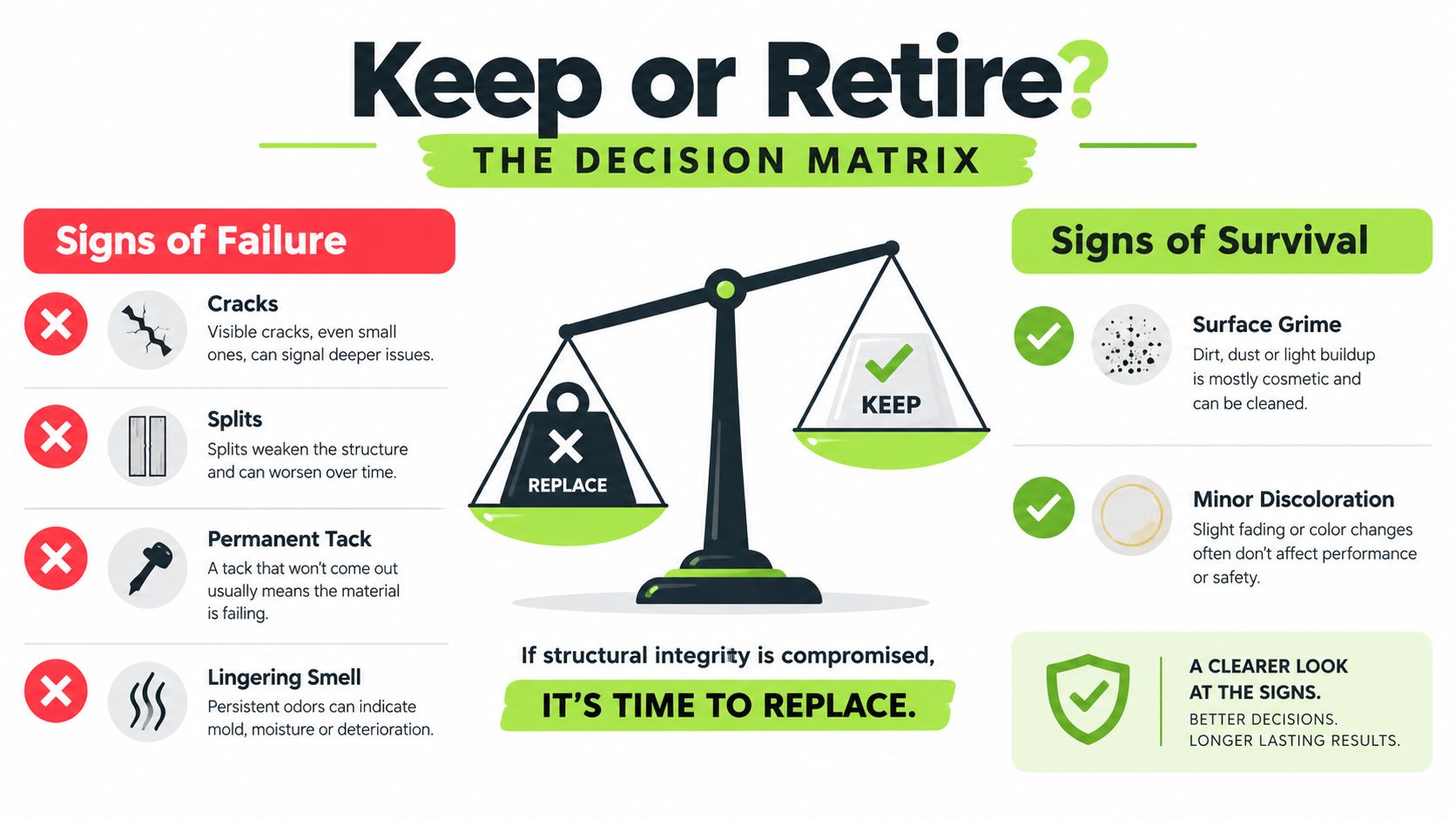
The right drying order is simple. Pat both sides dry, open the strap flat, and leave it away from direct heat until the skin-contact surface and the clasp area are fully dry. Samsung specifically advises drying rubber bands thoroughly and cleaning the band and wrist after exercise or sweating.
The practical argument for owning more than one band is right there. If one band is still drying, a second band lets you keep wearing the watch without trapping moisture against your skin. That's the easiest way to avoid the cycle of odor, irritation, and early wear.
A conservative product-care check also matters before you reach for stronger cleaners. Which? keeps its rubber-strap advice simple: rinse with water, use a soap-free cleanser or a soft toothbrush if needed, and check the manufacturer's instructions Which?. If you do try anything stronger, test it on a hidden section first and stop at any color transfer, whitening, tackiness, swelling, or cracking; bleach, acetone, and abrasive products don't belong on rubber or silicone.
Keep the band out of direct sunlight while it dries. Once a strap is wet, hot sun or another heat source adds stress for no good reason, and that's the wrong place to “speed things up.”
When to Replace a Rubber Watch Band Instead of Cleaning It
A rubber watch band should be replaced when cracks, splits, permanent tack, or a lingering smell survive a proper clean. At that point, the strap isn't dirty, it's worn out.
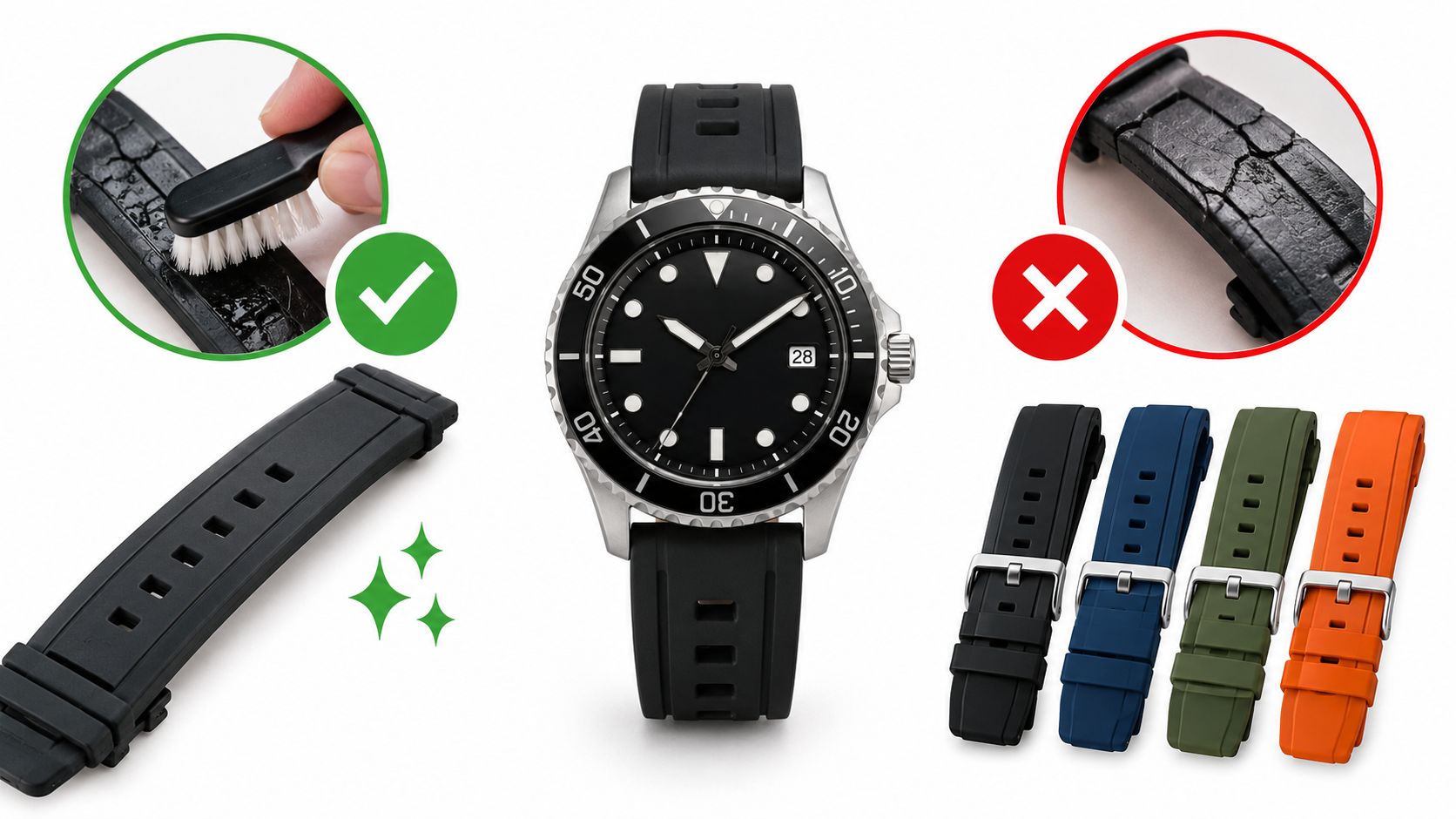
That cutoff matters because people waste a lot of time chasing stains that are material failure. Samsung warns that residual soap, sanitizer, or cleaning agents can irritate skin, and that after exercise or sweating the band and wrist should be cleaned and dried thoroughly Samsung. If a band still feels wrong after that, the safe move is to stop wearing it.
Replace when the damage is structural
- Cracks or splits: The strap has already lost integrity.
- Permanent tackiness: The surface has changed, and more washing usually won't fix it.
- A smell that survives cleaning: Residue is no longer the whole problem.
- Deformation around holes or edges: The band is stretching out and won't sit right again.
That's the point where cleaning stops being maintenance and starts being denial.
For readers who want a fresh replacement instead of another failed wash, the rubber vs silicone watch band comparison is the right reference for deciding whether the material still makes sense. If you prefer a simple swap, Nothing but Bands also carries silicone watch bands, Apple Watch bands, and nylon watch bands, which are useful if you want to wear something else while a rubber strap dries or retire a damaged one.
A replacement isn't a failure. It's the smart line between a band that needs cleaning and a band that's already given up.
Nothing but Bands offers replacement straps for Apple Watch, Samsung Galaxy Watch, Garmin, Fitbit, and standard quick-release fittings, with silicone and nylon options that fit everyday wear and workouts. If your rubber band is beyond cleaning, or you just want a dry backup in rotation, visit Nothing but Bands and pick the strap that matches how you typically wear your watch.
Related posts

- October 12, 2026
Most smartwatch owners don't need a quick release strap adapter. Learn what the term actually means, how to check your...

- October 09, 2026
Learn how to set up smart watch devices from Apple, Samsung, Garmin, and Fitbit. Follow our universal pairing path, configure...
