


Most owners of standard smartwatches don't need a lug adapter. A watch with ordinary 20 mm or 22 mm quick-release lugs usually needs only a correctly sized band, with the spring bar already fitted.
The confusion comes from using “adapter” for two different parts. A quick-release spring bar is the pin inside a compatible band, not a converter. A lug adapter is a separate metal component that changes a proprietary watch connection into a standard spring-bar fitting. Those are very different purchases, and choosing the wrong one can leave you with a loose band, an unusable part, or a connection you shouldn't trust during exercise.
Table of Contents
- What a Quick Release Strap Adapter Actually Is
- How Do I Know If My Watch Has Quick Release Lugs
- Do I Need an Adapter for Apple Watch, Garmin, or Samsung
- How Do I Measure My Watch Band Width Correctly
- What Are the Drawbacks of Using a Lug Adapter
- How to Install a Quick Release Band Without Tools
What a Quick Release Strap Adapter Actually Is
Most shoppers searching for a quick release strap adapter are looking for a standard band that fits their watch. The band already includes a spring-loaded pin with a small lever, so no separate adapter is required when the watch has ordinary drilled lugs.
A quick-release spring bar is a refinement of the long-established spring-bar attachment system, usually credited to watchmaker Charles Depollier, who patented the spring bar in 1916: a spring-loaded bar extending between the case lugs, with retractable end pins seated in lug holes. The modern change is mostly user access. Press the small lever, retract one pin, and remove the band without a separate tool.
A lug adapter is different. It sits between a proprietary watch case and a conventional strap, creating a new attachment interface. Apple Watch bands, Garmin QuickFit bands, and the Galaxy Watch Ultra use model-specific systems, so their correct replacement is usually a dedicated band or fitting, not a generic spring bar.
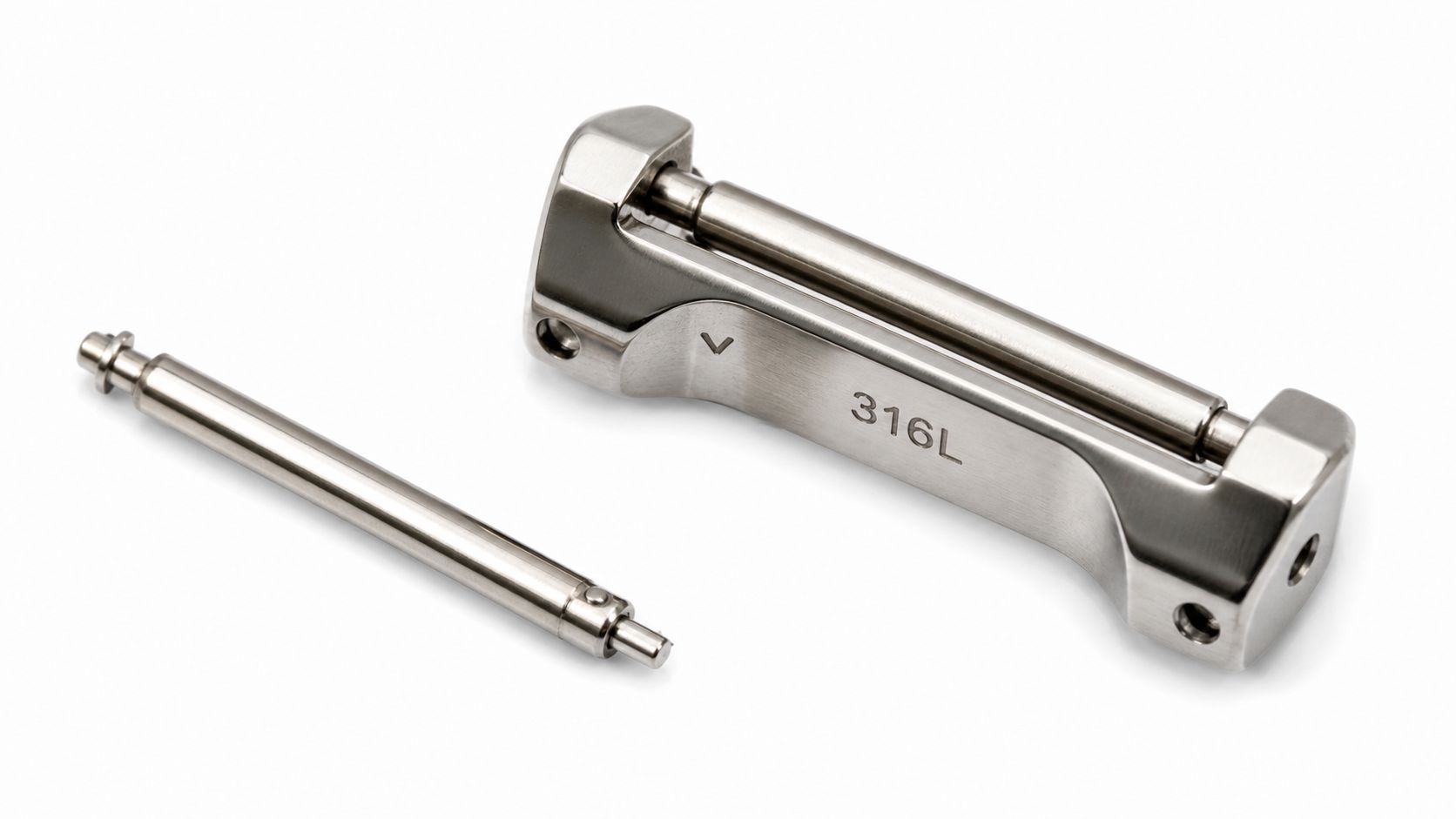
Practical rule: If your watch has normal lugs and visible lug holes, start with the band width. Don't buy a converter simply because the product title contains “adapter.”
Nothing but Bands doesn't sell lug adapters and hasn't tested or ranked them. Its direct-fit alternative is a quick-release band in 20 mm or 22 mm (with 18 mm for smaller watches), with the sprung bar built into the band — the Véllo — Nylon Loop — Quick Release 22mm, for example, arrives with its bars already fitted.
How Do I Know If My Watch Has Quick Release Lugs
A watch takes standard quick-release bands when it has ordinary drilled lugs and its band uses a spring bar with a small lever or tab visible from underneath the strap.
Turn the watch over and inspect the point where the band meets the case. On a compatible quick-release band, you'll usually see a narrow metal tab on the underside near one end of the pin. Pulling or sliding that tab retracts the spring-loaded tip, allowing the band to come out of the lug hole.
The lever belongs to the spring bar, not the watch case. A band sold as quick release normally arrives with these bars already installed, which is why buying a separate “quick-release adapter” is often unnecessary.
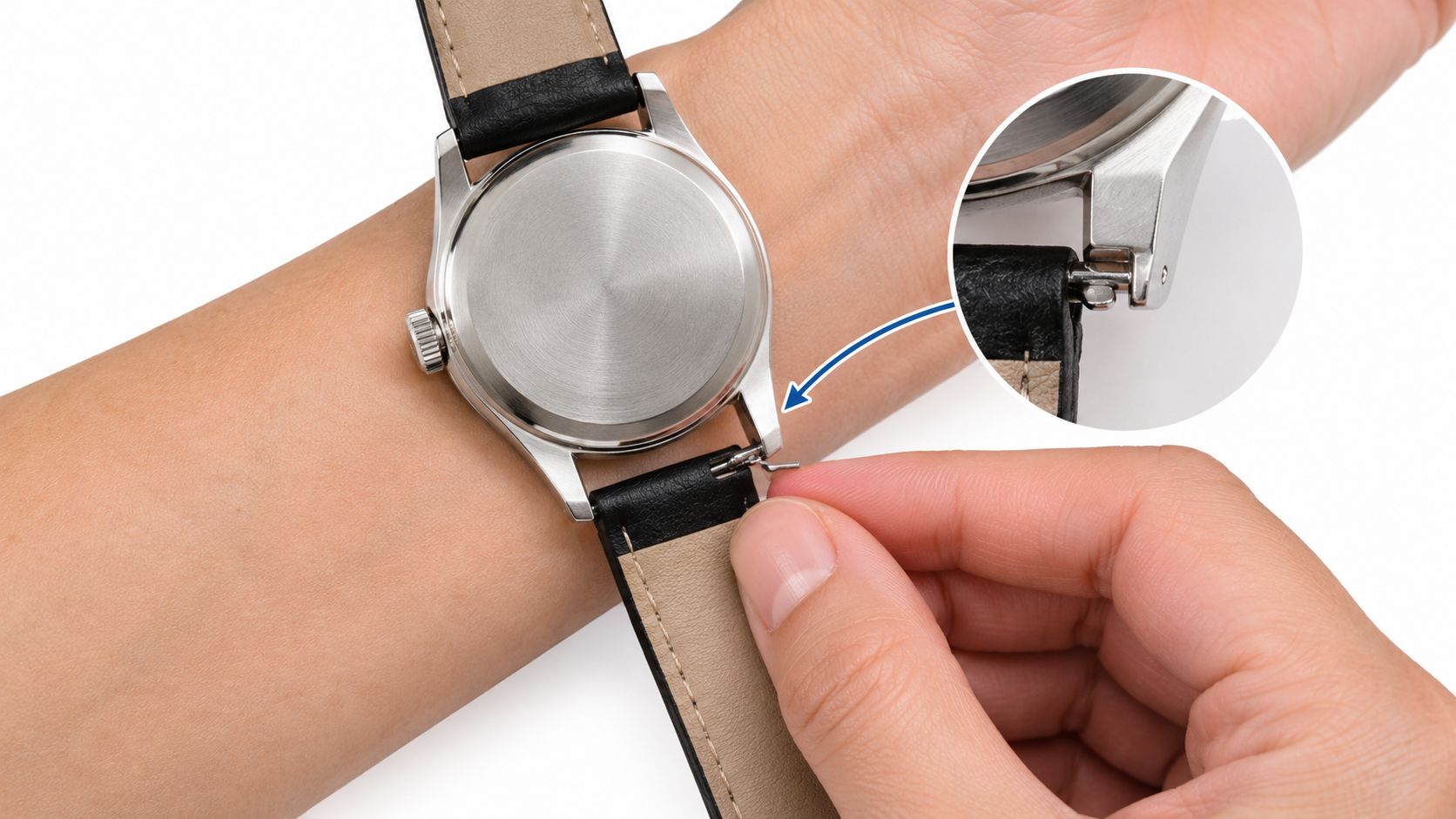
If you see smooth fixed metal, a molded channel, a latch, or no accessible spring-bar shoulder, stop before forcing anything. That may indicate a proprietary connection. Use the exact watch model and fitting type to choose a replacement, rather than assuming a standard 20 mm or 22 mm band will work.
You can measure a conventional lug gap with the method below, but measurement can't turn a proprietary connector into a standard one. Width answers only one part of the compatibility question.
Do I Need an Adapter for Apple Watch, Garmin, or Samsung
A non-standard connector does not automatically call for an adapter. Apple Watch requires an Apple-specific band or slide-in adapter, Garmin depends on the model, and many Samsung Galaxy Watch models take ordinary bands. Start with the watch's fitting system, then buy the band designed for it.
Apple Watch uses a slide-in channel
Apple Watch bands slide into a case channel rather than attaching through exposed spring-bar holes; the band release button sits on the back of the watch case, not on the band. A standard quick-release spring bar cannot fit that channel. Choose an Apple-fit band, or use a purpose-built slide-in adapter only if you have a specific reason to use another strap style.
Apple bands are sized by case-size group, not by lug width: bands for 38, 40, 41 mm (and the newer 42 mm) cases fit each other, and bands for the older 42 mm and the 44, 45, 46 and 49 mm cases fit each other, the Ultra included. Confirm your Apple Watch model and case size before ordering.
Garmin has standard and proprietary systems
Garmin uses several fitting systems. Some models accept standard quick-release bands, while Garmin QuickFit (20, 22 or 26 mm, sized to the watch) uses a proprietary latch: slide the latch open and lift the band off, then press the new band onto the pin until the latch closes. It does not work like a conventional quick-release spring bar, and a similar width will not make the fittings compatible.
Garmin Venu 3 shows why model-first buying matters. The 45 mm version uses 22 mm quick release, while the 41 mm version uses 18 mm. Neither should be treated as QuickFit. Check the exact model before choosing a standard quick-release band or a Garmin-specific fitting.
Samsung varies by model
Samsung states that many Galaxy Watch models, including Galaxy Watch4, Watch5, Watch6, and Watch7, support 20 mm bands with quick-release or conventional spring-bar attachments (Samsung's band compatibility guidance). Some larger or older models, such as the Galaxy Watch3 45 mm and the original Galaxy Watch 46 mm, use 22 mm, so the brand name does not identify the correct band size by itself.
The Galaxy Watch Ultra uses Samsung's own lug system and needs Ultra-specific bands. A normal 20 mm or 22 mm quick-release band is not a safe substitute for that proprietary attachment.
Fitment rules also apply to Fitbit and Google Pixel Watch. Fitbit bands are model-specific. Google says 45 mm accessories are only compatible with the 45 mm Pixel Watch 3, 4 and 5 (Google's Pixel Watch accessory guidance). Do not assume an exposed-lug adapter fits a Pixel Watch because its nominal width looks similar.
Nothing but Bands stocks model-specific bands for Apple, Fitbit, Garmin QuickFit and Samsung fittings, including the Galaxy Watch Ultra. For standard connections, its range includes 20 mm watch bands and 22 mm watch bands.
How Do I Measure My Watch Band Width Correctly
Measure the gap between the inside faces of the watch's lugs at the case end, in whole millimetres, not the buckle and not the watch case diameter.
Remove the existing band if necessary, then measure straight across the opening where the band sits. On smartwatches with standard lugs, 20 mm and 22 mm are the widths you will meet most often, with 18 mm on some smaller models. The measurement should match the band and spring-bar span. A 20 mm opening needs a 20 mm band, not a band chosen because the watch case looks close to that size.
The buckle is irrelevant to lug width. A tapered band can be wider at the watch and narrower at the buckle, so measuring the buckle end produces the wrong result.
Width is only the first fit check. The spring bar must also match the lug-hole diameter and tip geometry, and spring bars come in more than one diameter.
| Check | What to verify |
|---|---|
| Lug width | The inside distance between the lugs |
| Bar span | The spring bar reaches both lug holes |
| Pin diameter | The bar fits the holes without binding |
| Tip geometry | The ends seat correctly in the case |
| Body clearance | The band or adapter doesn't press against the case |
A 20 mm label doesn't guarantee a perfect fit if the band has the wrong pin diameter or shoulder shape. A spring bar's free length is slightly longer than the lug width, so it compresses during installation and extends again to seat in the lug holes.
What Are the Drawbacks of Using a Lug Adapter
A lug adapter adds another mechanical interface, usually adds length and bulk, and often produces a finish that doesn't match the watch case exactly.
That extra length can change how the band curves away from the case. The buckle or clasp may sit differently on the wrist, and a rigid adapter can make a flexible strap feel less natural. The result depends on the adapter's shape, the case geometry, and the band's own end construction.
There is also another failure point. The watch-side connection, adapter body, and strap-side spring bar must all remain secure. A conventional direct-fit band has fewer parts between the watch case and the strap.
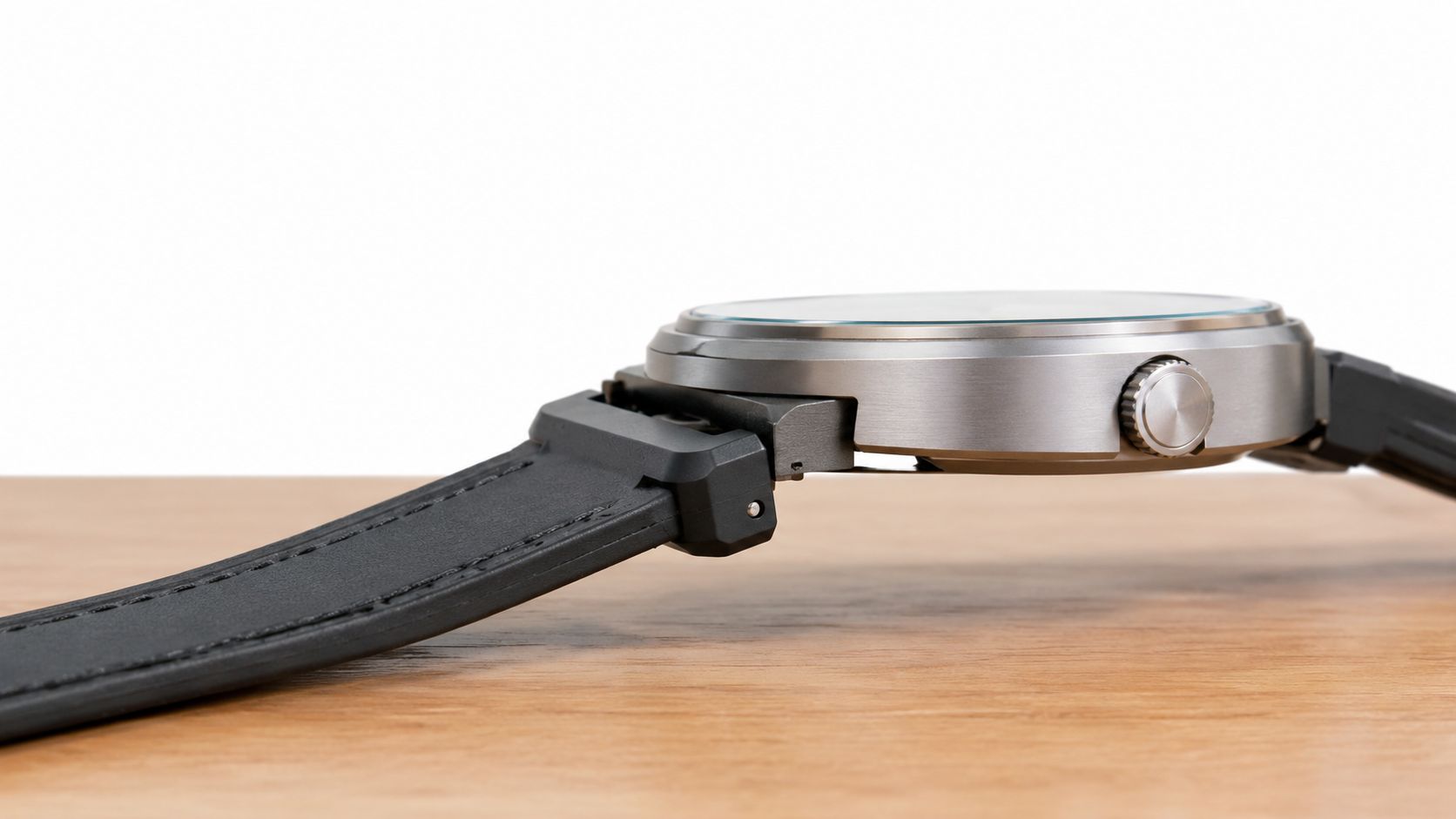
Where the adapter compromise matters most
For office wear, a small mismatch may be tolerable. Running, cycling, gym sessions, and other activities place more importance on secure seating and regular inspection. Contamination, insufficient compression travel, a mismatched lug width, or an incorrect pin diameter can reduce engagement depth and increase the risk of accidental release.
A sensible check is to inspect both ends after fitting, cycle the release lever, and apply a controlled pull before strenuous use. Treat the connection as a mechanical connector, not as a decorative accessory.
A nominally correct width can still be a poor fit if the adapter's shoulders or pin position don't match the case.
We don't sell lug adapters or have adapter swap-cycle data, so there isn't a responsible adapter ranking to give. For most standard-lug watches, buying a direct-fit quick-release band removes the added interface altogether.
How to Install a Quick Release Band Without Tools
Install a tool-free quick-release band by retracting one spring-bar tip, seating the opposite tip, then releasing the lever and checking both ends.
- Place the watch face down on a soft cloth. Keep the band aligned with the correct lug and avoid dragging metal across the case.
- Press the small lever on the underside of the band to retract one spring-bar tip.
- Seat the fixed end in the corresponding lug hole, then guide the retracted end between the lugs.
- Release the lever so the spring-loaded tip extends into the opposite hole.
- Inspect both shoulders. Each end should sit inside its lug recess, with no visible gap or partial engagement.
- Click and tug. Move the lever through its release action, then pull the band gently away from the case. If either end shifts, remove the band and refit it.
Don't wear the band for exercise if you can't see that both ends are seated. A bar that's too short may fail to reach both holes, while an oversized bar can bind and prevent full seating. The same check applies after repeated swaps, because the lever is the moving part most likely to fatigue and soft band lug holes can widen with use.
For ordinary spring-bar bands, a cheap double-ended spring-bar tool remains useful when a band lacks a lever. Use the forked end squarely on the bar and never lever against the watch case. Apple Watch slide-in bands and Garmin QuickFit bands follow their own attachment actions, so don't force them through a spring-bar installation method.
Quick-release watch bands are the straightforward route when your watch has standard lugs. Choose the 20 mm or 22 mm collection after measuring the case, or select a model-specific band when the watch uses Apple, Fitbit, Garmin QuickFit, or Samsung's proprietary fitting. That way you get a direct-fit replacement from Nothing but Bands instead of adding an adapter you may not need.
Artículos relacionados

- October 13, 2026
Learn how to clean rubber watch bands safely and effectively. Simple methods to remove dirt, sweat, and grime without harming...

- October 09, 2026
Learn how to set up smart watch devices from Apple, Samsung, Garmin, and Fitbit. Follow our universal pairing path, configure...
