


What good is a month-long battery claim if your display settings and workouts don't match the maker's assumptions? No single smartwatch has the longest battery life for every wearer, because manufacturers publish endurance figures under different usage conditions. Choose by matching the stated battery mode to your routine, whether that's everyday wear and sleep tracking, long GPS sessions, or solar-assisted use outdoors.
The smartwatch with longest battery life for your needs isn't necessarily the model with the largest advertised number. A hybrid watch can reduce charging interruptions without offering a full touchscreen experience. A solar outdoor watch can extend endurance in strong sunlight, but that advantage may matter little if you work indoors.
Always-on displays, extended GPS recording, and frequent sensor tracking are important drains in manufacturers' battery guidance. Case size matters too, because a larger watch can accommodate a different battery, but extra bulk can make overnight wear less comfortable.
Treat the following picks as options by need, not an endurance ranking. Garmin, COROS, Amazfit, and Withings don't define every usage scenario identically. If connected fitness software also matters, consider these wearable picks for ThriveXDNA app users, then confirm device support and battery conditions with the manufacturer.
Table of Contents
- 1. Is Withings ScanWatch 2 suited to everyday and sleep wear?
- 2. Does Garmin Instinct 3 Solar last indefinitely?
- 3. Is Garmin Forerunner 965 a good choice for a bright display without solar?
- 4. Does Amazfit T-Rex 3 suit rugged AMOLED buyers?
- 5. Is Garmin fēnix 8 Solar suited to feature-rich everyday use?
- 6. Is COROS VERTIX 2S suited to long GPS sessions?
- 7. Is Garmin Enduro 3 suited to expedition-style endurance?
- Maker-stated battery claims and the conditions behind them, as published on each maker's own pages
- What should you check before buying a long-battery watch?
- Frequently Asked Questions
1. Is Withings ScanWatch 2 suited to everyday and sleep wear?
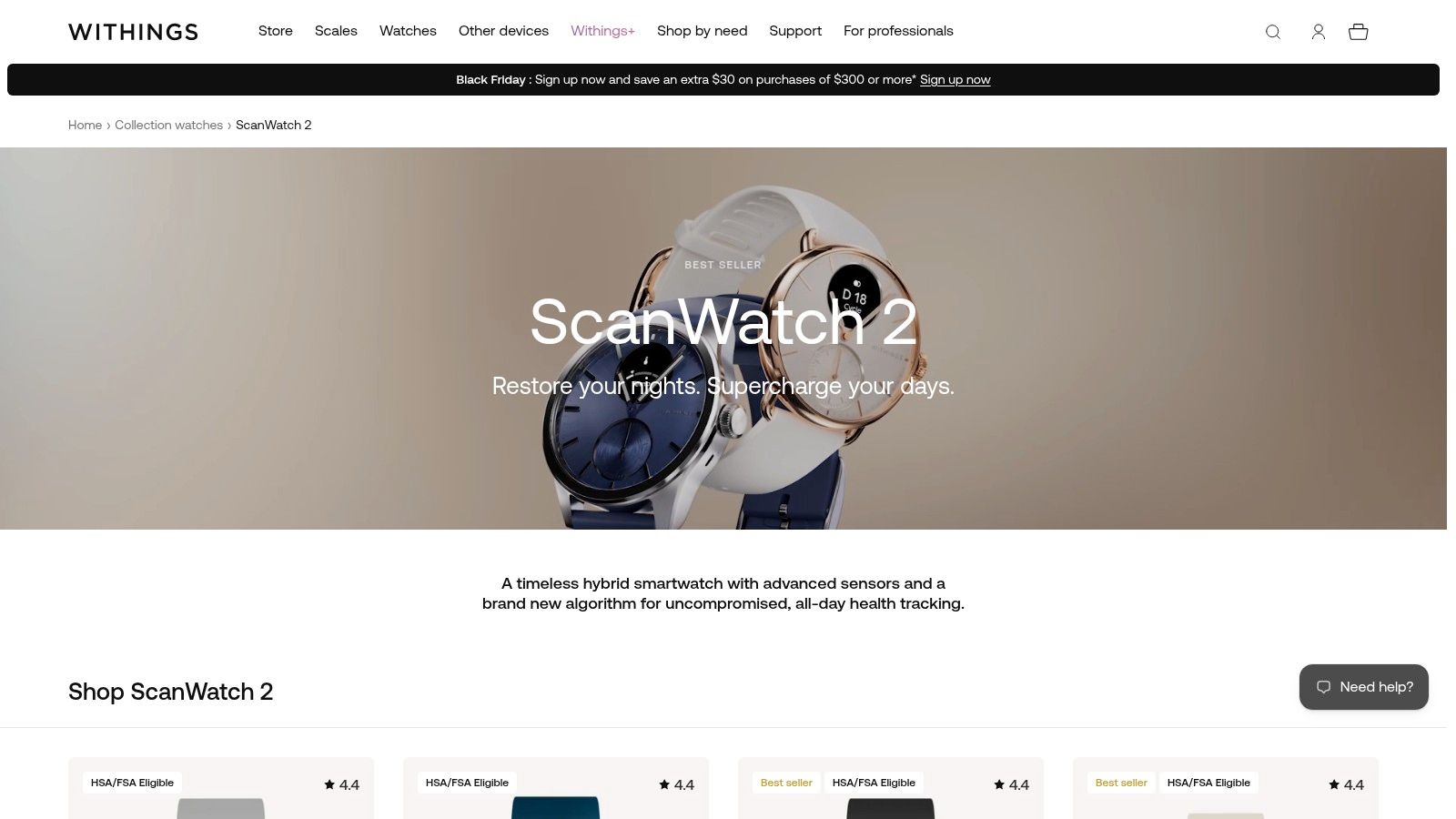
Withings ScanWatch 2 suits everyday and sleep wear when you want fewer charging interruptions and prefer a traditional watch appearance over extensive touchscreen interaction. Its appeal is discretion, not a wrist-sized app interface.
Withings advertises ScanWatch 2 at up to 35 days per charge, alongside a hybrid analog design, compact OLED display, health and sleep tracking, ECG features, iOS and Android compatibility, and a 5 ATM water-resistance rating. Treat the endurance figure as the maker's maximum claim, not a guarantee for every combination of enabled features.
The compact display is a deliberate compromise. It makes sense if you want to check information briefly and return to your day, rather than handle lengthy notifications or interact with detailed maps on your wrist.
Who it suits
Choose ScanWatch 2 if overnight comfort, unobtrusive styling, and a less interactive watch matter more than a large display. Before buying, check which health functions are available for your location and phone, and don't treat ECG or other health features as a substitute for medical advice.
Practical trade-off: A discreet hybrid can be the better battery decision when you don't actually want a full-screen smartwatch.
Band fit by format: ScanWatch 2 comes in two case sizes, and Withings sizes its bands to match: 18 mm for the 38 mm case and 20 mm for the 42 mm case. Confirm your case size and the connector for your exact model, and check the Watch Band Finder at /pages/watch-band-finder before ordering.
2. Does Garmin Instinct 3 Solar last indefinitely?
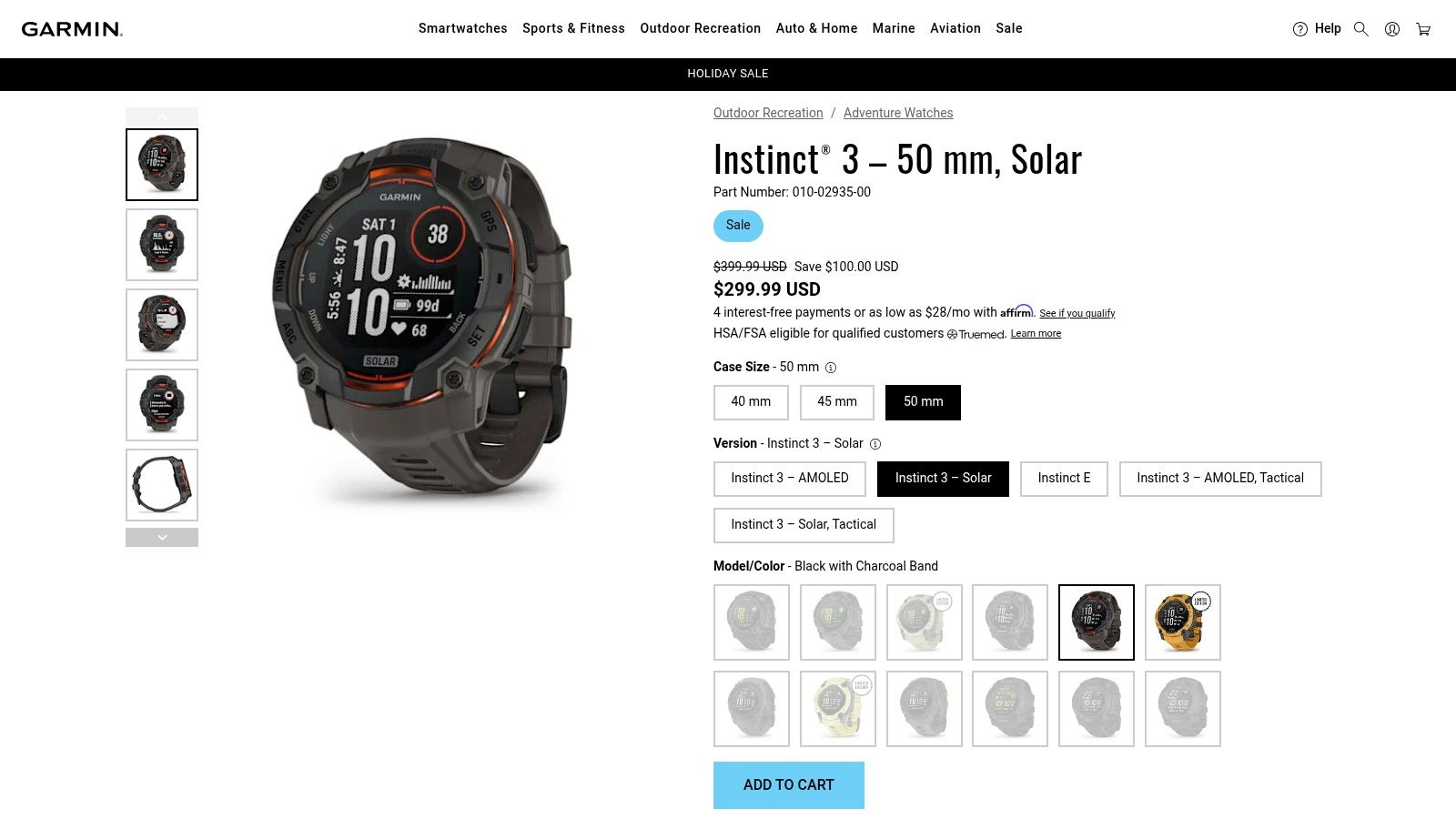
Garmin Instinct 3 Solar doesn't promise indefinite endurance in every environment; Garmin's unlimited claim depends on sufficient solar charging. For the large Solar version, sunlight is a condition of the claim, not an optional bonus you can assume indoors.
Garmin rates the Instinct 3 Solar in its 50 mm size for up to 40 days in smartwatch mode, or unlimited with solar, assuming all-day wear and three hours per day outside in 50,000-lux conditions. That makes the non-solar baseline the more useful starting point for an indoor worker or someone who usually exercises after dark.
Garmin's Instinct 3 Solar product page describes an outdoor-focused package with a monochrome display, multi-band GPS, health and activity tracking, and a built-in flashlight. The screen choice suits buyers who prioritize practical outdoor visibility over a vivid color interface.
Who it suits
Instinct 3 Solar suits people who spend meaningful time outside and want an endurance-focused daily watch. Choose it for the underlying battery strategy first, then treat solar input as help rather than permission to leave the charging cable behind.
The larger case deserves a comfort check. Wearability matters just as much as endurance if you intend to keep the watch on during work, training, and sleep.
Don't buy the unlimited claim unless your daily light exposure resembles Garmin's stated conditions.
Band fit by format: Confirm the Garmin connector format and band width for your exact model and case size on Garmin's page and in the Watch Band Finder at /pages/watch-band-finder. Check whether your version uses QuickFit or standard quick release; matching width alone doesn't establish compatibility.
3. Is Garmin Forerunner 965 a good choice for a bright display without solar?
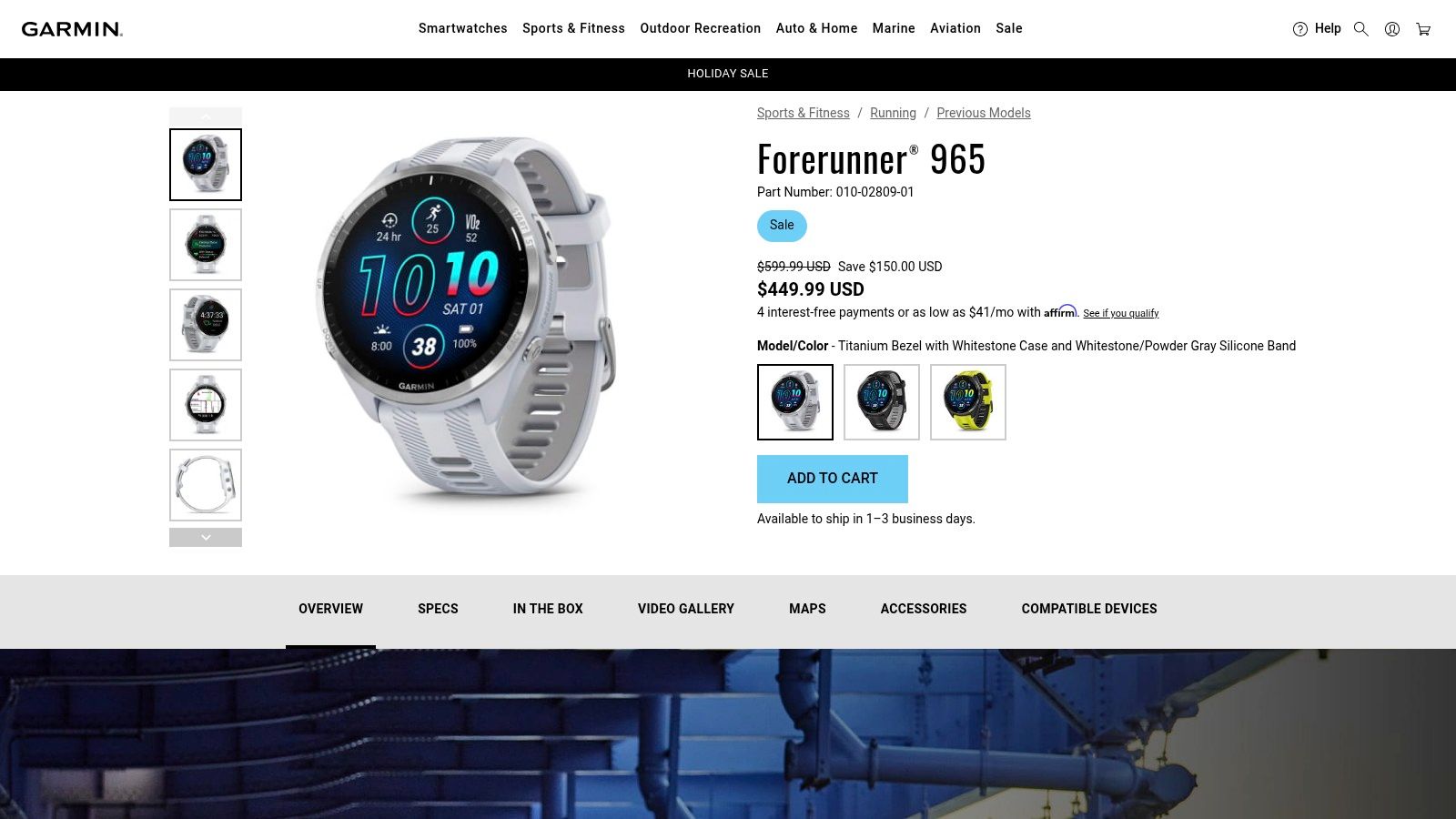
Garmin Forerunner 965 suits buyers who want an AMOLED display and training tools without making solar charging part of their battery plan. The important comparison is its everyday endurance versus its GPS-recording endurance.
Garmin's Forerunner 965 battery information lists up to 23 days in smartwatch mode and up to 31 hours in activity mode with GPS Only and wrist-based heart rate, with shorter figures for multi-band GPS and for music playback. Garmin notes that actual battery life depends on the features enabled. The watch also has an AMOLED display, maps, navigation, training and recovery tools, and Garmin Pay. These are separate operating-mode estimates, not a promise of the smartwatch figure while recording frequent workouts.
Who it suits
Forerunner 965 suits runners and triathletes who want readable color maps and structured training information, but don't need to buy around an expedition-style solar strategy. Garmin doesn't offer a solar version of this model.
Before choosing, decide whether you want the display continuously visible or are comfortable waking it when needed. Then check the corresponding display and battery guidance, rather than assuming the headline smartwatch estimate covers your preferred screen behavior.
- Choose it for: A bright-screen training watch with navigation and recovery information.
- Check carefully: The GPS mode you'll use and the display settings behind the battery estimate.
- Don't assume: A long smartwatch-mode claim means the same interval between charges during heavy training.
Buying judgement: Pick the screen you'll enjoy using, then accept its battery conditions. Don't choose an endurance figure that requires settings you'll immediately change.
Band fit by format: Confirm both connector type and width for Forerunner 965 in the Watch Band Finder at /pages/watch-band-finder. Don't infer fit from another Forerunner model or from the width alone.
4. Does Amazfit T-Rex 3 suit rugged AMOLED buyers?
Amazfit T-Rex 3 suits buyers considering a rugged, color-screen watch who want to assess value without giving up a long advertised charging interval. Compare the actual functions you'll use, not just the number on the battery label.
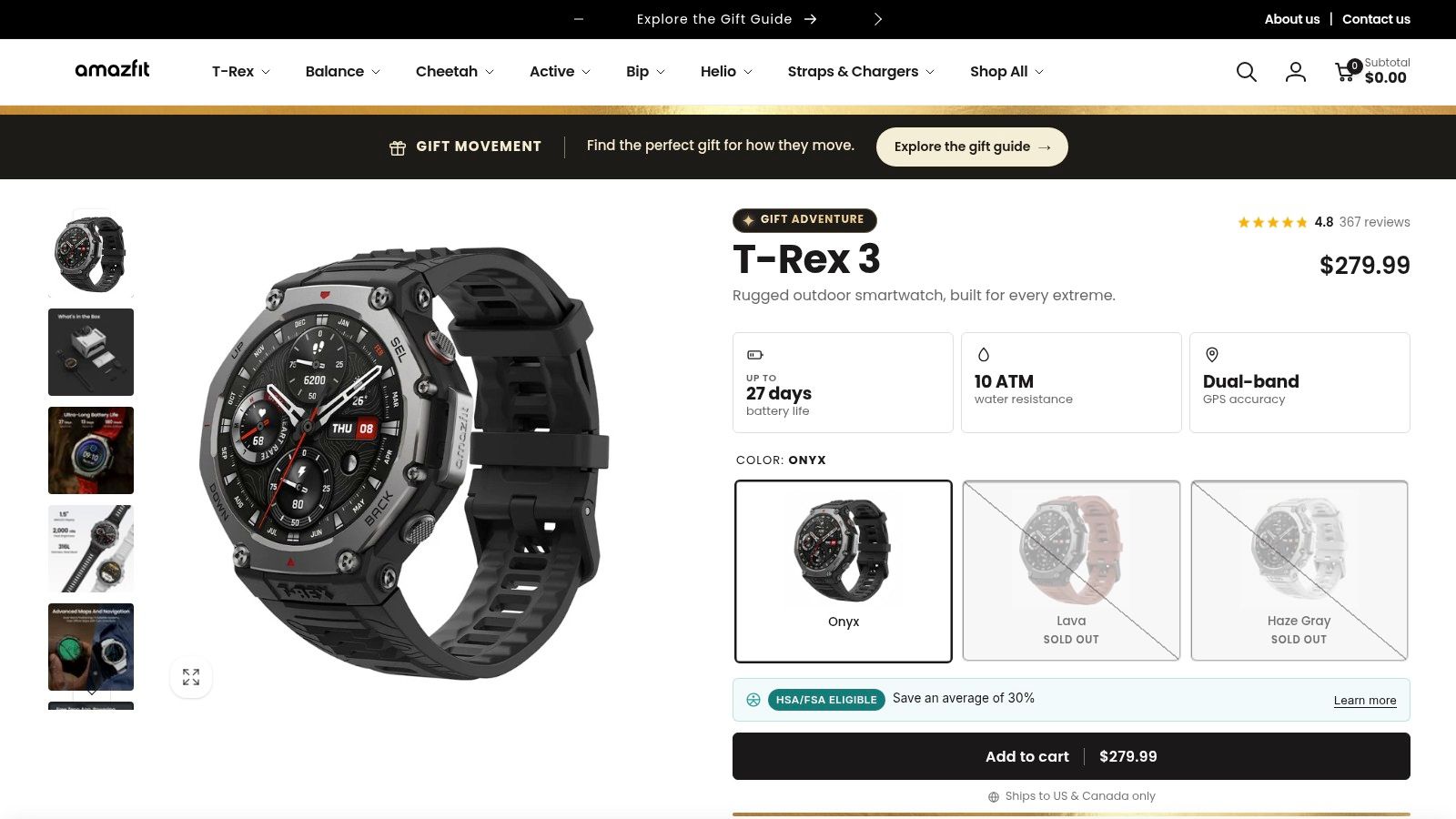
Amazfit claims up to 27 days in typical use for T-Rex 3, and lists an AMOLED display, dual-band GPS, downloadable maps, and extensive sports tracking. Typical use is Amazfit's defined scenario, not continuous GPS recording or unrestricted bright-screen use.
A value-focused purchase still needs a feature check. Confirm that its navigation workflow, phone notifications, and training information suit you before treating the charging interval as the deciding advantage.
Who it suits
T-Rex 3 belongs on the shortlist if you want outdoor styling and a color touchscreen, and you're willing to inspect the maker's typical-use assumptions. Comparing Amazfit with Garmin is mainly an ecosystem decision; keep it separate from the battery claims rather than turning them into an artificial league table.
For prolonged wear, also consider how the case and clasp feel when you bend your wrist or rest your arm on a desk. A watch that feels acceptable during a workout may be less convenient under a sleeve or during sleep.
A long typical-use claim is useful only if you're comfortable with the display, tracking, and notification settings that support it.
Band fit by format: T-Rex fittings vary by generation, so a band width alone doesn't establish fit. Check Amazfit's own strap guidance for T-Rex 3, then confirm band width and connector format in the Watch Band Finder at /pages/watch-band-finder before ordering.
5. Is Garmin fēnix 8 Solar suited to feature-rich everyday use?
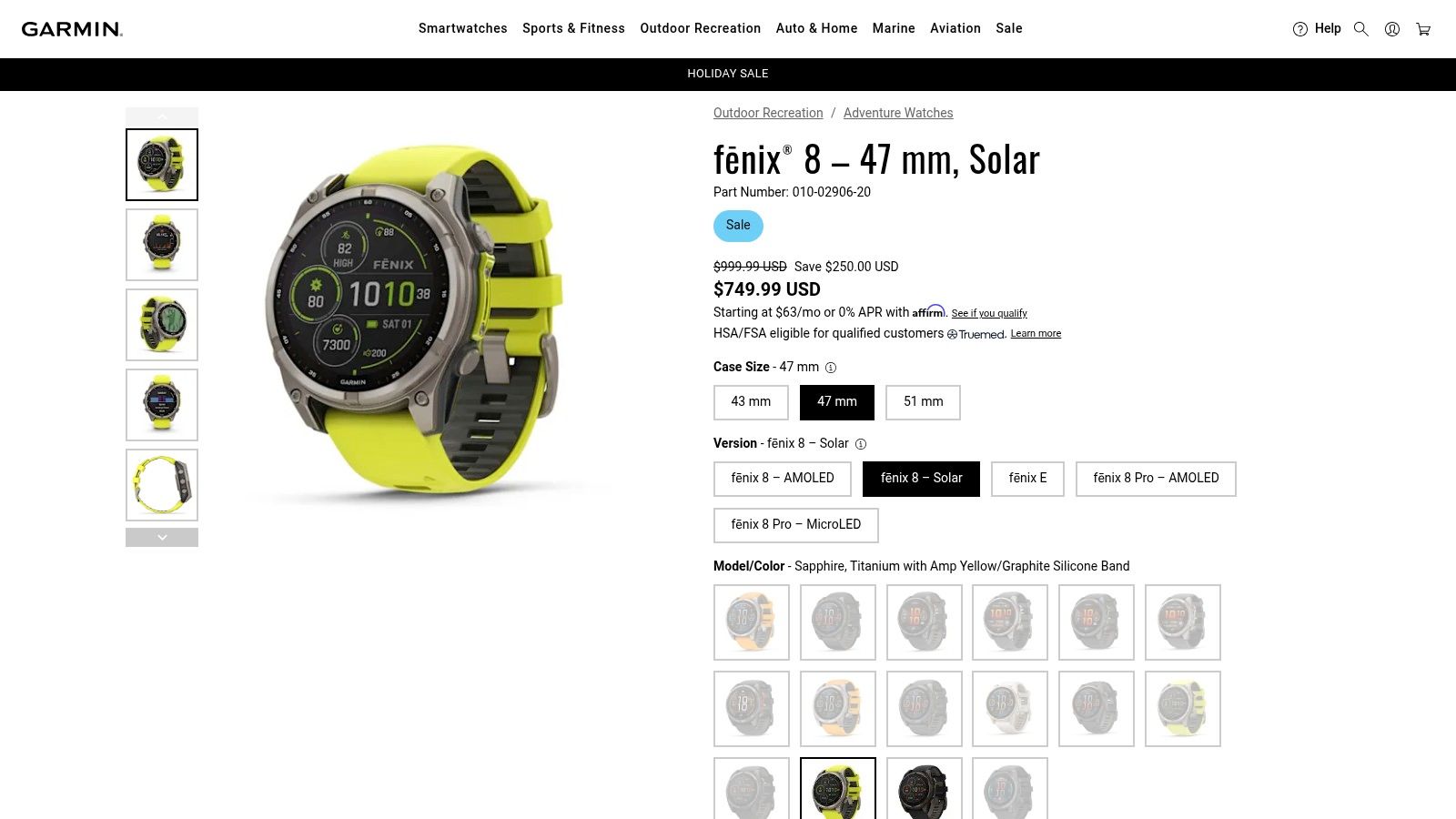
Garmin fēnix 8 Solar suits buyers who want mapping, multisport tools, and everyday functions alongside solar-assisted endurance. Choose the specified case and Solar version deliberately, because a family name alone doesn't identify the battery configuration.
Garmin rates the fēnix 8 Solar in its 51 mm version for up to 30 days in smartwatch mode, or 48 days with solar, with the solar estimate tied to all-day wear and three hours per day outside in 50,000-lux conditions. The fēnix 8 line also offers mapping, multisport training, a flashlight, a speaker and microphone, and dive features.
Who it suits
The fēnix 8 Solar suits someone who wants a broad outdoor feature set rather than a watch chosen primarily to minimize interaction. Justify the purchase through functions you'll use, not through solar endurance alone.
Its large-case configuration is part of the decision. Check that the watch sits securely without needing an overtight strap, particularly if you want overnight tracking as well as daytime navigation.
- Useful distinction: Solar smartwatch endurance and continuous navigation endurance answer different questions.
- Feature discipline: Review which sensors and functions you'll keep active.
- Comfort check: Consider the case and strap together, not as separate purchases.
Feature-versus-endurance trade-off: Paying for more capabilities doesn't mean you should expect maximum battery life while using all of them.
Band fit by format: fēnix case sizes don't all take the same band, so confirm the exact case size, connector, and width rather than ordering by family name. Use the Watch Band Finder at /pages/watch-band-finder to check the specified Solar model before purchase.
6. Is COROS VERTIX 2S suited to long GPS sessions?
COROS VERTIX 2S suits athletes who prioritize GPS-recording endurance and are prepared to choose tracking accuracy settings deliberately. Its separate GPS ratings make that choice more useful than a single days-per-charge headline.
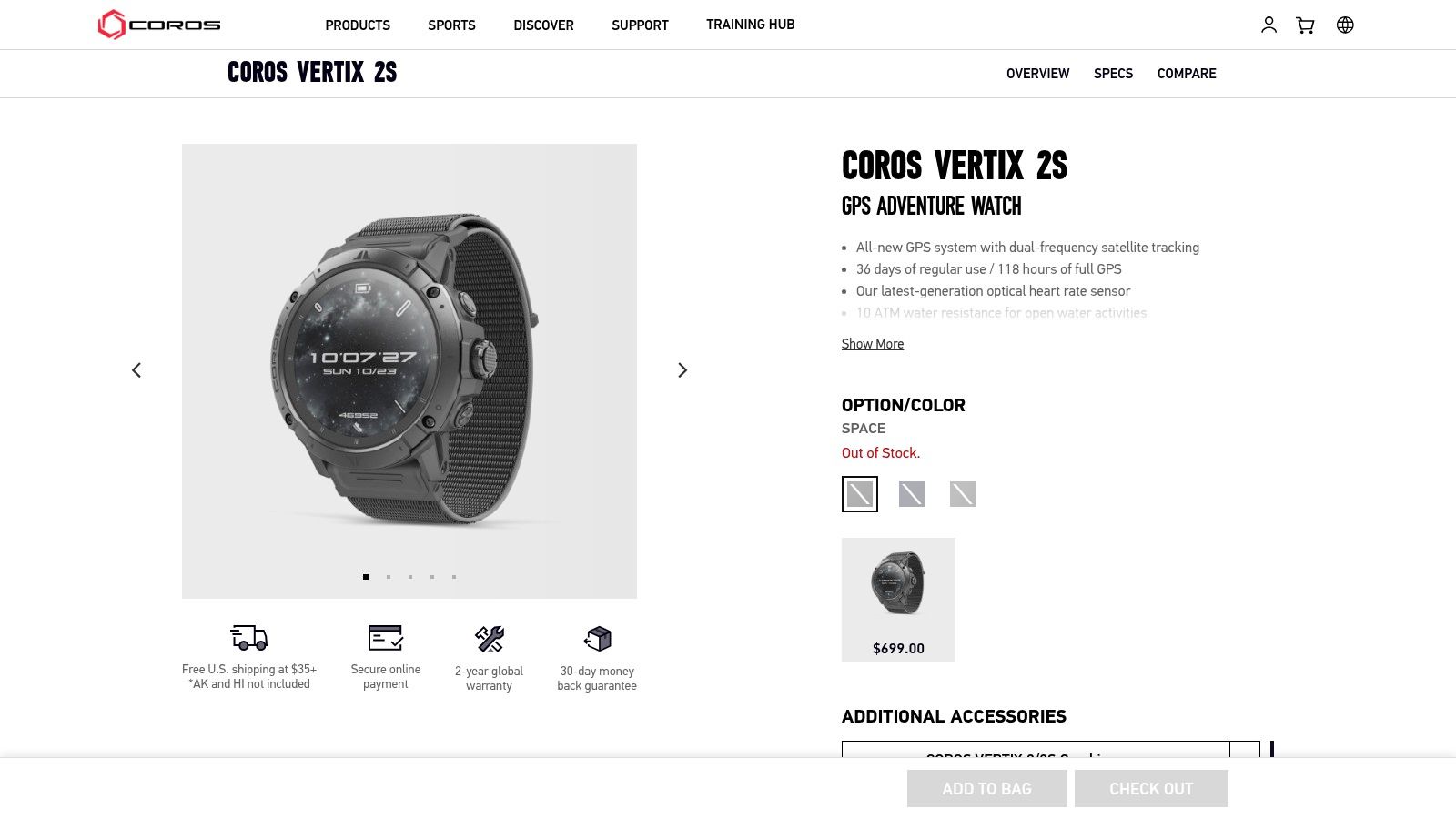
COROS battery specifications rate VERTIX 2S for up to 118 hours in standard GPS, 73 hours with all satellite systems enabled, and 43 hours in dual-frequency mode. Those figures describe different satellite configurations, so choose the configuration first and assess endurance second.
The COROS VERTIX 2S product page positions the watch around outdoor training, route navigation, and premium case materials, and lists 36 days of regular use alongside the 118-hour full-GPS figure. That focus makes sense if recording and reviewing activities matter more to you than a broad general-purpose app experience.
Who it suits
VERTIX 2S suits athletes whose charging concern is a long recorded activity rather than making it through ordinary daily use. Keep the ecosystem choice between COROS and Garmin separate from the battery-mode choice.
For a planned route, consider the tracking mode you need, navigation use, and access to charging. Don't build a trip plan around the standard-GPS estimate if you intend to leave a more demanding mode enabled.
Choose the GPS mode you trust for the route. Then decide whether the matching endurance gives you enough charging flexibility.
Band fit by format: Confirm the VERTIX 2S band width and connector format on COROS's own page, then check the Watch Band Finder at /pages/watch-band-finder. A strap that fits one COROS model isn't a guarantee for every COROS model.
7. Is Garmin Enduro 3 suited to expedition-style endurance?
Garmin Enduro 3 is the pick for buyers who need long GPS recording, mapping, and solar assistance in one endurance-focused watch. It rewards a deliberate tracking plan more than casual wear.
Garmin's battery overview rates Enduro 3 for up to 36 days in smartwatch mode, or 90 days with solar, assuming all-day wear with three hours per day outside in 50,000-lux conditions. Garmin's Enduro 3 announcement adds up to 320 hours in GPS mode with solar charging, a figure that assumes continuous use for the entire period in 50,000-lux conditions. Garmin also builds mapping, navigation, and an UltraFit nylon band into the endurance package.
Who it suits
Enduro 3 suits riders, hikers, and ultra-distance athletes whose longest outing runs past what a general-purpose watch records comfortably. For office wear and short workouts, the specialist hardware adds bulk without much return.
Route planning sets the battery mode, and our guide to how long a watch battery lasts covers the broader ownership side. On the bike, a route planner that shows distance and climbing lets you check both before you decide which GPS mode the ride needs.
Expedition rule: Plan around the non-solar rating for your intended tracking mode. Treat available sunlight as assistance, not a substitute for a charging plan.
Band fit by format: Garmin lists an UltraFit nylon band as stock, but any replacement must match the required width and connector. Confirm Enduro 3 in the Watch Band Finder at /pages/watch-band-finder; a similar-looking nylon strap isn't enough to establish fit. After long sweaty efforts, rinse and fully dry a nylon strap before the next outing.
Maker-stated battery claims and the conditions behind them, as published on each maker's own pages
The same “days” or “hours” label can mean different things across brands, so read each number with the mode, light exposure, and tracking load behind it before choosing between models. The rows are listed in the order above, not ranked: the figures are not comparable across makers.
| Item | Maker's headline battery claim | Conditions the claim assumes | Display | Best for |
|---|---|---|---|---|
| Withings ScanWatch 2 | Up to 35 days per charge | Maker's maximum; varies with the features enabled | Compact OLED with analog-watch design | Health tracking and fewer charging interruptions in a discreet watch |
| Garmin Instinct 3 Solar (50 mm) | Up to 40 days in smartwatch mode; unlimited with solar | Solar figure assumes all-day wear with 3 hours per day outside in 50,000 lux | Monochrome display | Rugged outdoor use and long endurance |
| Garmin Forerunner 965 | Up to 23 days in smartwatch mode; up to 31 hours in GPS Only activity mode | GPS figure with wrist-based heart rate; multi-band GPS and music playback shorten it | 1.4-inch AMOLED | Runners and triathletes who want a vivid display and training tools |
| Amazfit T-Rex 3 | Up to 27 days | Amazfit's typical-use scenario; heavier GPS or screen use shortens it | 1.5-inch AMOLED | Value-focused outdoor and fitness tracking |
| Garmin fēnix 8 Solar (51 mm) | Up to 30 days in smartwatch mode; 48 days with solar | Solar figure assumes all-day wear with 3 hours per day outside in 50,000 lux | Outdoor-readable display | Feature-rich multisport training and outdoor navigation |
| COROS VERTIX 2S | Up to 118 hours standard GPS, 73 hours with all satellite systems on, or 43 hours in dual-frequency mode | COROS lists separate GPS modes; plan around the recording mode you will actually use | See the maker's spec page | Athletes prioritizing long GPS sessions and endurance training |
| Garmin Enduro 3 | Up to 36 days in smartwatch mode or 90 days with solar; up to 320 hours in GPS mode with solar | Smartwatch solar figure assumes 3 hours per day outside in 50,000 lux; GPS solar figure assumes continuous use in 50,000 lux | See the maker's spec page | Ultrarunners, multisport athletes, and outdoor expeditions |
What should you check before buying a long-battery watch?
Before buying ScanWatch 2, Instinct 3 Solar, Forerunner 965, T-Rex 3, fēnix 8 Solar, VERTIX 2S, or Enduro 3, check the battery conditions, exact model configuration, and band fitting together. The right purchase should suit your charging routine and remain comfortable between charges.
- Identify the watch: Confirm the exact model and case size.
- Read the conditions: Separate smartwatch mode, GPS-only operation, solar assumptions, and sleep tracking.
- Match the material: Choose for wet workouts, everyday wear, or overnight use.
- Verify fit: Check connector type and band width as a pair.
- Check attachment: Perform a click-and-tug check before setting off.
- Inspect regularly: Examine buckle holes, keepers, and attachment points.
Which band material suits a multi-day GPS trip?
For Garmin Enduro 3 or COROS VERTIX 2S on a wet multi-day trip, silicone is a practical choice because it doesn't soak up water and can be wiped dry. Wear it slightly looser when appropriate and lift it away from the skin at stops.
Nylon breathes and adjusts finely, but can remain damp after soaking, so pack a dry alternative. Milanese mesh can retain water around the clasp; leave leather at home for prolonged wet use.
Which band suits sleep tracking on Enduro 3 or ScanWatch 2?
A light, finely adjustable nylon loop, stretch weave, or hook-and-loop band can suit sleep tracking on Garmin Enduro 3 or Withings ScanWatch 2, provided the connector fits the exact model. Silicone is also practical, but allow a little more room overnight and rinse and dry it regularly.
Metal links and Milanese add weight, and a bulky clasp can press against your wrist during sleep. Keep a spare suitable band so a damp strap doesn't go straight back on; long battery life shouldn't mean uninterrupted damp-strap wear.
Does width alone confirm Garmin band fit?
No, width alone doesn't confirm Garmin Enduro 3 or another Garmin model's band fit, because QuickFit and standard quick release are different attachment systems. “22 mm” does not automatically mean ordinary 22 mm quick release; Garmin QuickFit 22 is different. Record the watch model, case size, connector type, and band width together in one row before ordering.
Garmin QuickFit is a strong part of our replacement-band business, and it serves long-battery families such as fēnix, Instinct and Enduro. With these watches, the important issue is prolonged wear through training, sleep, sweat and outdoor use, so we recommend keeping two suitable bands so one can dry properly while the other is worn.
Use the Watch Band Finder at /pages/watch-band-finder before ordering.
Nothing but Bands sells replacement bands only, not watches or trackers. When browsing replacement watch bands, confirm fit first, then choose the material that suits how you'll wear the watch between charges.
Frequently Asked Questions
Does changing the band affect smartwatch battery life?
No, swapping the band on Garmin Enduro 3 or another watch in this guide doesn't change its published battery figures. Those figures depend on the manufacturer's conditions for display, GPS, sensors, and other powered functions. A different strap changes wearing comfort, not the watch's electrical consumption.
Is a solar watch worth it if I spend most of the day indoors?
Plan around the non-solar figure. Garmin's solar smartwatch estimates assume all-day wear with three hours per day outside in 50,000-lux conditions, so a mostly indoor routine will usually land closer to the standard rating.
Why is a watch's GPS battery figure so much shorter than its smartwatch figure?
Continuous satellite tracking draws far more power than everyday timekeeping and notifications. Makers therefore publish separate figures for each mode, and multi-band or all-systems GPS settings shorten the recording time further. Check the figure for the exact GPS mode you plan to use.
Nothing but Bands offers replacement straps for everyday wear, workouts, and overnight tracking, so a long charging interval doesn't have to mean wearing the same damp band continuously. Find a suitable material and confirm your watch's exact connector and width before ordering.
Podobne artykuły

- November 19, 2026
Does Galaxy Watch Work with iPhone? Samsung lists which models pair with iOS, which features are limited, and how to...

- November 18, 2026
A practical guide to Fitbit watches for men: match case size, activity, and battery life to your routine, then find...
