


If you're choosing between Garmin and COROS, the question isn't which brand has the flashier spec sheet. It's whether you care more about ecosystem depth, endurance-first simplicity, budget, or how many strap systems you'll need to think about if you switch later. Garmin and COROS can both make sense for serious training, but they solve different problems.
3 Key Takeaways: Garmin vs COROS
Range vs focus: Garmin offers more models and features. COROS is simpler and endurance-first.
COROS leads on battery: The Pace 4 is rated up to 41 hours of GPS vs 19 hours for the Forerunner 165.
Check straps when switching: Garmin QuickFit and Quick Release don't swap, and COROS widths vary by model.
| Decision point | Garmin | COROS |
|---|---|---|
| Training focus | Broad, feature-rich, and flexible across running, multisport, adventure, health, golf, maps, payments, and apps | Narrower and more endurance-first, built around training, sensors, and simple updates |
| Buying logic | Best when you want more choice within a wide range and more connected features | Best when you want a focused watch and usually less complexity |
| Brand position | Long-established benchmark in GPS running watches | Newer challenger with an endurance-led identity |
| Strap implications | Multiple band systems to match exactly by model and mount type | Fewer ecosystem layers, but model-specific sizing still matters |
Table of Contents
- Garmin vs COROS Which Should You Choose
- How Do Garmin and COROS Differ as Brands
- Does GPS and Sensor Accuracy Decide Between Garmin and COROS
- Which Lasts Longer on Battery When Training Gets Serious
- Do You Need Garmin Ecosystem or Is COROS Simplicity Enough
- What Does Switching Between Garmin and COROS Mean for Straps
- How to Decide Between Garmin and COROS for Your Use Case
Garmin vs COROS Which Should You Choose
Garmin and COROS both make sense, but for different buyers. Garmin is the better fit if you want a wider feature set, more app integration, and more room to move within one brand. COROS fits better if you want a tighter training tool and fewer extras to sort through.
The decision usually comes down to four things: what you train for, which apps you already use, how much you want to spend, and how much choice you want inside the brand range.
Practical rule: choose the watch that fits your actual training habits, not the one with the longest feature list.
Runners who want structure, daily training support, and a broader wearable platform usually get more from Garmin. Runners who care mostly about endurance training and a simpler experience usually get more from COROS. Switching brands can also change more than the watch itself, especially if your straps, accessories, or app setup already belong to one system.
That last point is the one we can speak to with any certainty, because a brand change can affect strap fit and band widths as much as it affects features.
How Do Garmin and COROS Differ as Brands
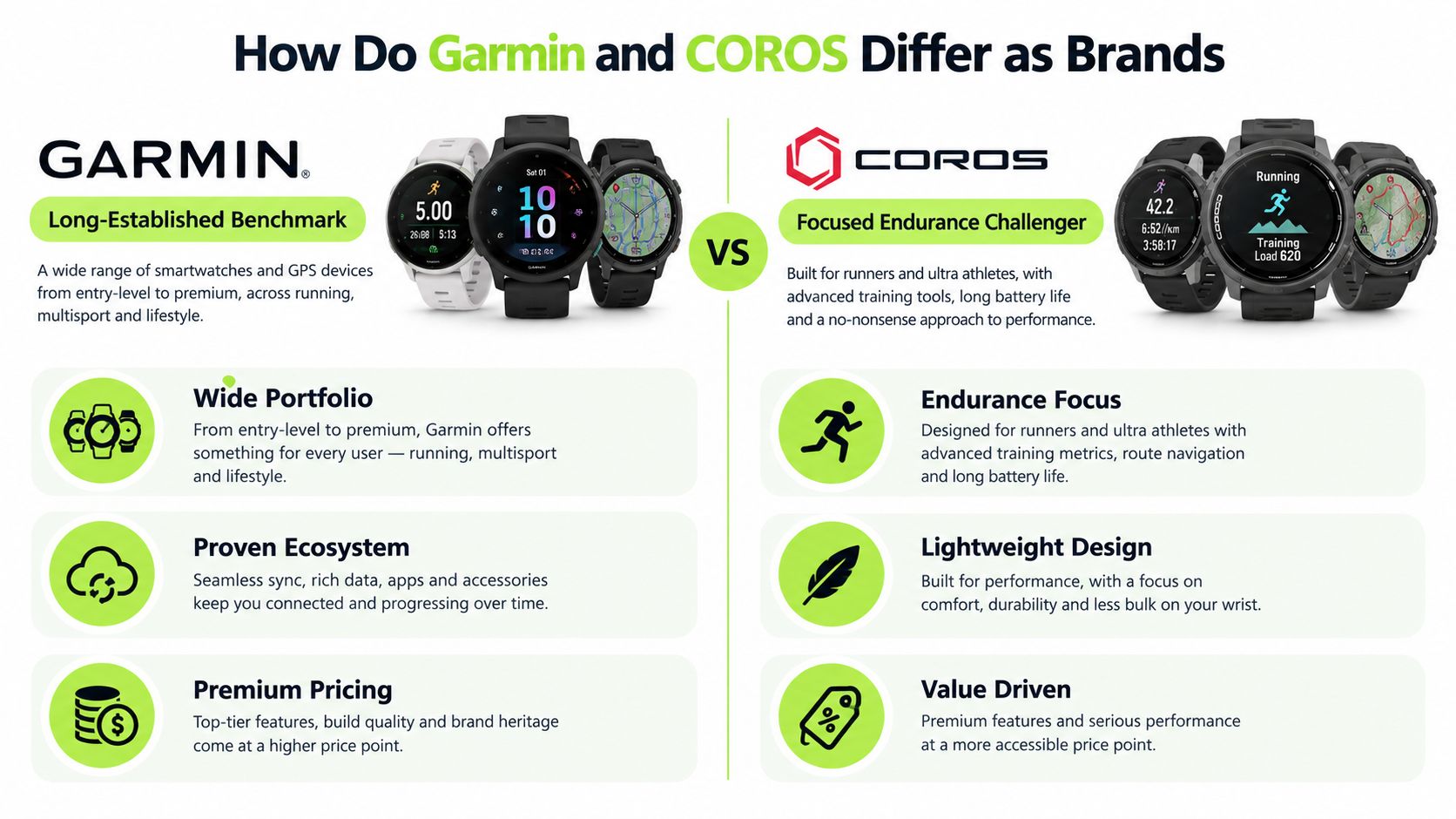
Garmin is the established benchmark, and COROS is the newer endurance-first challenger. That difference shapes how each brand builds, prices, and positions its watches. Garmin still has the larger installed base: one market-research estimate puts Garmin at about 28.5% of global GPS running watch revenue share in 2025, against roughly 5.8% for COROS Dataintelo market estimate.
What Garmin's breadth changes
Garmin's lineup stretches from entry-level Forerunner models up to premium Fenix and Enduro watches, which gives buyers room to step up or sideways without leaving the ecosystem Dataintelo market estimate. One comparison sums that breadth up as Garmin packing in every feature imaginable, from music and payments to maps, training plans and sleep coaching Runners Picks comparison. Check the price and feature list on Garmin's own product page for the model you are weighing, because both move with the model.
That breadth is useful if you want a watch that can do more than training. It also creates more choice than some buyers want. If you only want a watch for structured sessions and recovery tracking, Garmin can feel like a platform with extra layers.
What COROS's focus changes
COROS entered the market later, with the original PACE in June 2018 and the first APEX later that same year model history. That newer start still shows in the lineup. COROS stays centered on endurance watches, training metrics and a clean interface rather than a broad smartwatch range Runners Picks comparison.
COROS makes the decision simpler. Garmin makes the range broader.
For buyers, that is the brand split. Choose Garmin if you want more models, more adjacent features, and more room to grow inside one system. Choose COROS if you want a tighter training-led lineup with less to sort through. Switching brands also changes practical details, especially straps, accessory compatibility, and watch width, so the move is not just about software or features.
Does GPS and Sensor Accuracy Decide Between Garmin and COROS
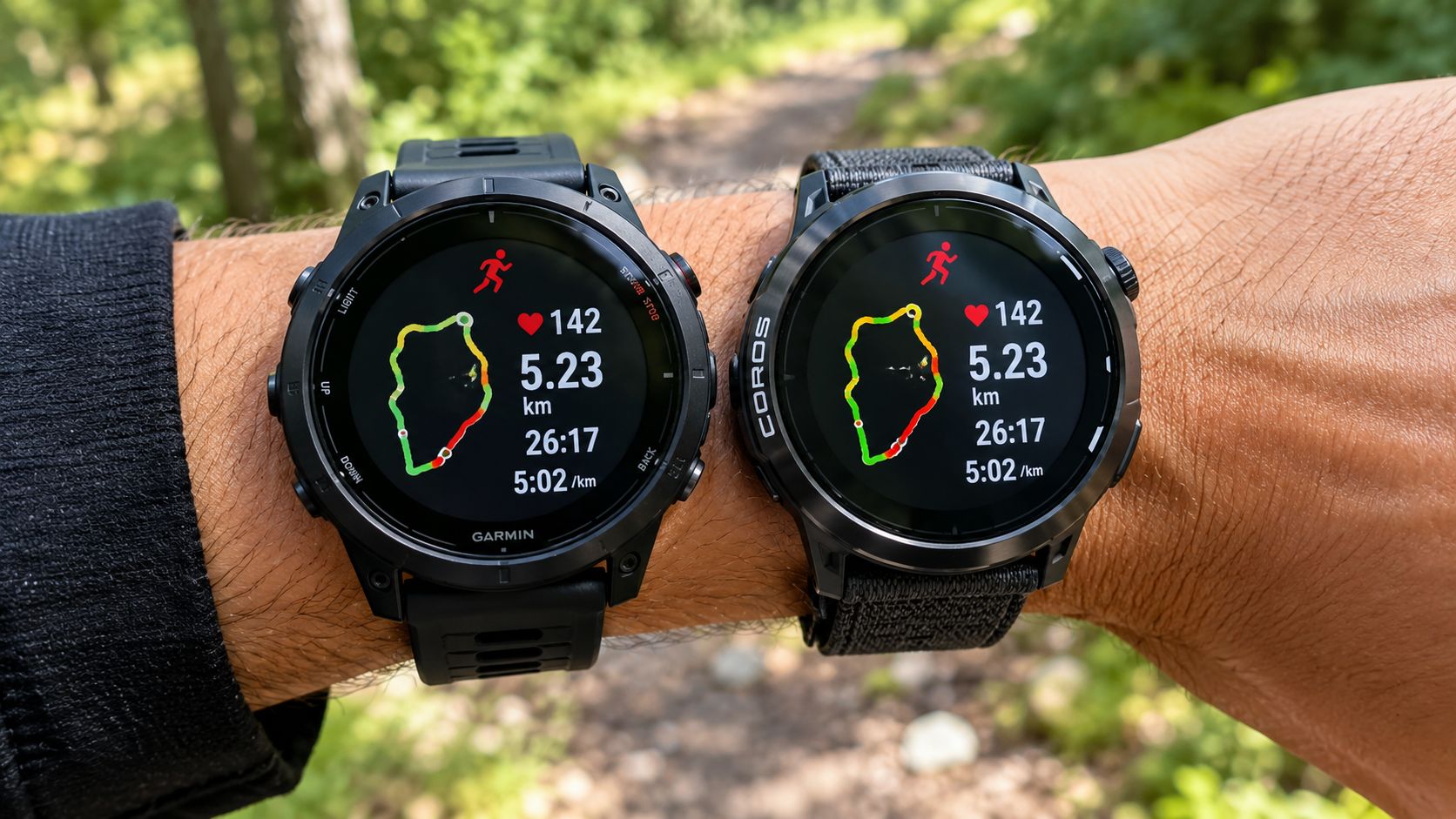
GPS and sensor accuracy rarely settles the Garmin vs COROS choice, because it is a model-level question rather than a brand-level one. Satellite systems, sensor hardware and accuracy notes differ between a mid-range running watch and a flagship multisport model inside the same brand, so the comparison that counts is between the two specific watches you are weighing.
Where to check accuracy claims
We sell replacement straps, not watches, and we have not tested either brand's hardware, so we do not publish an accuracy verdict. Garmin and COROS each list the satellite systems and sensors their watches use on their own product pages. Read the page for the exact model rather than taking a brand-wide claim, and treat any number you find elsewhere as second-hand until you have seen it on the maker's spec sheet.
That shifts the buying logic. If both watches on your shortlist already cover road runs, trail work, and mixed training, the deciding factor becomes the interface, software stack, and training tools you want to use every day.
What that means in practice
For runners, cyclists, and hikers, both brands sit in the mainstream training-watch category. Check the maker's own product page for any numeric claims on the model you are considering, then choose based on the rest of the experience.
Garmin suits buyers who want a deeper performance dashboard and more connected features around the watch. COROS suits buyers who want a simpler training tool and prefer that focus. Accuracy figures alone rarely separate the two, because they belong to models, not brands.
Switching brands also changes the practical details. Strap systems and widths can differ, so this is not just a software decision. If you move from one brand to the other, check compatibility before you buy.
Which Lasts Longer on Battery When Training Gets Serious
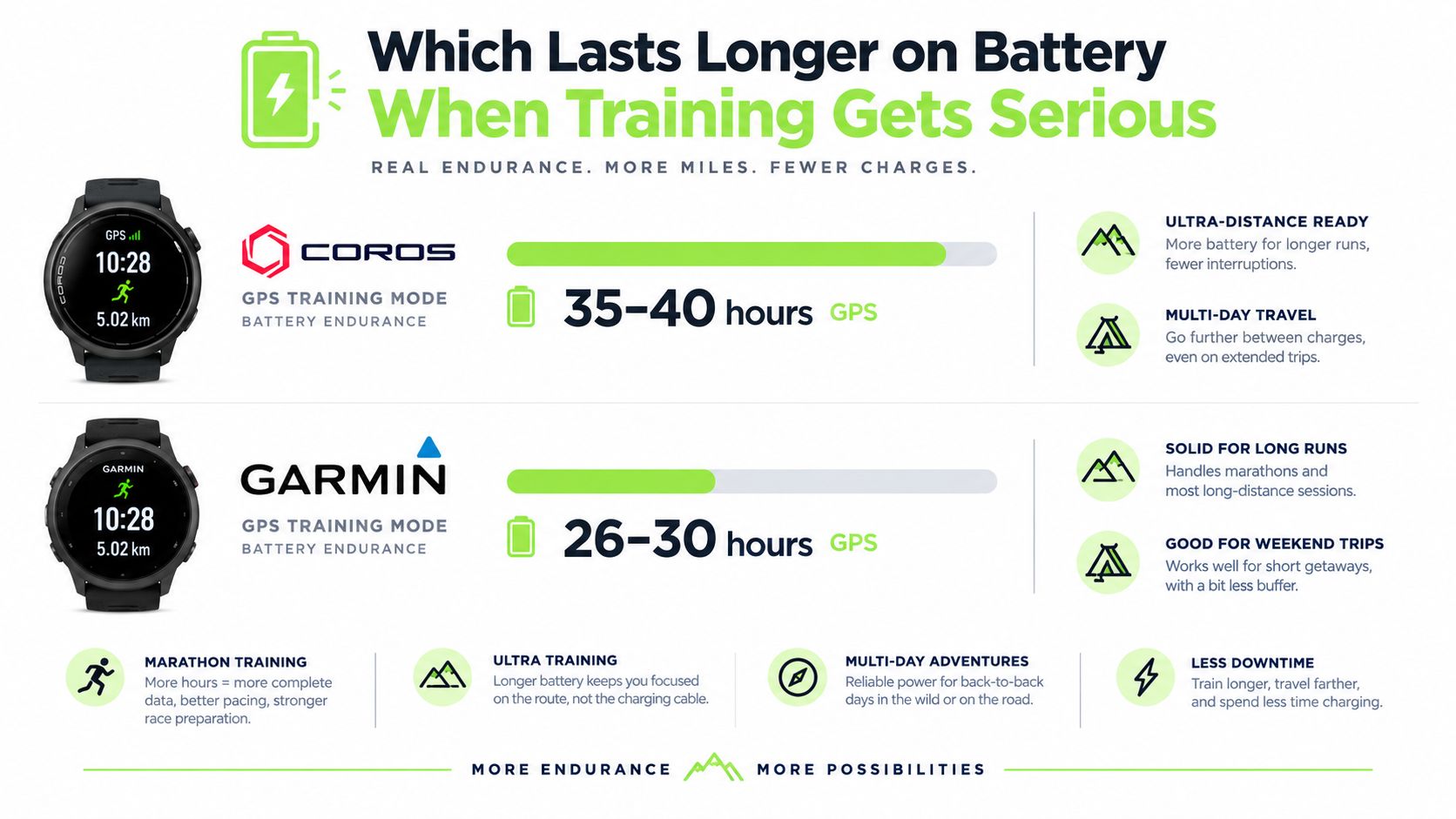
Battery life is one of the few places you can compare like for like, as long as you take the figures from each maker rather than from a review. COROS rates the PACE 4 at up to 19 days of daily use and up to 41 hours of continuous GPS tracking in All-Systems mode. Garmin rates the Forerunner 165 at up to 11 days in smartwatch mode and up to 19 hours in GPS mode. Both makers note that real runtime depends on which features you leave switched on.
Why battery still matters more than raw spec lists
Those two watches are one pairing out of many, and each brand's range spans much longer and much shorter rated runtimes. What the comparison shows is the shape of the decision: how often you want to charge, and how calmly you head into a race, a long trail day, or a multi-day trip.
Practical rule: if charging is the part you dread, compare the rated figures on each maker's own spec page for the exact models on your shortlist.
For a broader battery context across wearables, the SoccerWares 2026 battery guide is useful because it shows how much runtime can shift once GPS is involved. Garmin buyers should still check the maker's own spec page, because Garmin's range is wide and battery behavior changes by model.
Why the battery gap isn't the whole story
COROS also keeps adding features through software updates without giving up its endurance focus, and Garmin keeps widening what its watches do beyond training. Rated battery life is an input into the decision, not the decision itself.
The better question is how much battery you need once the watch does more than basic tracking. If you want maps, richer navigation, or more training intelligence, Garmin may still justify the extra charging trade-off. If you want the longest practical runtime with a cleaner setup, the longer-rated COROS models are the easier pick.
Do You Need Garmin Ecosystem or Is COROS Simplicity Enough
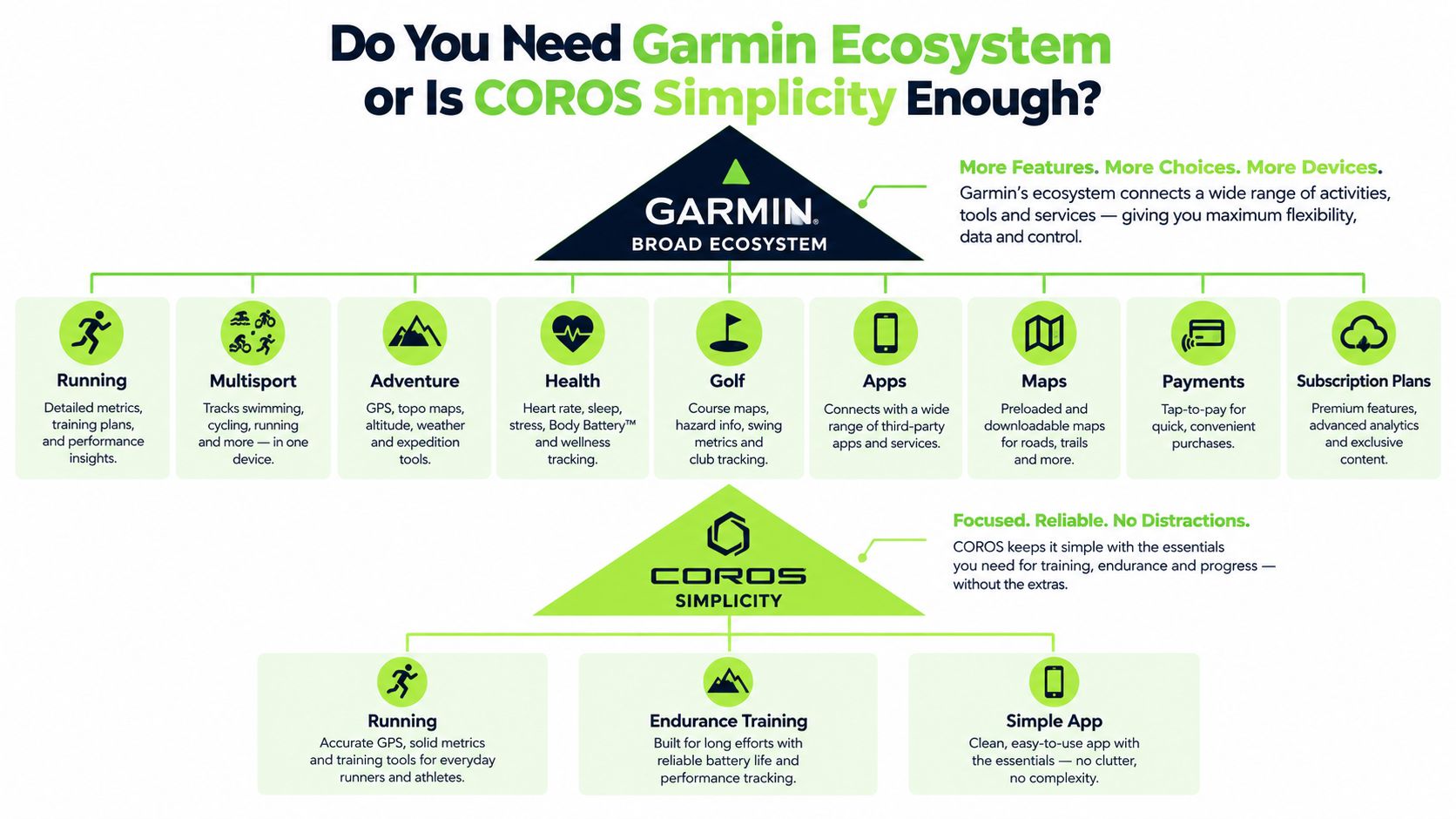
Garmin is the stronger fit if you want your watch to do more than track workouts. One comparison describes Garmin as the brand that packs in every feature imaginable, from music and payments to maps and training plans, while COROS is framed as the focused challenger built around GPS accuracy, battery life, training metrics and a clean interface Runners Picks comparison.
What Garmin's ecosystem is really for
Choose Garmin if you want one watch to handle training, daily wear, and connected services in the same device. Maps, payments, music, apps, and training dashboards are the reason to buy Garmin, not extras bolted on afterward. That broader feature set also comes with a wider price spread, which makes the trade-off obvious at the shelf.
What COROS simplicity is really for
Choose COROS if you want fewer moving parts. The brand's watches stay centered on running, endurance training and sensors rather than acting like a full smartwatch platform. That narrower approach suits buyers who want a clean training tool and nothing more.
Bottom line: Garmin suits buyers who want the watch to do more. COROS suits buyers who want the watch to stay out of the way.
One practical issue sits outside the spec sheet, strap fit. If you switch brands, the strap system and width can change with it, so the watch choice can affect what replacements you can use. That matters most if you care about specific strap types or plan to move bands between watches.
What Does Switching Between Garmin and COROS Mean for Straps
Switching between Garmin and COROS changes more than the watch face. It can also change the strap system, so match the mount type and width exactly: QuickFit 20, 22, or 26mm, quick release, or the width COROS lists for your own model. That is the practical rule, and it is the one that keeps you from buying a strap that will not fit.
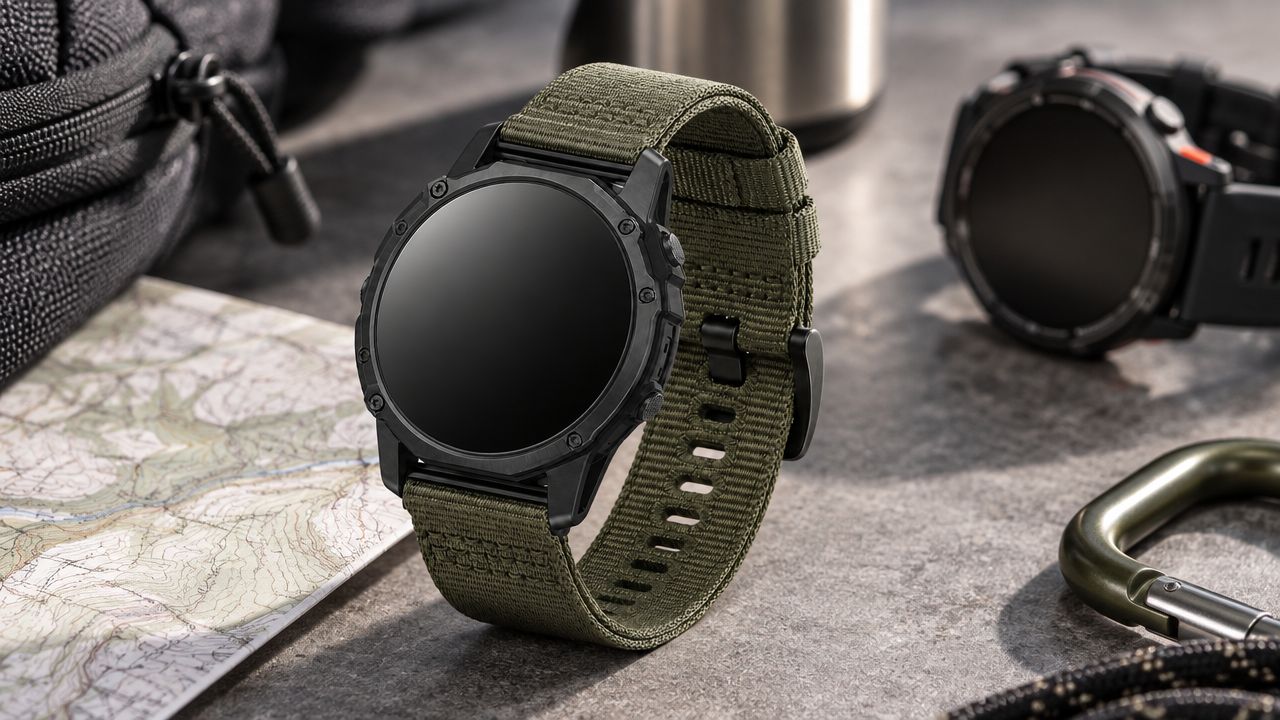
The compatibility rule that matters
Garmin says QuickFit and Quick Release bands are not interchangeable, and Garmin QuickFit bands come in 20mm, 22mm, or 26mm sizes Garmin support. COROS uses model-by-model sizing, so the correct width depends on the watch itself, not just the brand. The company's own COROS band compatibility page is the right reference for that.
Check the model first.
Our replacement straps are third-party options, not official or OEM, so fit still comes down to the watch's mount and width. If you want to shop by system, start with Garmin Watch Bands, COROS Watch Bands, or quick-release watch bands for watches that use that format.
A quick sizing view
| Strap system | Widths | Compatibility rule |
|---|---|---|
| Garmin QuickFit | Our QuickFit bands come in 20mm, 22mm and 26mm | Match the exact QuickFit size and do not treat it like quick release |
| Quick release (our range) | Mainly 20mm and 22mm | Fit depends on the watch's lug spacing and attachment format |
| COROS | Model-specific — COROS lists its own 22mm Nylon Band as a 22mm quick-release band for the PACE 4 | Check the width COROS lists for your exact model before buying |
If you want a Garmin example from our catalog, Teral Nylon Loop, Garmin QuickFit 22 is a straightforward QuickFit 22 replacement strap with a nylon loop build. The point is simple. Garmin buyers need to verify the exact mount and width, and COROS buyers need to do the same against their own model's listing.
For more COROS sizing context, this COROS band size guide is useful when you are checking a specific watch before buying.
How to Decide Between Garmin and COROS for Your Use Case
Choose Garmin if you want a wider ecosystem, more feature depth, and more choice within the brand. Choose COROS if you want a leaner endurance watch, a longer rated runtime on the models that advertise it, and a training-first setup with less clutter. That is the cleanest way to read garmin vs coros without getting lost in spec-sheet noise.
Runners usually fit Garmin when they want training data and everyday smartwatch convenience in one device. Cyclists and triathletes often fit Garmin too, especially if they use maps, payments, or connected features beyond workouts. Ultrarunners and anyone who wants fewer charges usually fit COROS better.
Hikers should be honest about how much navigation they use. If maps, route handling, and a broader wearable stack matter, Garmin is easier to justify. If reliable tracking and long runtime matter more, COROS stays the simpler pick.
We sell replacement straps, not watches. We do not stock Garmin or COROS watches and we have not tested either brand's hardware, so this page is here to frame the decision rather than pick a winner for you. If you are only shopping straps, go back to the fit rules, match the mount type and width, and keep the choice simple.
Nothing but Bands offers replacement straps for smartwatch owners who want a better fit, a cleaner look, or a more comfortable daily carry. If you are choosing between Garmin and COROS, strap compatibility is where the details matter most, so browse Nothing but Bands and match your watch model to the correct width and attachment system before you buy.
Gerelateerde artikelen

- October 06, 2026
Clear installation instructions for smartwatch bands. Learn how to attach, verify, and troubleshoot Apple, Samsung, Garmin, and Fitbit straps safely.

- October 05, 2026
A practical guide to changing watch bands across Apple, Garmin, Samsung, and Fitbit, covering tools, fitment, daily rotation, and common...

- October 02, 2026
Everything to know about the Coros Pace 4 nylon band including sizing, quick-release installation, cleaning tips, and compatible third-party options.


