


That familiar, unscratchable itch almost always starts the same way. You finish a workout, glance down at your Apple Watch, and notice a faint, red outline exactly where your strap sits. By evening, the skin is inflamed. By the next day, you are constantly loosening the watch, washing your wrist, and wondering if you have to give up tracking your health altogether.
Key Takeaways: Apple Watch Straps for Sensitive Skin
- Identify Your True Trigger: Not all irritation is the same. Determine whether your skin is reacting to an actual metal allergy (often triggered by the nickel in standard clasps) or simple contact dermatitis (caused by trapped sweat, soap residue, and friction).
- Material is Medicine: Ditch standard, non-breathable silicone. The best Apple Watch Straps for sensitive skin utilize ultra-breathable woven nylon, premium FKM (Fluoroelastomer), or nickel-free hardware to eliminate allergens and heat buildup.
- Hygiene and Fit: Even the best hypoallergenic strap will cause a rash if worn incorrectly. Wash both your wrist and the strap regularly to remove trapped salt and oils, and wear the watch slightly loose to allow the skin to breathe.
You aren't imagining it, and you aren't alone: up to 35% of smartwatch wearers experience some form of skin irritation. The problem is rarely the watch sensors; the culprit is almost always trapped moisture, harsh friction, or an allergic reaction to standard strap materials. If you are looking for the right Apple Watch Straps for your wrist, choosing something "soft" isn't enough. You need a strap engineered to eliminate your specific trigger, whether that means avoiding nickel-based hardware, maximizing airflow to prevent sweat rashes, or upgrading to a material that doesn't cause friction burns.
This guide cuts straight to the solutions. Instead of a generic list, we match the right options to the exact problems they solve. From premium, hypoallergenic rubbers that repel soap residue to ultra-breathable nylons that eliminate heat buildup, these upgrades will help you finally wear your device 24/7 in total comfort. Want the reasoning behind why your skin reacts in the first place before jumping to picks? Our hypoallergenic Apple Watch strap guide breaks down the dermatology and helps you diagnose your specific trigger.
How I Picked These Apple Watch Straps for Sensitive Skin
I evaluated every strap on this list against six criteria that determine whether a strap will irritate reactive skin over a full week of wear. First, skin contact material: I prioritized straps made from inert ceramics, medical-grade fluoroelastomers, or open-weave nylons, while disqualifying any option relying on cheap, unventilated TPU that traps heat. Second, hardware exposure: I checked exactly how much metal touches the underside of the wrist. A strap with a stainless steel pin pressing directly into the volar surface was penalized heavily, because even trace nickel can trigger a flare-up. Third, adjustability: wrists swell during workouts and shrink overnight. Straps offering micro-adjustments—like hook-and-loop closures or stretch braids—scored higher than fixed-hole straps that force you into one tension setting.
Fourth, sweat handling: I looked at whether the material wicks moisture away or acts as a dam. A breathable weave passes; a solid slab of rubber that leaves a damp imprint fails. Fifth, cleaning ease: if a strap requires special solvents or takes days to dry after a rinse, it becomes a bacterial breeding ground. I favored materials you can wash with mild soap and water in under a minute. Finally, workout suitability: a strap might feel great at a desk but slide around dangerously during a run, creating friction burns. Any option that couldn't stay secure without being cranked painfully tight was disqualified. What would immediately disqualify a strap? Visible seams rubbing the skin, exposed metal clasps on the underside, or materials known to off-gas volatile compounds when heated by body temperature.
Table of Contents
- Key Takeaways: Apple Watch Straps for Sensitive Skin
- How I Picked These Apple Watch Straps for Sensitive Skin
- 1. Apple Sport Loop
- 2. Arden Nylon Loop
- 3. Apple Solo Loop
- 4. Apple Braided Solo Loop
- 5. Nomad Sport Strap
- 6. Braxley Straps
- 7. Anhem Ceramic Apple Watch Strap – Classic Strap
- 7 Apple Watch Straps: Sensitive-Skin Comparison
- Choosing Your Comfort Final Tips for a Rash-Free Wrist
- 🛍️ Shop This: Gentle Apple Watch Straps for Sensitive Skin
- Frequently Asked Questions
1. Apple Sport Loop
Apple's own Sport Loop is a single continuous strap of woven nylon, with a hook-and-loop fastener that runs the length of the strap rather than sitting in one buckle or pin. That matters for sensitive skin because there's no single hardware point pressing into the wrist, the kind of localized pressure spot that's often the first thing to flare up.
Best for fine-tuning fit all day
Because the closure runs the full length of the strap, you can loosen or tighten it in small increments as your wrist changes through the day, without waiting until you're home to swap holes. That makes it a strong pick if your irritation tends to build gradually rather than appear all at once.
The trade-off is the same one every woven material carries: nylon holds onto sweat and skin oils more than a smooth rubber does. If your trigger is heat and moisture rather than metal contact, plan on washing it regularly to keep it comfortable.
What it does well
- Micro-adjusts constantly: No fixed holes, so you can respond to swelling or heat in real time.
- No concentrated pressure point: The closure spreads hold across the strap instead of one buckle position.
- Official Apple fit and finish: No third-party sizing guesswork.
What to watch
- Needs regular washing: Woven nylon absorbs sweat and oils.
- Casual look: A stronger comfort pick than a dressy one.
2. Arden Nylon Loop

Your wrist feels fine when you put the watch on. By midafternoon, the strap feels damp, slightly tight, and the skin underneath starts to itch. That pattern usually points to fit drift and trapped moisture more than a true allergy, and the Arden Nylon Loop is one of the better options for that specific problem.
The reason is simple. It combines a soft woven nylon contact surface with hook-and-loop adjustment, so you can make small fit changes as your wrist expands through heat, workouts, or long desk sessions. Apple also notes in its guidance on wearing Apple Watch that straps worn too tight can irritate skin, while straps worn too loose can cause rubbing. This style addresses both sides of that problem better than fixed-hole straps.
Woven nylon works differently against reactive skin than standard silicone or fluoroelastomer. Solid elastomers create a vapor barrier; sweat pools underneath, macerating the stratum corneum and triggering irritant contact dermatitis. Nylon’s crosshatched threads leave microscopic gaps that allow continuous evaporation, keeping the skin drier. It also lacks the tacky surface tension of rubber, meaning it won’t drag or pull when your arm gets damp—a major source of friction blisters during summer runs. Compared to ceramic, which offers zero absorption but can feel heavy and cold, nylon provides a lightweight middle ground that conforms to wrist anatomy without rigid edges. The maintenance tradeoff is real, though. While you can wipe down an FKM strap in seconds, nylon requires actual laundering to remove dead skin cells and salts trapped in the weave. If you skip this, the fabric itself becomes the irritant. For deeper context on managing fit and preventing mechanical irritation, the American Academy of Dermatology recommends keeping wearable devices snug but not tight, allowing the skin to breathe and reducing friction-induced flares.
Best for sweat-related irritation on a budget
I usually point people toward this style when they are not sure whether their issue is material sensitivity or pressure management. In my own testing rotation, the Arden loop was the only strap I could wear through a humid afternoon commute without feeling the urge to rip the watch off the moment I sat down. If the irritation improves as soon as you loosen the strap a few millimeters, that is a strong sign the strap needs more precise adjustment, not just a different material.
For sensitive skin, that distinction matters. A metal allergy calls for minimizing metal contact. A sweat rash calls for airflow and easier tension control. The Arden Nylon Loop fits the second category especially well because the main skin contact area is fabric, and the closure makes it easy to reset the fit before irritation builds.
There are trade-offs. Nylon can hold sweat and skin oil, so this strap needs regular washing if you wear it for workouts or in hot weather. It also looks more casual than a smoother fluoroelastomer or leather-style strap. If you want to compare similar woven options before deciding, this guide to a fabric Apple Watch strap for sensitive skin is a useful next read.
What it does well
- Micro-adjusts quickly: Easy to loosen or tighten during the day without committing to fixed holes.
- Reduces pressure points: The closure spreads hold across the strap instead of relying on one buckle position.
- Works well for sweat-related irritation: The woven surface usually feels less sticky on damp skin than solid sport materials.
What to watch
- Needs cleaning: Fabric straps stay comfortable only if you rinse or wash them regularly.
- Less ideal for confirmed metal allergy testing: It lowers hard contact points, but it is still not the clearest diagnostic choice if you are trying to eliminate every possible irritant.
- Casual look: Strong comfort pick, weaker choice for dressier settings.
3. Apple Solo Loop
A common sensitive-skin complaint sounds like this: the wrist stays calm until the buckle area starts itching, then the whole strap becomes hard to tolerate by the end of the day. The Apple Solo Loop is built for that kind of problem because there is no clasp, pin, or overlapping tail pressing into one spot. It's a one-piece liquid silicone rubber strap, smooth, easy to rinse, and with no edges to fiddle with.
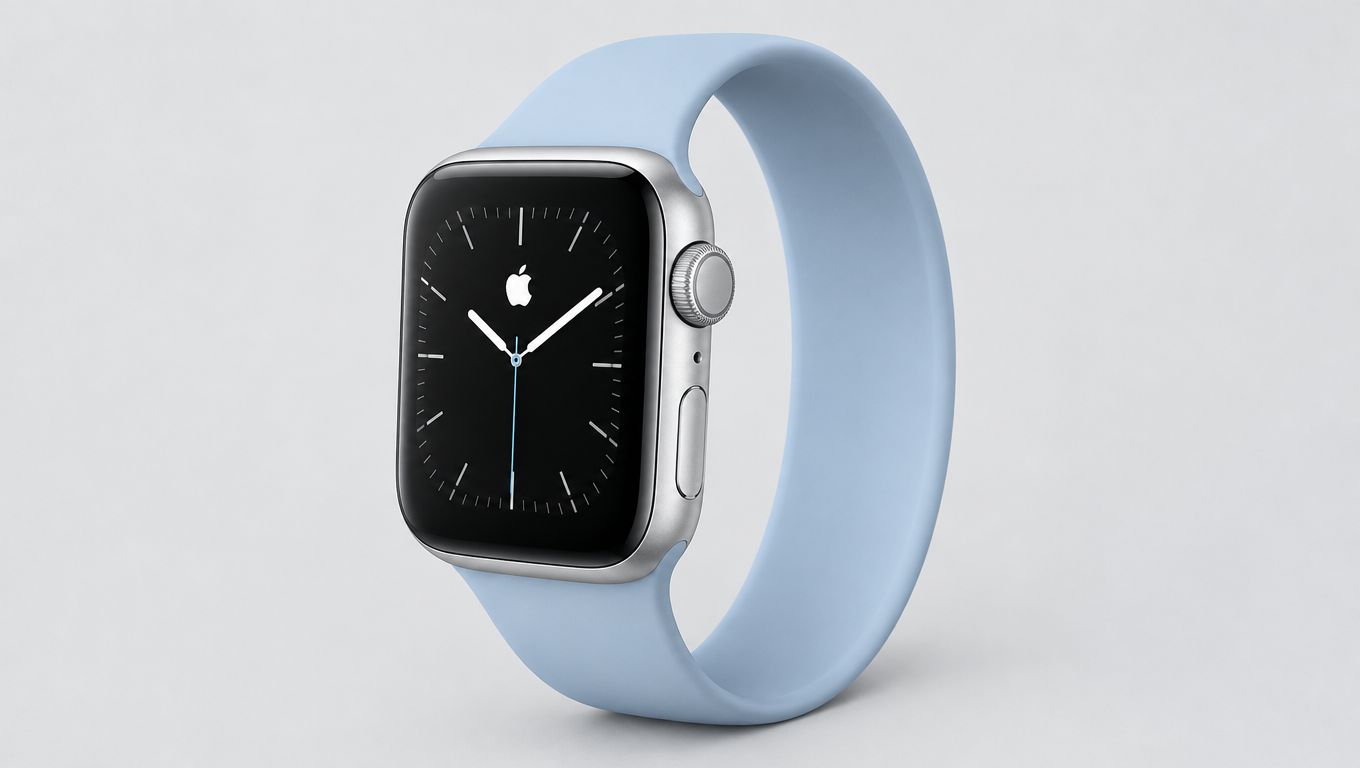
That makes it a strong pick for the no-metal-contact category. If your irritation tends to show up exactly where hardware sits, a one-piece design is often easier to rule in or rule out than a strap with mixed materials. Nickel sensitivity is a central consideration here. Apple states that some cases, strap components, release buttons, and magnets contain nickel, although these parts remain below the strict limits established by the European Union’s REACH regulations. This does not mean every wearer will react: nickel exposure is considered unlikely to cause a problem for wearers without a known allergy, but individuals with a known nickel allergy may still develop redness, itching, swelling, or a rash after prolonged contact. For someone trying to reduce possible trigger points, fewer parts touching the skin is a practical advantage on Series 4 and later models.
Best for metal sensitivity and buckle pressure
This is the strap I put in front of users who say, "I react right under the clasp," or "the fastening point is always the problem." It gives you consistent, uniform skin contact with very little going on structurally, which is useful when you are trying to isolate the source of irritation.
The downside is airflow. Compared with a woven loop, the Solo Loop sits more continuously against the skin, so a sweaty wrist can stay damp longer under the strap. Sizing also matters more here than it does with an adjustable loop. If you choose the wrong size, there is no quick mid-day correction. Too tight, and it can trap heat and leave a pressure line. Too loose, and the strap shifts more than it should, which can create friction instead of solving it.
What it does well
- Removes closure hardware from the equation: Helpful for people who suspect the buckle or clasp area is the trigger.
- Feels smooth against the wrist: No edges, folds, or overlapping strap sections.
- Rinses clean quickly: Easy option if you want a strap that is simple to wash after daily wear.
What to watch
- Less forgiving in hot conditions: A solid strap can hold moisture against the skin longer than woven fabric.
- Sizing has to be right: Comfort depends heavily on choosing the correct size from the start.
- Limited adjustability: You cannot loosen it a notch when your wrist swells during the day.
4. Apple Braided Solo Loop

The Apple Braided Solo Loop sits between a fabric strap and a smooth elastomer strap. That's why it has such a loyal following among people who dislike standard sport straps but don't want a hook-and-loop closure either.
The braided construction spreads pressure better than many solid straps. It doesn't create the same "sealed" feeling on the wrist, and the stretch makes it easier to wear for long periods without noticing one hard contact point.
Best for softer all-day pressure distribution
Apple's support documents note that some strap materials include trace acrylates and methacrylates, but they're engineered so they don't directly contact the skin. The company also points out that sweat, soap, and poor fit can make irritation worse. In practice, Braided Solo Loop works best for users whose main problem is not a true allergy but cumulative discomfort from a strap that feels too rigid.
I recommend it most for office wear, commuting, and all-day use where comfort matters more than maximum wash-and-go convenience. It looks cleaner than many nylon sport straps and feels less plasticky than rubber-style options.
If a solid sport strap leaves a damp imprint on your wrist, a braided option is often the first upgrade worth trying.
The trade-off is durability over time. Stretch straps can change fit with heavy use, and this strap costs more than simpler alternatives. If you're rough on your straps or rotate poorly, that's worth considering. But as a comfort-first option, it's one of Apple's better answers for a sensitive wrist that hates stiff straps.
5. Nomad Sport Strap

The Nomad Sport Strap is for the person who sweats hard, rinses their gear often, and needs a strap that doesn't get swampy by the second workout of the week. Nomad uses FKM fluoroelastomer and adds underside ventilation channels, which is the key design difference here.
I don't usually recommend thick sport straps to people with unexplained irritation. Many are comfortable until sweat gets trapped underneath. Vent channels don't eliminate that issue, but they do make this style more forgiving than a flat, non-breathable strap.
Best for training days when easy cleaning matters most
For active use, ease of cleaning often beats softness alone. A strap that feels good but stays damp or grimy isn't going to stay skin-friendly. Apple's guidance warns that fluoroelastomer straps can become irritating when sweat or soap builds up, and regular cleaning helps. If you need a refresher on that part, Nothing But Bands has a practical guide on how to clean an Apple Watch strap.
A useful broader point from third-party testing is that some premium silicone and fluorine-rubber straps have been marketed with zero detectable PFAS/PFOA in independent testing, as discussed in this WizeBand review of sensitive-skin Apple Watch straps. That doesn't make every sport strap equal, but it does make material transparency more important than generic "silicone" labels.
Best reasons to choose it
- Workout-ready cleanup: Sweat, sunscreen, and grime are easier to wipe away than on fabric.
- Ventilated underside: Better than a flat sport strap if your skin gets clammy fast.
- Secure fit: Good choice for running, lifting, or higher-motion wear.
Reasons to skip it
- Stiffer feel: Some people prefer softer or stretchier straps.
- Still a sport material: If rubbery textures trigger you, nylon or ceramic may work better.
6. Braxley Straps
Braxley Straps take a different route. They're soft, stretchy, buckle-free, and easy to wash. If your skin reacts less to materials and more to rigid pressure points, Braxley-style elastic straps make a lot of sense.
The slip-on design removes one of the most common nuisance zones on any watch strap. No clasp digging into the underside of the wrist. No pin sitting in a single hole. No metal piece that shifts during typing or sleep tracking.
Best for users avoiding buckles and rigid hardware
This category is especially useful for people with mild eczema-prone skin or wrists that get irritated by concentrated pressure. The strap stretches, distributes contact more evenly, and feels less mechanical than a standard watch strap.
Braxley is also appealing if chemical transparency matters to you. That's a gap in a lot of buying guides. Material type alone doesn't tell the whole story, which is why independent testing and clear PFAS/PFOA claims have become more important in the category, as highlighted in this Buckle & Strap discussion of PFAS-free Apple Watch straps.
The trade-off is classic fabric behavior. Elastic can loosen over time, and absorbent materials need regular laundering. If you're a heavy sweater and hate maintenance, a rinseable sport strap may still be easier day to day.
Some of the happiest sensitive-skin users don't find one perfect strap. They use a soft elastic strap for work and a washable sport strap for training.
7. Anhem Ceramic Apple Watch Strap – Classic Strap

The Anhem Ceramic Apple Watch Strap – Classic Strap is the option I point to when someone says, "Fabric still irritates me, and rubber straps feel sticky." Ceramic changes the feel of contact completely. It's smooth, cool on the wrist, and doesn't absorb sweat the way woven materials do.
For some sensitive users, that's a real relief. Skin that gets angry under soft sport materials sometimes calms down with a harder but more inert-feeling surface, especially outside workouts.
Best for people who react to rubbery materials
Ceramic is also interesting because market commentary around sensitive-skin straps has increasingly regarded ceramic straps as a premium solution, including mentions of ceramic-focused options in later review roundups and recommendation lists. Another gap in the category is long-term rotation advice. Many shoppers know they should rotate straps, but not how to pair materials or monitor irritation patterns over time, which is discussed in this TrendyStraps guide on sensitive-skin strap selection.
That matters here. I wouldn't make ceramic your only strap unless your lifestyle is mostly office, casual, and low-sweat. For workouts, ceramic is less forgiving if knocked around, and most ceramic bracelets still include some metal in lugs or clasp components.
Why choose ceramic
- Cooler surface feel: Useful if soft straps feel hot or sticky.
- Doesn't soak up sweat: Easier to keep feeling clean on normal days.
- Dressier look: Better suited to more formal outfits than nylon loops.
Why hesitate
- Not ideal for impact-heavy activity: Ceramic can be more brittle than metal.
- Some hardware remains: Better for many users, but not the purest no-metal-contact setup.
7 Apple Watch Straps: Sensitive-Skin Comparison
| Item | Material | Metal contact | Best for | Main irritation it helps prevent | Cleaning effort | Main drawback |
|---|---|---|---|---|---|---|
| Apple Sport Loop | Double-layer woven nylon | Hook-and-loop fastener (no direct skin metal) | Daily wear, gradual swelling | Buckle pressure points | Moderate (machine or hand wash) | Absorbs sweat and odors if unwashed |
| Arden Nylon Loop | Soft woven nylon | Hook-and-loop fastener | Budget-friendly sweat management | Trapped moisture and friction | Moderate (needs regular rinsing) | Casual aesthetic only |
| Apple Solo Loop | Liquid silicone rubber | None (zero hardware) | Confirmed metal allergies | Nickel/clasp reactions | Low (wipe or rinse) | Poor breathability in heat |
| Apple Braided Solo Loop | Recycled polyester braid | None (zero hardware) | All-day office wear | Rigid strap pressure | Moderate (hand wash recommended) | Stretches out over time |
| Nomad Sport Strap | FKM fluoroelastomer | Aluminum pin-and-tuck | Heavy training days | Sweat maceration | Low (wipe clean instantly) | Stiffer feel than fabric |
| Braxley Straps | Elastic fabric/cotton blend | None (slip-on) | Eczema-prone wrists | Concentrated hardware pressure | High (requires laundering) | Looses elasticity with heavy use |
| Anhem Ceramic | High-polish ceramic links | Metal lugs/clasp components | Dressy wear, rubber aversion | Sticky elastomer reactions | Low (wipe down) | Brittle under impact |
Takeaway: If you have a confirmed nickel or metal allergy, the Apple Solo Loop or Braided Solo Loop are your safest starting points because they eliminate hardware entirely. If your primary issue is sweat rash, friction, or heat buildup, the Arden Nylon Loop and Nomad Sport Strap address those triggers through airflow and easy sanitation, respectively. Keeping any of these materials safe requires proper hygiene; for detailed steps on maintaining different strap types without degrading them, this guide on how to clean watch straps without damaging them from Evo Dyne Products covers the specific solvents and methods to avoid.
| Item | 🔄 Implementation complexity | ⚡ Resource requirements (materials & care) | ⭐📊 Expected outcomes (comfort & performance) | 💡 Ideal use cases | ⭐ Key advantages |
|---|---|---|---|---|---|
| Apple Sport Loop | Low, hook‑and‑loop fastener, easy adjust | ⚡ Double‑layer nylon; washable; MSRP $49; Velcro may catch lint | ⭐📊 Very light and fast‑drying; strong airflow; lint/odor possible | 💡 Workouts, metal‑sensitive users, daily casual wear | ⭐ Wide color/size options, excellent micro‑adjustability |
| Arden Nylon Loop | Low, simple attach, micro‑adjust loop | ⚡ Soft woven nylon; lightweight; occasional washing; mid‑range cost | ⭐📊 Breathable, quick‑dry, comfortable for long wear; moderate odor risk if unwashed | 💡 Everyday active use, workouts, casual wear | ⭐ Custom micro‑fit, low‑profile, breathable, 30‑day comfort guarantee |
| Apple Solo Loop | Low, slip‑on continuous strap; sizing critical | ⚡ Liquid silicone rubber; water/sweat‑resistant; MSRP $49; easy rinse clean | ⭐📊 Smooth, low‑friction and comfortable; less breathable in heat | 💡 Exercise, water activities, nickel‑sensitive users | ⭐ Seamless design with zero metal contact; simple maintenance |
| Apple Braided Solo Loop | Low, slip‑on elastic braid; sizing required | ⚡ Recycled polyester braided with silicone cores; washable; MSRP $99 | ⭐📊 Very comfortable and more breathable than solid silicone; may stretch over time | 💡 All‑day wear, those wanting soft/stretchy premium strap | ⭐ Soft, breathable, washable, premium aesthetic |
| Nomad Sport Strap | Low, pin‑and‑tuck closure; standard fit process | ⚡ FKM fluoroelastomer with ventilation channels; aluminum pin; MSRP $59 | ⭐📊 Durable, secure for training; slightly stiffer feel; low skin metal contact | 💡 Daily training, durability‑focused and outdoor use | ⭐ High‑grade elastomer, ventilation, secure fit |
| Braxley Straps | Very low, slip‑on elastic, no hardware | ⚡ Fabric/organic cotton or PFAS‑free options; machine‑washable; ~ $39.99 | ⭐📊 Very soft and breathable; may loosen with heavy use; washable | 💡 Sensitive skin, allergy‑prone users, casual comfort | ⭐ Non‑toxic options, very soft, no clasps or rigid parts |
| Anhem Ceramic Apple Watch Strap – Classic Strap | Medium, removable links for sizing; some metal parts | ⚡ High‑polish ceramic links; PFAS‑free claim; resizing support; ~ $64.99 | ⭐📊 Premium feel, cool on skin, low sweat absorption; more brittle than metal | 💡 Dressy or premium look with hypoallergenic needs | ⭐ Hypoallergenic ceramic surface, premium look, scratch‑resistant |
Choosing Your Comfort Final Tips for a Rash-Free Wrist
The Direct Recommendations
- Best overall for unknown triggers: The Arden Nylon Loop. It balances airflow, adjustability, and minimal hardware better than any other option on this list.
- Best for sweat and friction rashes: The Nomad Sport Strap. Its ventilated FKM construction prevents the moisture trapping that causes irritant contact dermatitis during exercise.
- Best for buckle/metal sensitivity: The Apple Solo Loop. Zero hardware means zero nickel exposure against the skin.
- Best if rubbery textures irritate you: The Anhem Ceramic Apple Watch Strap. It provides a cool, inert surface that never clings to damp skin.
Stopping Irritation Beyond Strap Choice Choosing the right material is only half the battle. Published medical reports show that Apple Watch-related allergic contact dermatitis is documented but appears uncommon in the available literature. A 2024 dermatology case report stated that only two previous cases of allergic contact dermatitis related to Apple Watches had been reported at that time, and both were attributed to nickel in the device’s case. Another report described a patient whose testing supported nickel allergy connected with an Apple Watch, while also identifying fragrance in hand soap and overwashing as contributing irritants. This means your daily habits matter as much as the strap you buy.
- Fit: Wear the watch snug enough that the optical heart sensor maintains contact, but loose enough that you can slide a pinky finger under the strap. Apple explicitly warns that overly tight straps restrict blood flow and cause pressure marks, while loose straps create repetitive friction.
- Cleaning cadence: Rinse non-fabric straps with fresh water after every workout. Wash nylon straps with mild, fragrance-free soap at least twice a week if worn daily.
- Drying: Never put the watch back on a wet wrist. Pat the skin completely dry after showering or sweating before reattaching the strap.
- When to pause wear: If your skin is already red, weeping, or actively inflamed, take the watch off for 48 to 72 hours. Continuing to wear any strap over broken skin introduces bacteria and prolongs the healing cycle. If symptoms persist beyond a few days of rest, consult a board-certified dermatologist to rule out underlying conditions like eczema or psoriasis, as general clean skincare practices for reactive skin often need to accompany hardware changes.
There's also no rule that says you need one strap for everything. In fact, rotation often works better. Use nylon or elastic for long desk days, a sport strap for workouts, and ceramic or braided styles when you want a cleaner look. Sensitive skin usually responds best when you match the material to the situation instead of forcing one strap to do every job. For a related angle on managing reactive skin barriers, reviewing best practices for sensitive skin care can help you identify if your wrist flare-ups are part of a broader contact sensitivity issue.
Not sure yet which trigger is causing your reaction? Our guide to diagnosing skin irritation from Apple Watch straps walks through the three most common causes before you buy.
🛍️ Shop This: Gentle Apple Watch Straps for Sensitive Skin
Looking for a strap that's kind to your skin? These soft, skin-friendly options are a great place to start:
- Halo — Silicone Sport Strap — Apple Watch — Soft, smooth silicone that's gentle against skin all day
- Arc — Silicone Sport Strap — Apple Watch — Lightweight and breathable for sensitive wrists
- Rovan Magnetic Silicone Sport Strap for Apple Watch — Easy magnetic clasp, no irritating buckle pressure
- Rovan Magnetic Silicone Sport Strap (Black) for Apple Watch — Sleek and skin-friendly in classic black
Browse all Apple Watch straps →
If your current strap is leaving marks, itching, or making you take your watch off early, browse Nothing But Bands for softer nylon, silicone, braided, and resin options built for everyday comfort. The store also backs purchases with a 30-day money-back comfort guarantee, which makes trying a better-fit strap a lot less risky.
Frequently Asked Questions
Which Apple Watch strap is best for sensitive skin?
The best overall option is a woven nylon loop, like the Arden Nylon Loop or Apple Sport Loop, because the breathable weave prevents sweat from pooling against the skin. However, if your sensitivity is specifically a nickel allergy, a hardware-free option like the Apple Solo Loop is the safest choice since it eliminates metal contact entirely.
Which Apple Watch straps are least irritating to the skin?
Straps with zero hardware and high breathability cause the least irritation. The Apple Braided Solo Loop and elastic slip-on straps like Braxley distribute pressure evenly across the wrist without using pins, buckles, or clasps that dig into the skin during movement or typing.
How do I stop my Apple Watch strap from irritating my skin?
First, ensure the strap is not too tight; you should be able to slide a finger underneath it. Second, wash the strap regularly with mild soap to remove trapped sweat, dead skin, and lotion residue. Third, always dry your wrist completely before putting the watch back on. If irritation persists, switch from a solid elastomer strap to a woven or ceramic material.
Are there hypoallergenic straps available for the Apple Watch?
Yes. Hypoallergenic options include the Apple Solo Loop (liquid silicone rubber with no metal), the Braided Solo Loop (recycled yarn with no hardware), and ceramic link bracelets. When shopping third-party brands, look for explicit "nickel-free" hardware claims and materials like medical-grade fluoroelastomer or high-purity ceramic.
Can I be allergic to the Apple Watch itself?
It is rare but possible. Apple confirms that some cases, magnets, and release buttons contain trace amounts of nickel and acrylates within EU REACH regulatory limits. If you react even when wearing a completely hardware-free strap, the issue may be the watch case resting against your skin, and you should consult a dermatologist for patch testing.
Related posts

- October 23, 2026
Learn how to adjust watch band size on metal link, Milanese, leather, silicone, and stretch straps with pro tips for...

- October 22, 2026
A mixed metal Apple Watch band starts with one rule: keep finishes coherent. Learn how silver, black, rose gold and...

- October 21, 2026
Discover truly nickel free watch straps that won't irritate skin. Compare materials, avoid common myths, and find comfortable hypoallergenic options.


