

Log in
Reset password
Create an account
Your bag(0)
Your cart is empty
Continue ShoppingSearch

For a quick, effective clean, all you really need is some warm water and a bit of mild dish soap. That simple combination is perfect for cutting through the daily build-up of sweat, oils, and general grime that collects on your silicone watch band, keeping it feeling fresh without any harsh chemicals.
Your Five-Minute Method for a Fresh Watch Band
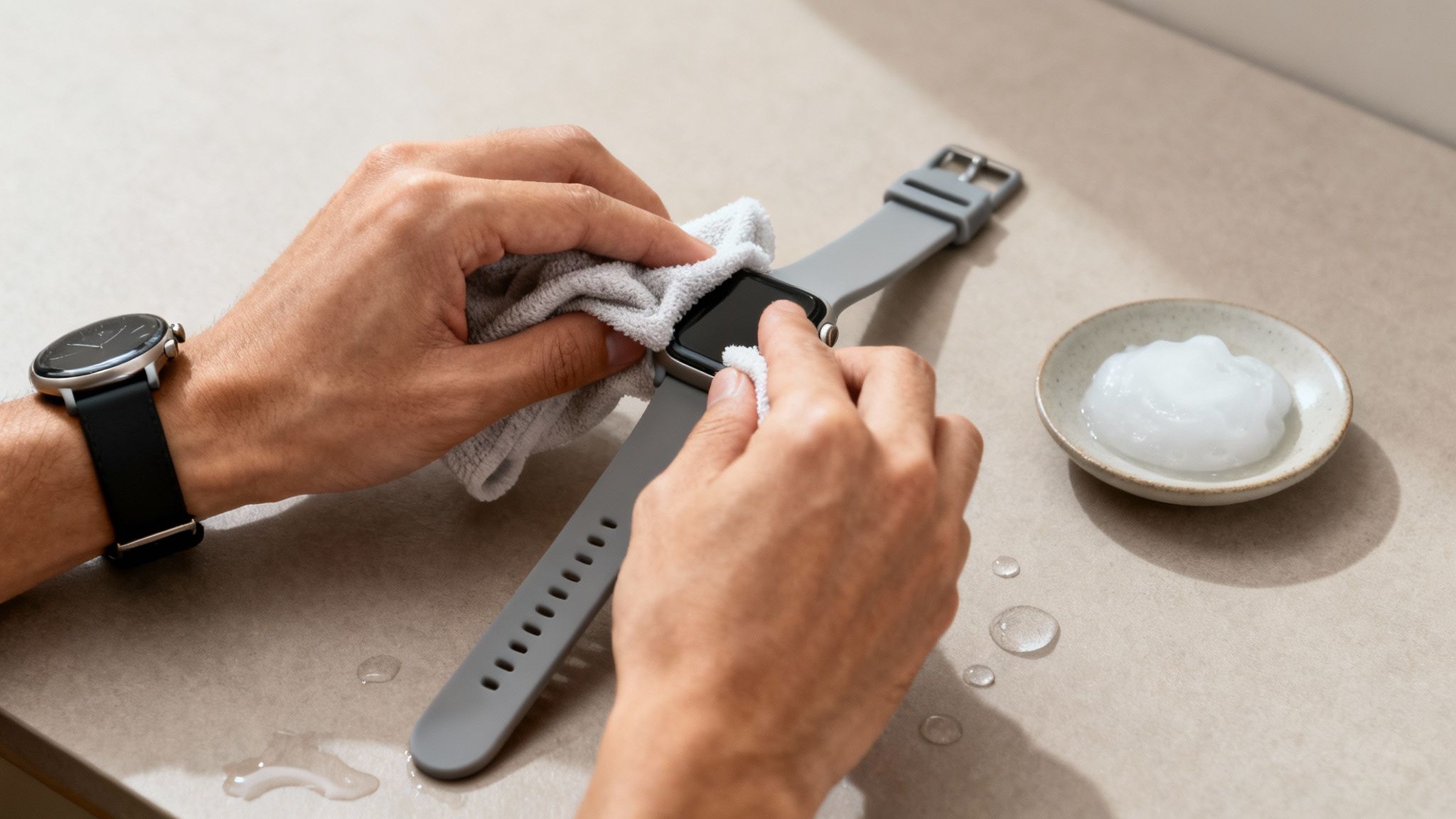
We all lead busy lives, and who has time for a deep-cleaning ritual every few days? The good news is, keeping your silicone watch band in great shape doesn't take much time at all. A quick, five-minute routine is usually all it takes to tackle the everyday muck from a workout, a day at the office, or an accidental coffee spill.
Think of it as simple, preventative maintenance. By giving your band a regular wipe-down, you stop oils and dirt from settling in for the long haul. This is key to preventing that gradual discolouration or unpleasant sticky feeling that can develop over time. It’s the perfect little task to do after a gym session or at the end of the day to keep your accessories looking and feeling their best.
The Simple Steps to a Clean Band
First things first: always remove the band from your watch face. It’s a non-negotiable step that protects the watch’s sensitive electronics from getting wet. Once it’s off, grab a soft, lint-free cloth (a microfibre one works wonders) and dampen it with warm water.
Next, put just a single drop of mild, pH-neutral dish soap onto the cloth itself, not directly on the band. Gently wipe down the entire strap, making sure to get into the buckle area and any of those textured grooves where dirt loves to accumulate. A well-made band like our Arc Silicone Sport Band for Apple Watch is designed to stand up to this kind of regular care.
Finally, rinse the cloth with clean water and wipe away any soap residue from the band. Give it one last pass with a dry part of the cloth before letting it air dry completely.
Quick Clean Do's and Don'ts for Silicone Bands
When you're doing a routine clean, it's easy to fall into bad habits. Here's a straightforward guide on what to do and what to avoid to keep your band in top condition.
| Do | Don't |
|---|---|
| Use a soft, lint-free cloth | Use abrasive sponges or paper towels |
| Choose mild, pH-neutral dish soap | Use harsh chemicals or bleach |
| Remove the band from the watch first | Submerge the entire watch in water |
| Rinse thoroughly with clean water | Dry with heat (e.g., a hair dryer) |
Following these simple rules ensures your quick clean is effective without causing any accidental damage.
Key Takeaway: When it comes to watch bands, consistency beats intensity every time. A gentle, regular clean will do far more for your band's appearance and lifespan than the occasional, aggressive deep scrub.
This habit of keeping personal items clean has become more important than ever. We’ve all become more aware of hygiene, from public spaces to the items we wear every day. Just as schools have adopted more frequent deep-cleaning schedules, taking a moment to disinfect daily accessories like a watch band is a small but meaningful step towards better personal hygiene.
Giving Your Band a Proper Deep Clean
Sometimes, a quick once-over with soapy water just won't cut it. Maybe you've just come back from a sunny holiday where sunscreen was constantly being applied, or perhaps a muddy trail run has left its mark. You might notice your band has a stubborn, sticky film or just looks a bit dull and dingy. That's your cue that it’s time for a proper deep clean.
The good news? You don't need any expensive, specialist products. The most effective deep-cleaning solutions for silicone are probably sitting in your kitchen cupboards right now. We're going to use some gentle but powerful household staples to break down that grime without harming the band itself. This method is perfect for tackling that built-up residue that makes a band feel less than fresh.
Making a Gentle Cleaning Paste
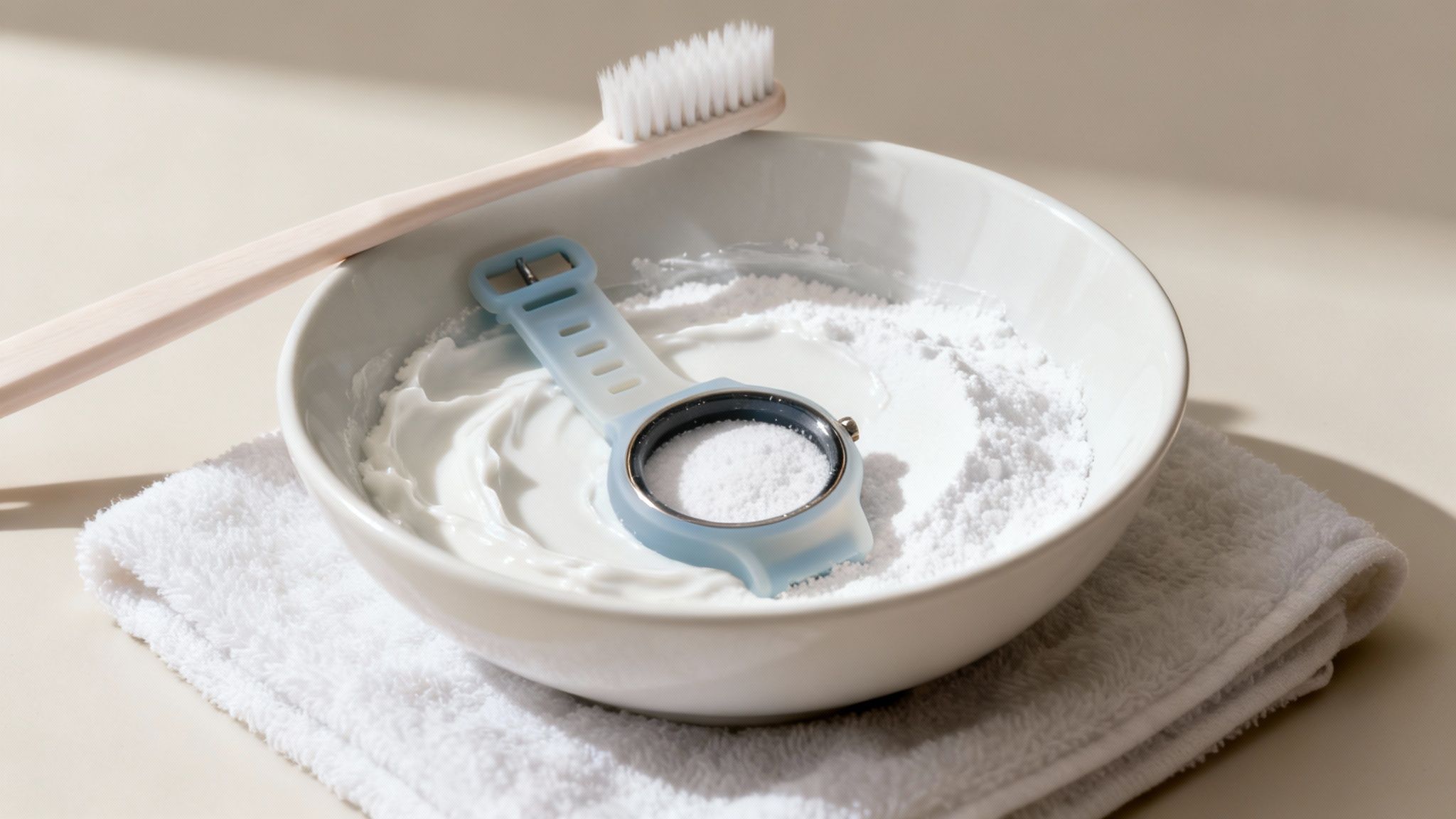
For a really effective deep clean, a simple paste made from baking soda and water is your best friend. Baking soda is a fantastic mild abrasive, which means it can scrub away grime without scratching the silicone's surface. This is key to keeping that smooth, matte finish on your strap.
Here's how to whip up the perfect cleaning paste:
- Grab a small bowl.
- Tip in about two tablespoons of baking soda.
- Slowly add water, just a few drops at a time, mixing until you get a thick paste with a similar consistency to toothpaste.
You’re aiming for a paste that's thick enough to cling to the band, not a runny liquid. This texture lets the baking soda get to work on all that embedded dirt.
Expert Tip: Dealing with a particularly stubborn mark, like a bit of dye transfer from new jeans? Try adding a single drop of white vinegar to your paste. Its mild acidity can help lift stains, but use it sparingly as you don't want to risk any damage to the silicone.
Once the paste is ready, use your fingers or a soft brush to coat the entire band in a generous, even layer. Make sure to get into any textured areas or the buckle holes, as those spots are notorious for trapping dirt. Now, let it sit for at least 15-20 minutes. This waiting time is crucial; it gives the baking soda time to break down oils and lift stains right out of the surface.
How to Scrub and Revitalise Your Strap
After the paste has worked its magic, it's time to scrub. Grab a soft-bristled toothbrush – an old one will do, but a child’s toothbrush is perfect because its bristles are extra gentle.
Using small, circular motions, carefully scrub the entire band. This light scrubbing action is all you need to lift the grime that the paste has already loosened, without using any harsh force that could scuff the material. It’s the ideal technique for removing that chalky residue from sunscreen and getting into the band's grooves to restore its proper colour.
Once you’ve scrubbed every nook and cranny, rinse the band thoroughly under cool, running water. Keep rinsing until every last trace of the baking soda paste has washed away. Your band should now look noticeably brighter and feel silky smooth to the touch again.
Dealing with Tough Stains and Funky Smells
Let's be honest, sometimes a regular wash just won't cut it. You might look down and see an annoying ink smudge, a bit of dye that’s rubbed off your new jeans, or catch a whiff of a smell that’s… less than fresh. It can make a great watch band feel like it's destined for the bin, but don't give up on it just yet.
When you're faced with these more stubborn problems, you need to switch up your tactics. We're not talking about harsh chemicals here, but simple household heroes that can tackle specific stains and smells without damaging the silicone. Getting this right is the real secret to keeping your band looking and feeling new for ages.
Getting Rid of Ink and Dye Stains
Ink marks and dye transfer are the absolute worst, but they’re often salvageable. The key is to act fast with a solvent that can gently lift the pigment away. Your best friend for this job is isopropyl alcohol, often just called rubbing alcohol.
- Start by putting a little rubbing alcohol on a cotton bud or the corner of a microfibre cloth.
- Instead of scrubbing, which can just spread the stain, gently dab at the mark. You're trying to lift the ink or dye off the surface.
- Wipe the area with a clean bit of the cloth and see how it looks. You might need to repeat the dabbing and wiping a few times to get it all.
This technique is a lifesaver for light-coloured bands that have picked up that bluish tint from new denim. A few gentle dabs with rubbing alcohol and you can usually lift that dye right off, leaving no trace behind.
Banishing Lingering Odours
If your watch band has started to smell a bit funky, that’s usually down to bacteria from sweat and skin oils getting trapped in the silicone. A quick soap and water wash cleans the surface, but it might not be enough to knock out the source of the odour. That’s when a deodorising soak works wonders.
The Ultimate Deodorising Soak: Mix up a simple solution of one part white vinegar to four parts warm water. Pop your watch band in and let it soak for about 30 minutes. The acetic acid in the vinegar is fantastic for neutralising odours and killing off bacteria.
Once the soak is done, just give the band a quick wash with some mild dish soap to get rid of any vinegar smell and rinse it well. This is brilliant for completely refreshing a band after months of sweaty gym sessions. Just be sure to stick to vinegar; anything stronger could damage the silicone, making it brittle or sticky over time. Even the best quality silicone has its limits.
The Right Way to Dry and Reattach Your Band
After a good clean, you might be tempted to speed things up, but this is where a bit of patience really pays off. Getting your silicone watch band properly dry isn't just a suggestion—it's a critical final step. If you trap moisture between the band and your wrist, it can lead to skin irritation. Worse, it could even work its way into the delicate parts of your watch.
The best way to dry it is also the easiest: let it air-dry completely. Just lay the band flat on a soft, clean towel somewhere with decent air circulation, but keep it out of direct sunlight. It might seem like a quick fix to grab a hairdryer or pop it on a radiator, but please, avoid heat. High temperatures can permanently warp the silicone, ruining its shape and that soft, supple feel.
Ensuring a Bone-Dry Finish
Before you even think about putting the band back on your watch, give it a proper once-over. Check the little holes for the buckle and the grooves where the pins sit. These tiny nooks and crannies are notorious for trapping water droplets.
A quick wipe with a dry, lint-free microfibre cloth will soak up any leftover moisture. For those really tricky spots, like the channels for the spring bars, a gentle puff of air usually does the trick.
Key Insight: Don't rush it. A band that feels dry to the touch can still be hiding moisture. I always recommend giving it an extra 30 minutes to air-dry after you think it’s ready. It’s a simple habit that protects both your skin and your watch.
Reattaching Your Band Securely
Once you’re positive the band is completely dry, it's time to put it back on your watch. It’s a simple process, but you need a gentle hand to avoid damaging the attachment points, especially on popular models like the Apple Watch or Samsung Galaxy Watch.
- For an Apple Watch: Gently slide the end of the band into the slot on the watch case until you hear and feel a faint click. It should go in smoothly. If you feel any resistance, don't force it—just slide it back out and try again.
- For a Galaxy Watch (and others with spring bars): You'll need to use a spring bar tool or just the edge of your fingernail to press down on one end of the pin. Slot that end into the lug hole on the watch, then guide the other end into place. Give it a gentle tug to make sure it's locked in securely.
Knowing how to handle different materials is the cornerstone of proper care. It's a principle we see across the UK's professional cleaning industry, where there's a growing shift towards precise, automated methods for delicate items. This approach minimises the risk of damage from harsh abrasives and boosts hygiene—lessons we can easily apply to personal items like our watch bands. You can explore more on this trend with UK cleaning statistics over at Janiking.co.uk.
A secure fit is everything. For bands with more intricate link systems, it's worth checking out how to remove links from a watch band to get that perfect, safe fit. Nailing this final step means your freshly cleaned band is secure and ready for whatever your day throws at it.
Proactive Habits for Long-Term Band Care
The real secret to keeping your silicone band looking brand new isn't some complicated cleaning marathon. It’s all about the small, smart habits you weave into your everyday life. Moving from reactive scrubbing to proactive care is what will truly extend your band's life, keeping its colour bright and its texture soft for years to come. A little bit of consistent effort goes so much further than the occasional harsh deep clean.
Simple routines can be surprisingly powerful. For example, getting into the habit of giving your band a quick rinse under the tap after a sweaty gym session or a swim is a game-changer. This simple act stops salt and body oils from settling into the pores of the silicone, which is usually the starting point for discolouration and that tacky, unpleasant feeling. It honestly takes seconds but makes a massive difference over time.
Avoiding Everyday Damage
Knowing what not to do is just as crucial as knowing what to do. Silicone is a tough material, no doubt, but it’s not invincible. You need to be mindful of direct contact with certain things that can degrade it over time.
- Chlorine and Saltwater: Always give your band a good rinse with fresh water after you've been in the pool or the sea. Chlorine, in particular, can be quite corrosive and may weaken the silicone.
- Perfumes and Lotions: Make a habit of applying your sunscreen, perfumes, and lotions before you put your watch on. The oils and chemicals in these products can easily stain or even start to break down the band’s surface.
- Direct Heat: Whatever you do, don't leave your watch band sitting on a hot radiator or baking in intense, direct sunlight for ages. Extreme heat can make the material brittle or even cause it to lose its shape.
This sort of mindful approach is becoming more common everywhere. As sustainability moves to the forefront of our minds, people are getting much more selective about their cleaning products. In fact, a surprising 60% of UK consumers are happy to pay a bit more for eco-friendly cleaning options, choosing non-toxic, biodegradable soaps and methods that save water. This conscious consumerism fits perfectly with the gentle care silicone bands need, encouraging a move away from harsh, damaging solvents. You can read more about these eco-conscious trends and the UK's net-zero goals on fmindustry.com.
Key Takeaway: The best way to think about your band's care is to treat it like skincare. Gentle, daily prevention is always going to be more effective than trying to reverse damage after it’s already happened. A little attention really does go a very long way.
Smart Storage and Cleaning Choices
It might seem minor, but where you keep your watch when you're not wearing it actually matters. Just tossing it onto a dusty bedside table or into a jumbled drawer is a surefire way to get it scratched and discoloured. A much better idea is to store it in a soft pouch or give it a dedicated spot in a jewellery box. This protects it from ambient dust and stops it from getting scuffed up by your other bits and pieces.
To help you pick the right tool for the job every time you clean your band, it's useful to know what different cleaning agents are best for.
Choosing the Right Cleaning Agent for Your Silicone Band
This table breaks down the most common household items you can use, what they excel at, and any precautions you should take.
| Cleaning Agent | Best For | Safety Notes |
|---|---|---|
| Mild Dish Soap | Daily grime, oils, and sweat | The safest and most effective option for regular cleaning. |
| Baking Soda Paste | Stubborn dirt and mild discolouration | A gentle abrasive; perfect for deep cleaning without scratching. |
| Rubbing Alcohol | Ink, dye transfer, and tough stains | Use sparingly with a cotton bud for targeted stain removal. |
| White Vinegar | Deodorising and killing bacteria | Dilute heavily with water for an effective odour-removing soak. |
Having these simple options in your cleaning toolkit means you'll always have a safe and effective way to tackle anything from everyday sweat to an accidental ink mark, keeping your band in pristine condition.
Common Questions About Silicone Band Cleaning
Even with a solid cleaning routine, it's natural to have questions or run into tricky situations with your silicone watch band. We get it. You want to keep your favourite accessory looking and feeling its best.
Let's tackle some of the most common questions we hear. My aim here is to clear up any confusion and give you the confidence to deal with anything from stubborn discolouration to figuring out the right cleaning schedule for you.
How Often Should I Clean My Watch Band?
This is the big one, and the honest answer is: it really depends on your lifestyle.
For most people wearing their watch day-to-day, a quick wipe-down with a bit of soap and water about once a week is perfect. This simple step stops oils, lotions, and general grime from building up, keeping the band feeling fresh.
But if you’re always on the move, you'll need to clean it more often.
- After exercise: If you’ve just had a good workout, give the band a quick rinse under the tap. This washes away sweat and salt before it has a chance to dry and cause irritation.
- Monthly deep clean: It's a good idea to schedule a more thorough deep clean, maybe using the baking soda method, about once a month. Also, if you ever notice the band looks particularly dirty or feels a bit sticky, it's definitely time for one.
Can I Use Bleach on a Stubborn Stain?
Absolutely not. Please, step away from the bleach! Harsh chemicals like bleach, hydrogen peroxide, and other strong solvents are a one-way ticket to a ruined watch band.
These aggressive cleaners will literally break down the silicone. This can make the band brittle and prone to cracking, leave it with a permanently sticky texture, or cause some serious, irreversible discolouration. Stick to the gentle stuff we’ve talked about – mild soap, a dab of rubbing alcohol for tough spots, or a baking soda paste.
My White Band Is Turning Yellow—Can It Be Saved?
Yellowing on a white or light-coloured band is incredibly frustrating, but it's a common problem. It’s usually caused by a mix of things like sun exposure, body oils, or even dye transfer from your clothes.
Don't give up on it just yet! You can often bring it back to life. The best trick I've found is making a thick paste from baking soda and water. Slather it all over the band, let it sit for a good few hours, then give it a gentle scrub with a soft brush before rinsing it clean.
For really tough yellowing, some have had luck with a melamine foam sponge (like a magic eraser). Just be incredibly gentle, as it’s slightly abrasive and can dull the finish if you scrub too hard.
Expert Tip: With white bands, prevention is your best friend. If you’re wearing a new dark-coloured top or a denim jacket, give your band a quick wipe when you take it off. This can stop dye from setting in.
For more tips on looking after your bands, feel free to check out our detailed frequently asked questions page. We've packed it with extra info to help you out.
Shop the range: browse our silicone watch bands collection to find your perfect fit.