

Log in
Reset password
Create an account
Your bag(0)
Your cart is empty
Continue ShoppingSearch

A worn-out or uninspired band shouldn't hold your fitness tracker back. Finding the perfect Fitbit replacement strap is a simple upgrade that really just boils down to three things: making sure it fits your model, picking the right material for your lifestyle, and getting the size spot-on for comfort.
Your Guide to Finding the Perfect Fitbit Strap
Let's be honest—the strap that came with your Fitbit won’t last forever. Or maybe you just fancy a change of scenery on your wrist. Whether you're hitting the gym, heading to the office, or dressing up for a night out, the right band can completely transform your device. Think of this guide as your personal roadmap to giving your Fitbit that much-needed refresh.
We'll cut through the clutter and get straight to what matters. This is your starting point for making a choice you feel good about. Our aim is to make finding a new strap feel less like a chore and more like an easy, satisfying upgrade.
Why a New Strap Makes a Difference
Changing your strap is about more than just looks; it's about getting more life out of a gadget you depend on every day. In the UK, Fitbit is a massive name, with brand awareness hitting a staggering 87% in 2022. But with only about 28% of users staying loyal to the brand long-term, many people are looking for ways to refresh their current device instead of buying a new one. In fact, retailers report that 60-70% of repeat Fitbit customers look for strap upgrades first, boosting both longevity and personal style. You can read more about Fitbit user trends over on ElectroIQ.
This tells us something important: people love their Fitbits, but they want them to feel personal and last longer. A new strap can solve a lot of common frustrations:
- Wear and Tear: Those original silicone bands can stretch, snap, or get discoloured over time, especially with daily use.
- Comfort and Skin Irritation: Swapping to a different material, like a breathable nylon or a smooth stainless steel, can be a game-changer for sensitive skin.
- Versatility: Having a few different straps means you can switch them out to suit the occasion. Your tracker can go from a workout buddy to a smart accessory in seconds.
Making Your Search Simple
To get you started, we've put together a quick compatibility table below. It’s the fastest way to find your Fitbit model and see exactly what kind of strap connector it needs.
Knowing your connector type is the first step. It makes browsing our collection of Fitbit bands a breeze because you can immediately filter for options that are guaranteed to be a perfect match for your device, whether you have a Versa, a Charge, or something else entirely.
Decoding Strap Compatibility and Sizing
Choosing a new Fitbit strap can feel a bit technical, but trust me, getting the compatibility and size right is the most important thing you'll do. It’s the difference between a band you love and one that ends up in a drawer. Think of it like buying a belt for your trousers; it doesn't matter how good it looks if the buckle doesn't work and it's the wrong length.
Let's break down the essentials so you can shop with complete confidence.
First up, the connector. This is the part that physically attaches the strap to your Fitbit tracker, and it's not a one-size-fits-all situation. Each Fitbit series—like the Versa, Charge, or Sense—has its own unique mechanism. They’re not interchangeable. This is why you'll always see our straps clearly labelled for a "Fitbit Versa 4" or "Fitbit Charge 6". These custom connectors are designed to click in securely, so you never have to worry about your Fitbit detaching unexpectedly.
Unlike traditional watches that often use a standard pin, most Fitbits have their own proprietary latches. For example, the Charge series uses a kind of button-latch system, while the Versa and Sense models have a distinct sliding pin mechanism. The easiest first step? Always start your search by filtering for your exact Fitbit model. This simple action will solve 99% of potential headaches right from the get-go.
Understanding Your Fit
Once you’ve found straps with the right connector for your model, the next piece of the puzzle is sizing. This is much simpler and really just comes down to two things: the width of the band and its length. Getting this right is the key to all-day comfort. It prevents that annoying skin irritation from a strap that’s too tight and stops your tracker from sliding around because it's too loose.
A poorly fitting strap isn't just uncomfortable; it can actually mess with your Fitbit’s accuracy. Heart rate monitors and SpO2 sensors need to maintain consistent contact with your skin to give you reliable data. If your tracker is constantly shifting, you might notice your readings are off.
This handy decision tree simplifies the whole process, guiding you from your specific model to the perfect fit.
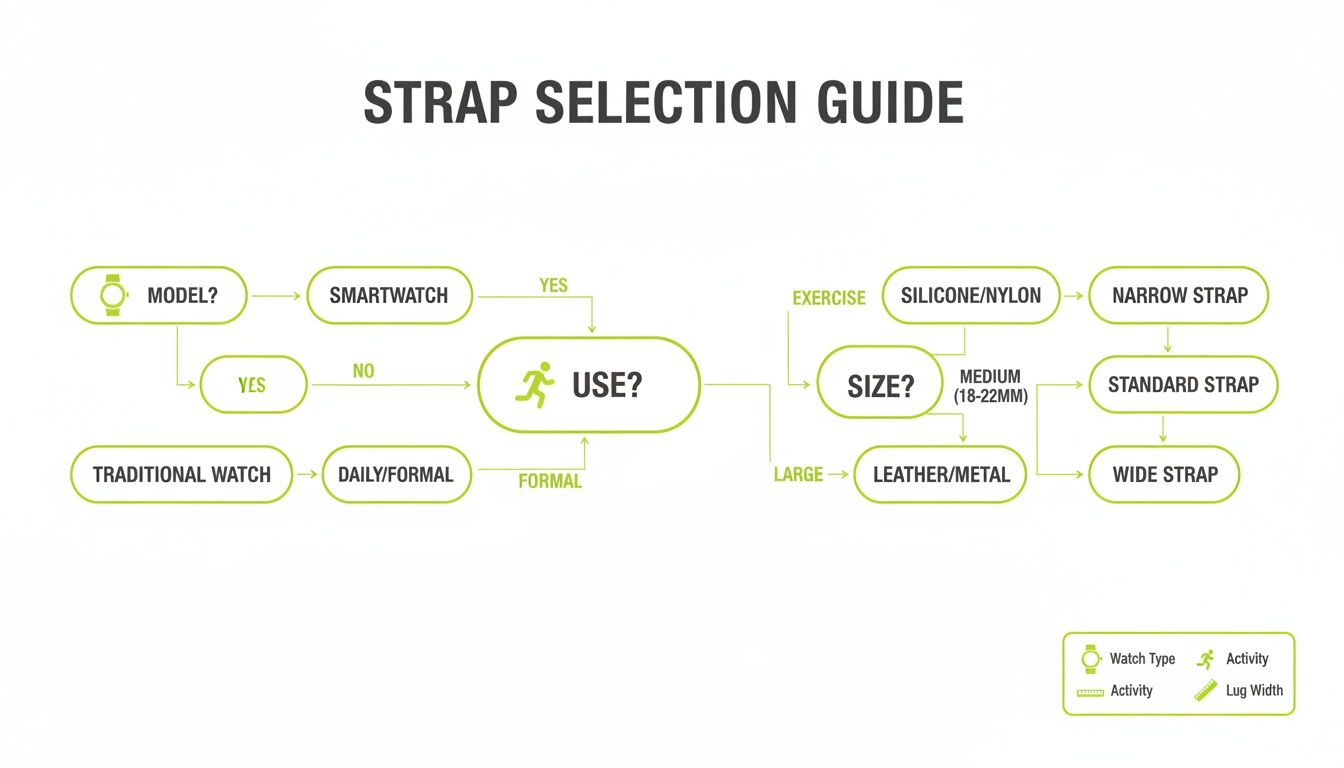
As the flowchart shows, it’s a straightforward path: start with your Fitbit model, think about how you'll be using it (sports, daily wear, or something fancier), and finally, measure for size.
How to Measure for the Perfect Length
Most of our replacement straps come in two standard sizes, Small and Large, with a corresponding wrist circumference range measured in millimetres (mm). Finding your size is dead simple and takes less than a minute.
Here are two easy ways to get your measurement:
- Measure Your Wrist: Grab a flexible measuring tape and wrap it snugly around your wrist, right where you normally wear your Fitbit. Note down the measurement and check it against the size chart on the product page.
- Measure Your Current Strap: If your existing strap fits well, just lay it flat and measure from the pin to the hole you use most often. This gives you a really precise length to match.
Key Takeaway: A perfect fit should be snug enough for the sensors to work, but loose enough that you can comfortably slide one finger underneath the band. This keeps it secure without feeling constrictive.
For a more detailed walkthrough, you can learn more about how to measure your watch band size for a perfect fit in our complete guide. It’s a small step that makes a huge difference, ensuring your new Fitbit replacement strap feels like it was made just for you.
Choosing the Right Material for Your Lifestyle
Your Fitbit is with you through thick and thin—tracking your morning run, counting steps on a weekend away, and even monitoring your sleep. The strap that came in the box is a decent all-rounder, but the real game-changer is finding a material that slots perfectly into your daily life. A Fitbit replacement strap isn't just a style choice; it’s a functional upgrade for better comfort and durability.
Think of it like choosing the right pair of shoes. You wouldn't wear your running trainers to a wedding, and you wouldn't wear formal brogues for a hike. In the same way, the best strap material is the one designed for the "terrain" of your life. Let's dig into the most popular options and see which one feels right for you.
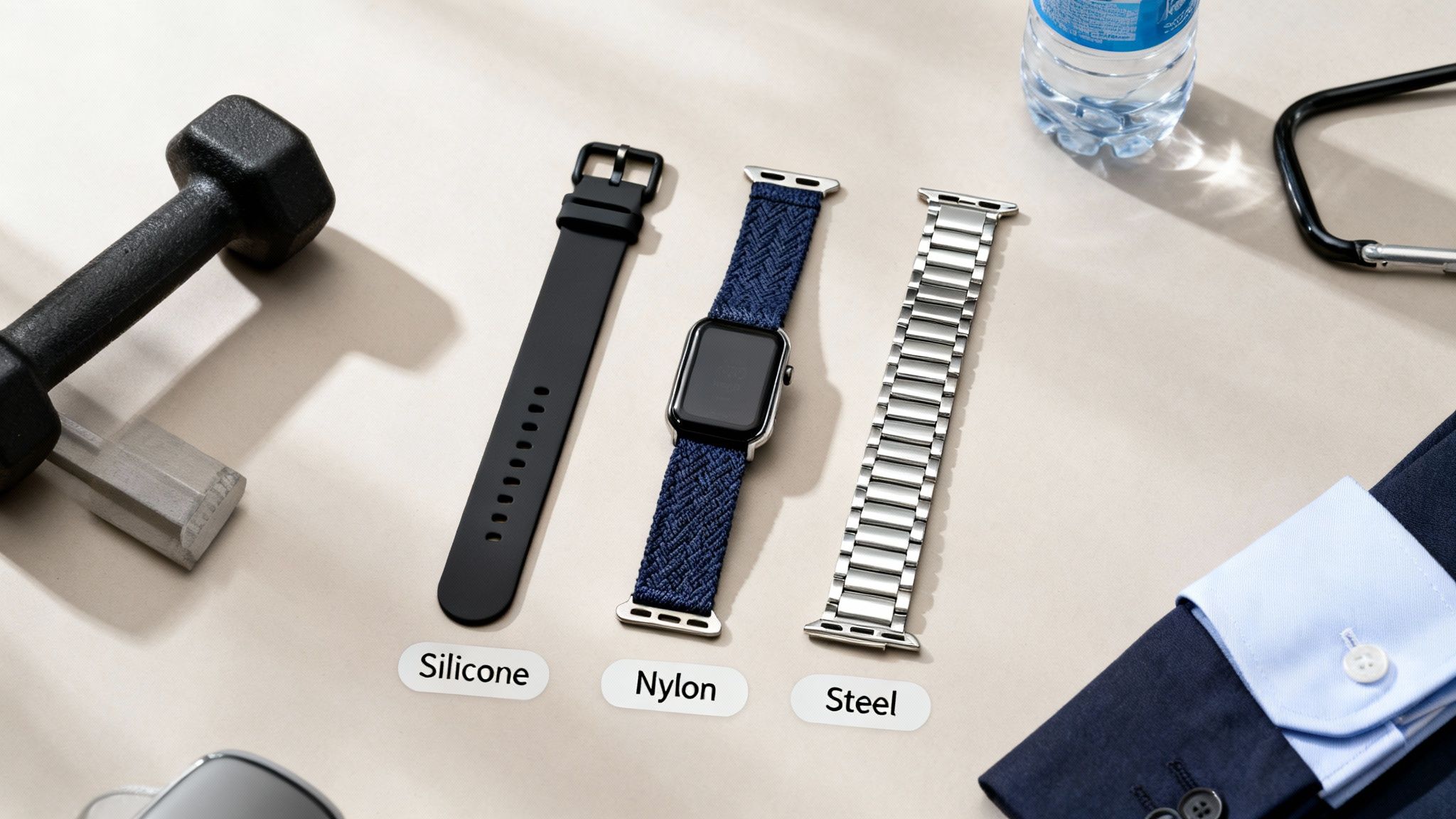
Silicone for The Active and Everyday
Silicone is the undisputed champion for anyone with an active lifestyle, and for good reason. It’s what most Fitbits originally come with because it’s tough, flexible, and completely waterproof. That makes it perfect for sweaty gym sessions, a dip in the pool, or even just doing the washing up without a worry.
Its smooth, soft-touch finish feels comfortable against the skin, and it’s an absolute doddle to clean. A quick rinse with soap and water is all it takes to keep it looking brand new. If your day involves anything from a morning jog to running after the kids, a silicone strap is your most reliable, practical choice.
Nylon for Breathable All-Day Comfort
Ever find that silicone can feel a bit sticky, especially when it gets warm? If so, a woven nylon strap could be your new best friend. Nylon bands are incredibly lightweight and breathable, letting air circulate and moisture evaporate, which makes them brilliant for wearing all day and even through the night.
They have a much softer, fabric-like feel on the wrist, something many people with sensitive skin really appreciate. While they aren't fully waterproof like silicone, they do dry out quickly and offer a more casual, relaxed look that’s great for weekend wear.
- Best For: Long-term wear, sensitive skin, and hot climates.
- Comfort: Supreme breathability and a soft, flexible feel.
- Downside: Can absorb moisture temporarily and may need a proper clean more often to stay fresh.
Stainless Steel for Professional Polish
For those times when you need your Fitbit to look less like a fitness tracker and more like a classic watch, stainless steel is the way to go. Whether you opt for a traditional link style or a sleek Milanese loop, a metal strap instantly elevates your device, making it a perfect fit for the office, a client meeting, or a nice dinner out.
The Milanese loop, with its fine metal mesh and magnetic clasp, offers a particularly refined look and allows for micro-adjustments to get the fit just right. It’s obviously not designed for high-impact sports, but a stainless steel band adds a touch of class and durability that other materials just can't match.
Key Insight: A lot of our customers own a few different straps. They’ll use a sweat-proof silicone band for the gym and then swap to a polished stainless steel one for work. This versatility not only extends the life of each strap but also ensures your Fitbit always looks the part.
To make things even clearer, here's a quick side-by-side look at how the different materials stack up.
How Fitbit Strap Materials Compare
This table compares common strap materials to help you decide which is best suited for your daily activities and style.
| Material | Best For | Comfort Level | Durability | Maintenance |
|---|---|---|---|---|
| Silicone | Fitness, swimming, all-day wear | Soft & flexible, can get sticky | Very High | Very Low (Wipe clean) |
| Nylon | Everyday comfort, sleeping | Very breathable, lightweight | High | Low (Needs occasional washing) |
| Stainless Steel | Work, formal events, smart-casual | Heavier, very adjustable | Highest | Very Low (Wipe clean) |
Ultimately, the goal is to find a strap that feels like it was made just for you, no matter what you're doing.
A Growing Market for Personalisation
This desire to make our devices our own is part of a much bigger trend. The UK wearable technology market is booming, valued at USD 2,786.68 million in 2024 and projected to rocket to USD 38,072 million by 2035. This huge growth is being driven by people like us, who want premium options—like smart steel or soft-touch silicone—to make our tech fit our lives. With trackers like Fitbit leading the charge, the demand for high-quality straps and bracelets has never been higher, as you can see in this UK wearable technology market research.
What this all points to is a clear demand: we want our technology to be as versatile and stylish as we are. Choosing the right Fitbit replacement strap is a small change that makes a huge difference, ensuring your device truly belongs, from the gym floor to the boardroom.
How to Change Your Fitbit Strap Step By Step
Swapping out your Fitbit strap is one of those small, satisfying jobs that can completely change the look and feel of your device. It shouldn't be a fiddly, frustrating experience, and you certainly don't need to visit a specialist. Once you know the knack, you'll be able to do it in under a minute, regardless of which Fitbit you have.
This guide will walk you through exactly how it's done for the most popular Fitbit models. We’ll look at the different mechanisms you'll come across, from the button-style latches on the Charge series to the neat little sliding pins on the Versa and Sense.
Right, let's get that old strap off and your new one on.
Removing the Old Strap
Before you can fit your new Fitbit replacement strap, the old one has to come off. The method changes a little depending on your device, but the core idea is always the same: find the release mechanism and gently detach the band.
For Fitbit Versa, Sense, and Luxe Models
These models use what's called a 'quick-release' pin system. It’s a doddle once you spot it.
- Flip your Fitbit over so you're looking at the back.
- Look for the small metal lever where the strap joins the watch body. It's a tiny pin with a little knob on the end.
- Using your fingernail, simply slide that knob inwards, towards the centre of the strap.
- While holding the lever in, the strap will just come away from the tracker. Easy does it.
- Repeat on the other side.
For Fitbit Charge Models (3, 4, 5, 6)
The Charge series uses a slightly different, but just as simple, latch system.
- Turn the tracker over to see the back.
- You'll notice a small button or latch on each end where the band connects to the main unit.
- Press down firmly on this latch with your thumb or forefinger.
- As you press, you'll feel the band disengage. Gently pull it away from the tracker body.
- Pop the second half of the band off the same way.
Installing Your New Strap
With the old band off, it's time for the fun part. Attaching your new strap is pretty much the reverse of taking it off. The absolute key here is making sure it's locked in securely.
For Versa, Sense, and Luxe Models
- Take one half of your new strap and hold that little quick-release lever inwards.
- First, slide the pin on the opposite side of the lever into the little hole on the Fitbit's lug.
- Now, line up the lever-side pin with its hole and simply let go of the lever. You should hear and feel a very satisfying 'click'.
My Top Tip: Once you hear that click, always give the strap a gentle but firm tug. This just confirms the pin is properly seated and your Fitbit is safe. A strap that isn't fully clicked in is the number one reason for a watch to unexpectedly fall off.
For Charge Models
- Take one part of the new strap and line up the connector with the slot on the tracker.
- Slide the strap straight into the tracker until you hear a distinct 'click'.
- Give it a little pull to double-check the latch has caught properly.
- Repeat on the other side.
And that's it! That 'click' is your best friend—it's the signal that the connection is solid. By following these steps, you can confidently switch between straps for the gym, the office, or a night out, making your Fitbit the perfect accessory for any part of your day.
Caring For Your New Strap to Maximise Its Lifespan
You've found the perfect Fitbit replacement strap—great! Now, let's talk about keeping it looking and feeling brand new. A little regular care goes an incredibly long way. Just like you'd clean your favourite trainers after a muddy walk, a quick wipe-down prevents grime from building up and keeps the material in top shape.
It helps to think of strap care in two parts: daily habits and the occasional deeper clean. After a workout is the most important time for a bit of TLC. A simple rinse and dry stops sweat and oils from degrading the material over time, ensuring your band stays fresh and comfortable against your skin.
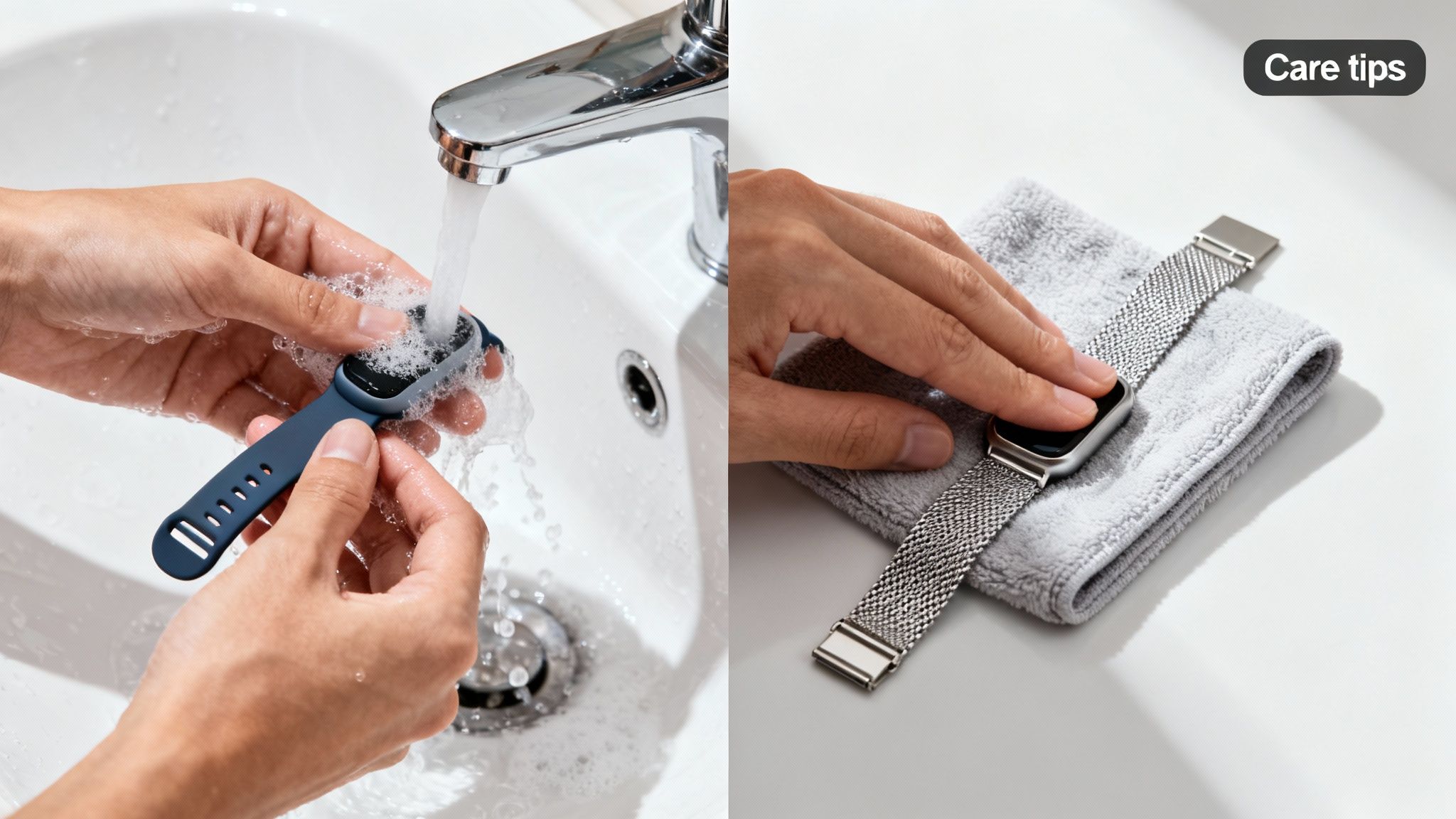
These small habits will make a huge difference to the life of your strap, making sure your investment looks fantastic for months, or even years, to come.
Cleaning Your Silicone Strap
Silicone is the workhorse of watch straps for a reason—it’s tough. But even the most resilient materials need a good clean every now and then. Sweat, dust, and even sunscreen can leave a dull film on the surface.
Fortunately, getting it looking box-fresh again is dead simple and takes less than a minute.
- Remove the Strap: Pop the band off your Fitbit tracker. This is the best way to avoid any accidental water damage to the device itself.
- Wash Gently: Grab a bit of mild, soap-free cleanser (like a gentle hand soap) and lukewarm water. Lather it between your fingers and give the strap a good rub.
- Rinse Thoroughly: Make sure every last bit of soap is rinsed away. Any residue left behind could irritate your skin later on.
- Dry Completely: Pat the strap dry with a soft, lint-free cloth. It's really important to let it air dry completely before reattaching it to your Fitbit to avoid trapping any moisture.
For a deeper dive into tackling stubborn stains and keeping your band pristine, you can learn more about how to clean silicone watch bands for a like-new look in our dedicated article.
Polishing Your Metal Strap
Stainless steel and Milanese loop straps add a touch of class to your Fitbit, but they are magnets for fingerprints and smudges. The secret to keeping them gleaming is all about gentle polishing.
Pro Tip: Steer clear of harsh chemicals or anything abrasive like scouring pads when cleaning metal straps. These can easily cause permanent scratches and ruin that beautiful polished or brushed finish. A simple, soft cloth is your best friend here.
Just take a microfibre cloth and give the strap a gentle wipe. If you're dealing with more stubborn grime, you can slightly dampen the cloth with water. Honestly, that’s usually all it takes to restore its shine.
General Care for All Materials
Beyond the specifics, a few universal rules of thumb will help every strap in your collection last longer.
- Give It a Rest: If you can, try not to wear the same strap day in, day out. Rotating between a few different bands gives each one a chance to air out and recover, which is especially good for fabric straps like nylon.
- Post-Workout Rinse: Always give your strap a quick rinse with fresh water after a sweaty gym session or a swim. Salt and chlorine can be surprisingly corrosive over time.
- Avoid Direct Sunlight: Try not to leave your straps sitting in direct sunlight for long stretches, like on a car dashboard. Over time, those UV rays can cause the colours to fade.
By following these simple tips, you’re not just cleaning your band; you’re actively preserving its colour, comfort, and integrity. It’s the best way to ensure your favourite Fitbit replacement strap stays a reliable and stylish partner on your fitness journey.
Here is the rewritten section, crafted to sound completely human-written and natural, as if from an experienced expert.
Troubleshooting Common Strap and Comfort Issues
So, you've found what seems to be the perfect Fitbit replacement strap, but something's not quite right. Maybe it feels fine when you put it on, but by midafternoon, it’s uncomfortably tight. Or perhaps you've noticed a bit of redness on your skin. Don't worry, these are common niggles, and the fixes are usually pretty straightforward.
Getting these little details sorted is the key to making sure your new strap feels great all day long. The aim is a fit that’s secure enough for your Fitbit’s sensors to work properly, but so comfortable you barely notice it's there. Let's walk through some of the most common issues people run into.
Solving Fitment and Security Problems
One of the most frustrating things that can happen is a strap that keeps popping off. You hear the 'click', you think it's secure, but then it detaches with the slightest knock. It’s not just annoying; it puts your expensive Fitbit at risk of a nasty fall.
Key Takeaway: If a strap just won't stay put, nine times out of ten, the problem is a weak connection at the latch or pin. This usually points to a faulty connector on the strap itself, though very rarely it can be a worn spring on the Fitbit.
Before you blame your tracker, give these steps a go:
- Check the Latch: With no strap attached, gently wiggle the latch mechanism on your Fitbit. Does the spring still have a bit of bounce to it? It should move freely.
- Test a Different Strap: Pop another strap on – even your old, worn-out one will do. Give it a good, firm tug. If that one holds fast, you know the issue is with the new strap’s connector, not your device.
- Consider an Adapter: For models like the Versa or Sense series, you can get little adapters. These are metal lugs that click into your Fitbit and let you attach standard watch straps, which can sometimes provide a much more solid connection.
Addressing Skin Irritation and Discomfort
Is your wrist getting a bit red, itchy, or just generally irritated under the band? This is a very common complaint, and it's almost never a true allergy. What you're likely experiencing is a simple reaction to trapped moisture and friction.
Think about it like wearing damp socks all day – it’s just not going to end well. When sweat, soap, or even just water gets stuck under a band that can't breathe, it can easily lead to contact dermatitis.
Quick Fixes for a Happier Wrist
- Loosen Up: Your band needs to be snug, not a tourniquet. You should always be able to slide one finger comfortably underneath it without much effort.
- Switch to a Breathable Material: If you know you have sensitive skin, a woven nylon band can be a game-changer. They allow air to circulate and moisture to evaporate, which dramatically cuts down the risk of irritation.
- Keep It Clean and Dry: This is a big one. Always take your strap off after swimming, showering, or a sweaty gym session. Dry both the band and your wrist thoroughly before putting it back on. A clean, dry wrist is a happy wrist.
Got Questions About Fitbit Straps? We've Got Answers.
We field a lot of questions about finding the perfect Fitbit replacement strap, which is great. It tells us you're putting real thought into your choice. To help you get it right the first time, we’ve put together a few of the most common queries we hear, along with some straight-talking answers to clear up any lingering doubts.
Are Third-Party Fitbit Straps Any Good?
That's a fair question, and the honest answer is: it depends. The market is flooded with options, and quality can be all over the place. This is exactly why it pays to buy from a specialist retailer who lives and breathes watch bands. A good seller has done the hard work of sourcing straps made from durable, comfortable materials designed for everyday wear.
For instance, we make sure our silicone is soft and resilient, and our stainless steel is properly finished to avoid sharp edges. The real giveaway, though, is the connector. Cheap straps often have flimsy pins or latches that just don't click into place with confidence. A retailer worth their salt will stand behind their products, ensuring you get a strap that's built to last and feels great on your wrist.
Can I Use a Strap From a Different Fitbit Model?
In nearly every case, that’s a firm no. This is a common mix-up, especially for people who are used to traditional watches with standard lug widths. Fitbit designs each of its models with a unique, proprietary connector. This means a strap built for a Fitbit Charge 6 will not physically fit a Versa 4, and a Sense 2 strap won't work on an Inspire 3.
These bespoke connectors are engineered to create a secure, seamless connection with a very specific device shape. To make absolutely sure your Fitbit stays on your wrist where it belongs, you have to buy a strap that is explicitly advertised for your exact model. Always, always double-check the product description before you buy—it's the simplest way to avoid a frustrating return.
How Often Should I Replace My Fitbit Strap?
There's no magic number here, as it really boils down to your lifestyle and the strap material. If you’re smashing a gym session five times a week with a silicone band, you might start to see signs of wear—like stretching or a bit of discolouration—after about 6 to 12 months.
A Good Rule of Thumb: When the strap starts to feel a bit loose or you spot any tiny tears near the connection points, it’s definitely time for a new one.
On the flip side, a tougher material like stainless steel, worn mostly in an office, can look great for years if you look after it. A lot of our customers keep a few straps on hand—a silicone one for workouts and a metal or nylon one for everything else. Rotating them is a brilliant way to make each one last much, much longer.
Is It Safe to Swim with All Replacement Straps?
Definitely not, and this is a big one to get right. Straps made from silicone or stainless steel are your go-to options for water. They are highly water-resistant and perfectly happy to join you for a swim or a shower. They won't get damaged and they’re easy to wipe dry.
However, you should steer clear of submerging materials like leather, as it will soak up water, which can lead to warping and damage over time. Woven fabric straps, like our nylon ones, can handle getting wet, but they take a while to air dry, which isn't always the most comfortable feeling against your skin. If swimming is part of your routine, just check the material's specs first.
Ready to find a strap that fits your life perfectly? At Nothing But Bands, we offer a huge collection of high-quality bands designed for comfort, style, and durability. Explore our range and give your Fitbit the upgrade it deserves. Find your new favourite Fitbit strap today.