

Log in
Reset password
Create an account
Your bag(0)
Your cart is empty
Continue ShoppingSearch

Finding the right strap for your child’s Fitbit Ace 3 is about more than just looks; it's about making sure their tracker can keep up with them. The perfect band needs to be tough enough for the playground, comfy on sensitive skin, and have a cool design your kid will actually want to wear. A simple swap can make all the difference.
Why the Right Strap Makes All the Difference
The Fitbit Ace 3 is brilliant for getting kids moving, but let's be honest—the original strap is often the first casualty of non-stop play. It’s built to be functional, but all that running, jumping, and climbing can quickly lead to stretching or breaking. This is why picking a quality replacement isn't just a style choice, it’s a practical and sensible one.
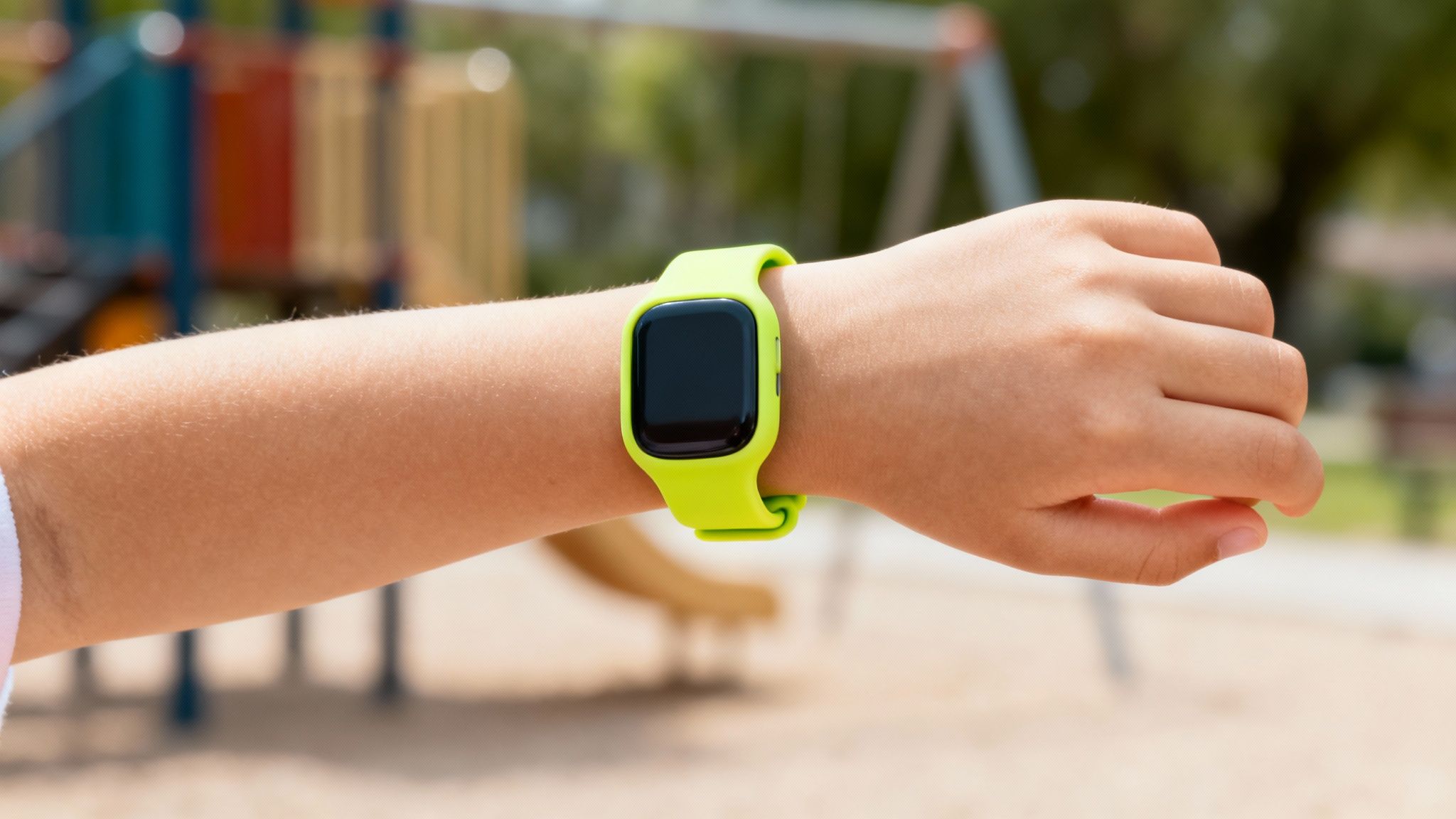
Think about it like buying a good pair of trainers. You wouldn't send them off to school in shoes that are uncomfortable or about to fall apart. The same logic applies here. A well-made strap keeps the Ace 3 securely on their wrist, so you don't have to worry about it getting lost during a chaotic game of tag.
Comfort and Personalisation
Beyond just being tough, comfort is absolutely key. Many kids have sensitive skin that gets easily irritated by cheap materials or a band that fits too tightly. A great replacement strap sorts this out.
- Uses hypoallergenic materials: Quality silicone or soft, breathable nylon can stop rashes and discomfort before they start.
- Provides a better fit: More adjustment holes mean you can get a snug fit that’s secure without being too tight.
- Lets them express themselves: Kids are far more likely to wear something they've had a hand in choosing. A strap in their favourite colour or a fun pattern transforms the Ace 3 from a gadget into a cool accessory they're proud to show off.
This kind of personalisation is a surprisingly powerful motivator. In the UK, Fitbit's brand awareness hit 87% in 2022, but active usage among people who own wearables is often much lower. Simple upgrades like fun Fitbit Ace 3 straps can genuinely boost a child's excitement and encourage them to wear it every day. You can find more insights on Fitbit usage over at ElectroIQ.com.
A new strap isn't just a repair; it’s an upgrade. It transforms the Ace 3 into something that reflects your child's personality, making them more engaged with their activity goals and more responsible for their device.
At the end of the day, the right band supports the whole point of the Ace 3—making fitness a fun, natural part of your child’s life. By investing in a strap that’s tough, comfortable, and fun, you’re not just protecting a bit of tech; you’re helping it remain a positive and motivating part of their daily routine.
Getting the Sizing and Compatibility Right
One of the first questions I always get from parents is, "Which straps will actually fit the Fitbit Ace 3?" It’s a great question because it’s not as straightforward as with other trackers. Let's clear up that confusion for good.
Unlike most smartwatches that use a standard pin to attach the band, the Ace 3 has a clever, integrated design. The little tracker ‘pebble’ simply pops into a one-piece strap.
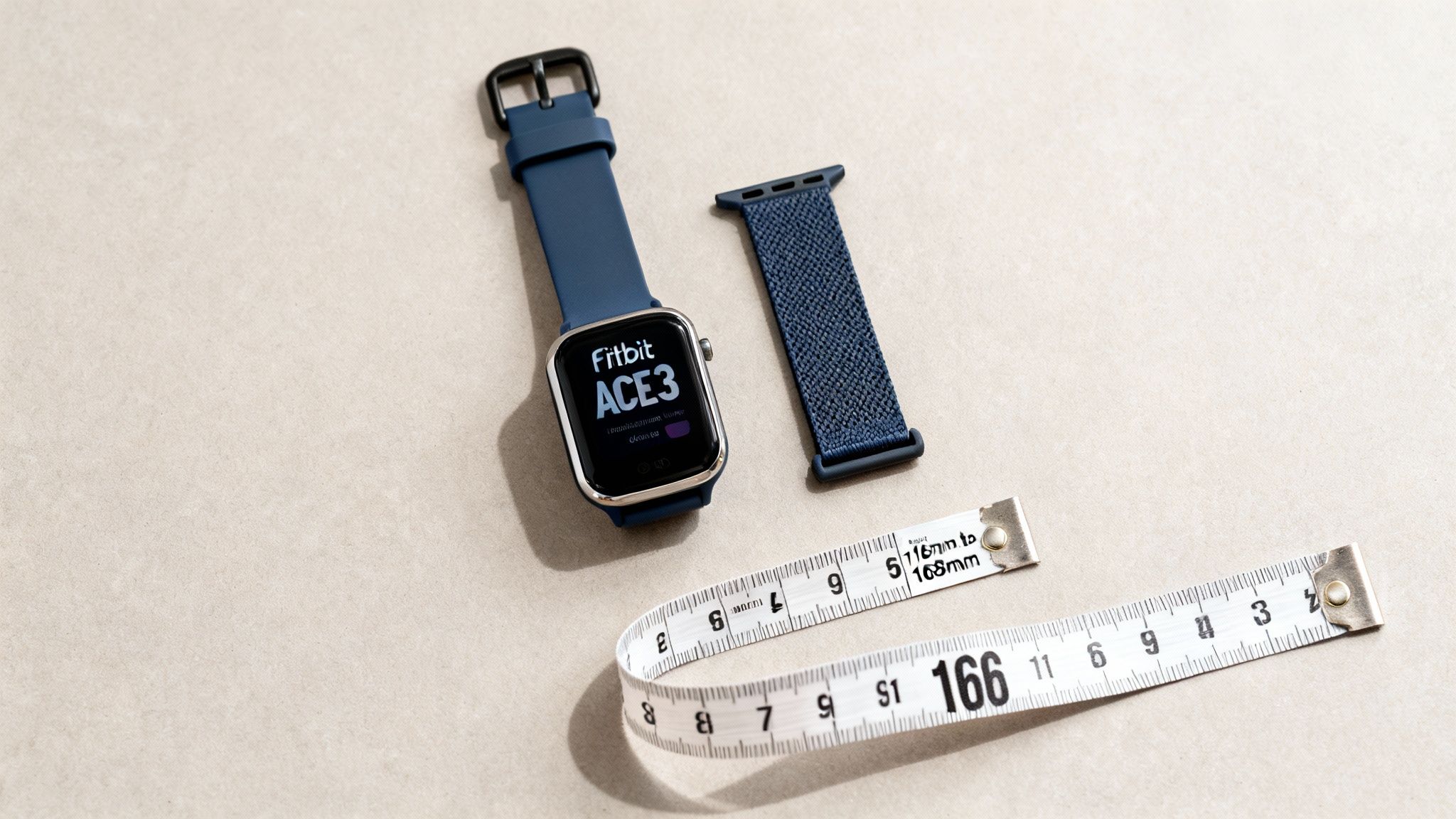
This single-piece construction is fantastic for durability—fewer moving parts to break! But it also means you absolutely cannot use straps designed for other Fitbits like the Inspire 3, Charge, or Versa series. Their connection systems are totally different, and the Ace 3 pebble just won't fit.
The Ace 3 Has a Unique Fit
Think of the Ace 3 pebble as a key and the strap as its matching lock. A key from a different Fitbit model simply won't turn the lock. The tracker for the Inspire 3, for instance, might look similar at a glance, but its size and shape are different. It will never slot securely into any Fitbit Ace 3 straps.
The good news? This actually makes shopping a lot easier once you know the golden rule. You only need to look for bands that are explicitly labelled as compatible with the "Fitbit Ace 3."
And here's a handy tip: the Fitbit Ace 2 uses the exact same pebble. That means straps for the Ace 2 and Ace 3 are completely interchangeable.
How to Measure for the Perfect Fit
Getting the right size is just as important as finding a compatible strap. If it’s too loose, it could fall off during a game of tag and get lost forever. Too tight, and it'll be uncomfortable and could irritate your child's skin.
The official Fitbit Ace 3 band is designed for wrists measuring between 116mm and 168mm around.
Measuring your child's wrist takes less than a minute.
- Grab a flexible measuring tape (the kind used for sewing is perfect) and wrap it snugly around their wrist, right where the watch will sit.
- Jot down the measurement in millimetres (mm).
- No tape measure? No problem. Use a piece of string or even a strip of paper. Wrap it, mark where it overlaps, then lay it flat and measure the length with a ruler.
For a deeper dive into sizing any kind of watch, our guide on how to measure watch band size for a perfect fit will help you buy with confidence every single time.
Why The Right Size Matters for Active Kids
The need for accurate sizing became really obvious shortly after the Ace 3 was released in 2021. In the UK, the device—usually priced around £50-£69.99—became a huge hit with parents of kids aged 6-13. Soon enough, replacement straps were in high demand, especially as the original 121mm-172mm bands started to stretch out after months of non-stop play.
This trend led to a 40% increase in UK online searches for 'Fitbit Ace 3 straps' by mid-2023. You can see just how popular the Ace 3 was from its initial reviews on TechRadar.
To help you see exactly why you can't just buy any Fitbit strap, I've put together a quick comparison table.
Fitbit Model Strap Compatibility Quick Guide
This table shows the key differences between the Ace 3 and other popular models at a glance. It's a great little cheat sheet to prevent you from accidentally buying a strap that won't work.
| Fitbit Model | Strap Connection Type | Typical Wrist Size Range (Small Band) |
|---|---|---|
| Fitbit Ace 3 | Integrated Pebble Casing | 116mm - 168mm |
| Fitbit Inspire 3 | Quick-Release Pins | 137mm - 193mm |
| Fitbit Charge 6 | Proprietary Latch System | 140mm - 180mm |
As you can see, the connection types and even the standard wrist sizes are completely different, reinforcing why model-specific straps are a must.
The most important takeaway is this: always double-check that a product description explicitly states compatibility with the "Fitbit Ace 3." This one simple step will save you the headache of returns and make sure your child’s new strap fits perfectly right out of the box.
Choosing Between Silicone and Nylon Straps
Once you've got the compatibility and sizing sorted, the next fun decision is the material. Choosing the right material for your child’s Fitbit Ace 3 strap goes way beyond just picking a favourite colour; it's all about comfort, how well it stands up to daily adventures, and even hygiene. For active kids, the two standout choices are silicone and nylon, and each has its own unique personality.
Think of it like choosing the right coat for the weather. You wouldn't send them out in a raincoat on a hot, sunny day, and a light fleece won't cut it in a downpour. The best strap material really comes down to your child's daily routine.
The All-Rounder: Silicone
Silicone is the go-to material for most fitness trackers, and for good reason. It’s the trusty pair of wellies of the watch strap world—tough, totally waterproof, and incredibly easy to clean after a day of jumping in muddy puddles. This makes it a brilliant all-rounder for most children.
Its biggest selling point is just how durable and water-resistant it is. Silicone can handle everything from swimming lessons and garden water fights to spilt juice and playground grime without breaking a sweat. A quick wipe with a damp cloth is usually all it takes to make it look good as new.
What's more, good quality silicone straps are typically made from hypoallergenic, medical-grade material. This is a massive plus for kids with sensitive skin, as it seriously cuts down the risk of rashes or irritation from wearing it all day. The finish is soft and smooth, so it feels comfortable against the skin and flexes with your child’s movements without pinching.
Here’s a quick rundown of why silicone is such a popular pick:
- Completely Waterproof: Perfect for the pool, washing hands, and getting caught in the rain.
- A Doddle to Clean: Just use a bit of soap and water to get rid of dirt and germs.
- Built to Last: It resists stretching, tearing, and fading, even with the roughest of play.
- A Rainbow of Colours: Comes in a huge range of bright, fun colours that kids absolutely love.
The only potential drawback? Because silicone isn't breathable, sweat can sometimes get trapped underneath on very hot or active days. For some kids, this might cause a bit of discomfort if the strap isn't cleaned regularly.
The Breathable Champion: Nylon
If silicone straps are the wellies, then nylon straps are like a great pair of lightweight, breathable trainers. They’re designed to be airy and feather-light, making them a fantastic choice for kids who are always on the go or tend to get a bit sweaty.
Nylon is a woven fabric, which means it has tiny gaps that let air flow through and moisture evaporate away. This natural ventilation is its superpower. It helps keep the skin underneath the strap cool and dry, which is a game-changer for preventing the heat rash or irritation that can sometimes pop up with less breathable materials.
This makes nylon a top-notch option for sports, long summer days at the park, or for any child who finds traditional watch bands feel a bit clammy. The material is also incredibly soft and flexible, hugging the wrist for a snug fit that’s so comfortable they’ll barely notice it's there. While it is water-resistant, it will absorb a little bit of water and takes longer to dry than silicone. If you're curious to learn more, you can check out our deep dive into the benefits of nylon watch straps.
For children with really sensitive skin or those who complain that their watch feels 'sweaty,' switching to a nylon strap can make all the difference. Its breathable, lightweight feel often solves comfort issues completely.
So, where does nylon really shine?
- Superb Breathability: Lets air and moisture escape, keeping skin comfortable and dry.
- Lightweight Comfort: It's so soft and light that kids often forget they're even wearing it.
- A Perfect Fit: Many nylon bands use a hook-and-loop closure, offering endless adjustability for a secure fit.
- Dries Quickly: Although it absorbs a bit of water, it dries out much faster than other fabrics.
Making the Final Call
To help you decide, let's put them side-by-side and see how they stack up in different situations.
| Feature / Scenario | Silicone Strap | Nylon Strap |
|---|---|---|
| Swimming & Water Play | Winner (100% waterproof) | Good (Water-resistant but absorbs moisture) |
| All-Day Comfort | Very Good | Winner (Extremely lightweight and soft) |
| Hot Weather & Sports | Good | Winner (Superior breathability prevents sweat) |
| Ease of Cleaning | Winner (A simple wipe-down) | Good (Needs a little more effort to clean) |
| Durability | Excellent | Very Good (Can fray over a very long time) |
| For Sensitive Skin | Excellent (Hypoallergenic) | Winner (Breathability prevents irritation) |
At the end of the day, there isn't one "best" material—just the best one for your child. If you have a little fish who lives in the pool or a budding artist prone to messy spills, silicone is probably the most practical choice. But for the sporty kid who runs around all day or has very sensitive skin, the breathable comfort of nylon is likely the winning ticket. Some parents even keep one of each and swap them out depending on the day's plans
How to Swap and Clean Your Ace 3 Strap
At first glance, changing a Fitbit Ace 3 strap can seem a bit puzzling. The single-piece design doesn't have the usual pins or latches you might expect, which can throw you off. But here's the good news: it's actually incredibly simple once you get the hang of it.
Think of the tracker itself as a smooth pebble and the strap as a flexible mould. All you're doing is popping the pebble out of one mould and gently pressing it into another. It’s designed to be done by hand in seconds, no tools required.
A Quick Step-by-Step Guide to Swapping Straps
This whole process should take less than a minute. The trick is to be firm but gentle—you don’t need to force anything.
- Hold It Securely: Flip the band over so you’re looking at the back. Grip the strap firmly in one hand, close to the screen.
- Push from the Back: Place your thumb right in the centre of the tracker pebble's back, where the charging contacts are.
- Gently Pop It Out: Push firmly and evenly with your thumb. You'll feel the pebble pop out through the front of the strap.
- Align the New Strap: Grab your new Fitbit Ace 3 strap and get it the right way round. The little button on the side of the pebble needs to line up with the button indentation on the new band.
- Snap It into Place: Start by inserting one end of the pebble into the strap, then press down firmly on the other end until it clicks or snaps securely into place.
And that’s it! Give the pebble a little wiggle to make sure it's snug and fully seated in its new home. Now it’s ready for your child’s next adventure.
Keeping Your Straps Clean and Hygienic
Let's face it, kids' things get grubby. Regular cleaning is a must to keep grime, sweat, and bacteria from building up, which can sometimes lead to skin irritation. A clean strap is a comfortable strap, and how you clean it really depends on the material.
The flowchart below gives you a quick visual on whether to opt for a quick waterproof clean (silicone) or a more gentle approach (nylon).
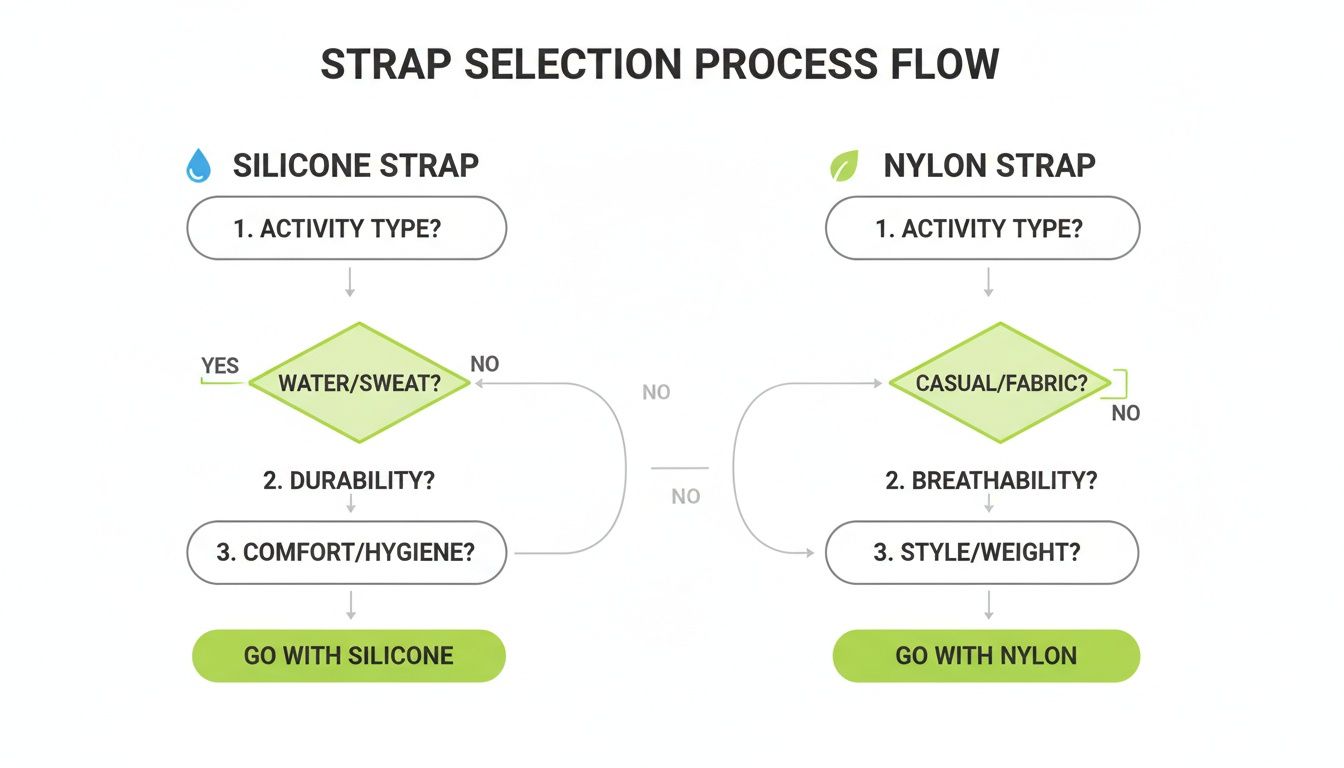
As you can see, silicone is your go-to for a quick, no-fuss wash, while nylon needs a bit more care to protect the fabric.
For Silicone Straps
Silicone is wonderfully low-maintenance. Because it’s non-porous and waterproof, dirt just sits on the surface, making it incredibly easy to wash off.
- Rinse with Lukewarm Water: Often, a quick rinse under the tap is all it takes to get rid of daily dust and sweat.
- Use Mild Soap: For a deeper clean, use a tiny amount of mild, soap-free cleanser (like Cetaphil) or simple hand soap. Steer clear of harsh chemicals, as they can wear down the material over time.
- Rinse and Dry Thoroughly: Make sure every last bit of soap is washed away, then pat it dry with a soft, lint-free cloth before popping the tracker back in.
For a complete walkthrough on making silicone look brand new again, our detailed guide on how to clean silicone watch bands has you covered.
For Nylon Straps
Nylon’s woven texture means you need a slightly different approach to get into all the nooks and crannies without damaging the fabric.
- Use a Soft Brush: Your best tools here are a soft-bristled toothbrush and a bit of mild soap.
- Scrub Gently: Work in light, circular motions to lift dirt out of the weave.
- Rinse and Air Dry: Rinse the strap thoroughly under cool water and just let it air dry completely before using it again. Definitely don't put it in a tumble dryer, as the high heat can damage the fibres.
A clean strap is fundamental to your child's comfort and health. Aim to give the band a quick clean at least once a week, and a more thorough wash whenever it gets visibly dirty.
Keeping wearables hygienic is just good practice. The principles are similar across many products, and you can see how professionals approach it in resources like a complete guide to hydration bladder cleaning kits, which shares deep-cleaning ideas that apply here too.
By mastering these simple swapping and cleaning routines, you can keep your child’s Fitbit Ace 3 fresh, functional, and ready for action, day in and day out.
What Makes a Replacement Strap Safe and Durable
When you're shopping for anything for your child, safety and durability are always top of mind. A replacement Fitbit Ace 3 strap is no exception. This is something they'll be wearing all day, every day, so it needs to be comfortable, secure, and tough enough to keep up with their non-stop adventures.
It’s not just about getting value for money. A cheap, flimsy strap can lead to skin irritation, unexpected breakages, or even a lost Fitbit. Knowing what to look for will help you pick a strap that’s both safe for your child and built to last.
The Importance of Hypoallergenic Materials
One of the biggest worries for any parent is the possibility of a skin rash or an allergic reaction. Kids' skin can be incredibly sensitive, especially around the wrist where a watch strap sits. This is why the material of the strap is so crucial.
Always look for Fitbit Ace 3 straps made from medical-grade silicone. This isn't your average plastic; it's a high-purity material designed to be biocompatible, meaning it's extremely unlikely to cause any irritation. It’s the same stuff used in many healthcare products for a reason—it has a proven track record for safety.
Another great option is a high-quality, soft-woven nylon. These straps are gentle on the skin and breathable, which helps prevent sweat and moisture from getting trapped underneath and causing trouble.
Think of a watch strap like an item of clothing. You wouldn’t put your child in a scratchy, irritating t-shirt, so the same logic should apply to an accessory that’s in constant contact with their skin.
Why a Secure Buckle is Non-Negotiable
A strap is only as strong as its weakest link, and that's often the buckle. The fastening on a kid's watch has a tough job—it needs to be easy enough for little hands to manage, yet secure enough to stay put during a chaotic game of tag.
A flimsy clasp is a recipe for disaster. Picture your child swinging on the monkey bars or doing a cartwheel; a weak buckle can easily pop open, sending their Fitbit flying. This is why a traditional watch-style buckle, usually made from stainless steel, is almost always the most reliable choice. It offers a proper lock that won't come undone by accident.
Here’s what to check for in a good buckle:
- Sturdy Materials: Stainless steel is the gold standard. It’s strong and won’t rust.
- Smooth Edges: Make sure there are no sharp or rough bits that could scratch or poke your child’s skin.
- Easy Operation: The pin should glide into the holes smoothly, making it easy to get a snug fit.
The need for durable and safe wearables extends beyond fitness trackers. Many parents also look for products like a Potty Training Watch, which is similarly designed to withstand the rigours of daily life with an active child.
Identifying a Truly Durable Strap
Durability isn't just about surviving a few knocks. A well-made strap is an investment that should easily handle daily wear and tear for a long time. Here’s how to spot one that’s up to the task.
First, check for resistance to stretching and tearing. Good quality silicone should feel soft and flexible, but it should always snap right back to its original shape. Cheaper materials can get stretched out and warped, or even rip, after just a few weeks.
Next, think about colour fastness. Kids are always outdoors, and sun exposure can make vibrant colours fade surprisingly quickly. Straps that are UV-resistant will hold their colour and keep looking bright for much longer. Finally, have a close look at where the strap connects to the tracker itself. This is a major stress point, so it needs to be properly reinforced to stop it from splitting. A little bit of savvy shopping goes a long way in finding a reliable strap that keeps your child’s Fitbit safe and secure on their wrist.
Your Top Fitbit Ace 3 Strap Questions Answered
When you're buying anything for your kids, it’s natural to have questions. You want to know it's comfortable, safe, and that you're getting good value for your money. To help you out, we've rounded up the most common questions parents ask when looking for Fitbit Ace 3 straps and given them clear, simple answers.
Think of this as your final checklist before you buy. We'll cover everything from compatibility quirks to finding that perfect, fun design your child will be excited to wear, so you can feel totally confident in your choice.
Are Fitbit Ace 3 Straps Compatible with the Fitbit Ace 2?
Yes, they are! This is brilliant news for families who might have both models or are thinking about an upgrade. The Fitbit Ace 3 and the Fitbit Ace 2 were designed around the exact same tracker 'pebble'.
Because the core unit's physical dimensions are identical, any strap made for the Ace 3 will click perfectly into place on an Ace 2, and the other way around. You can confidently buy a band labelled for either model, knowing it will be a secure fit.
Just keep in mind that this is a special case between these two trackers. Straps for the Ace 2 or 3 won't work with any other Fitbit, like the Inspire or Charge series, as their trackers are a completely different size and shape.
What Should I Do If the New Strap Causes Skin Irritation?
Skin irritation is very rare, especially with high-quality materials, but it’s always smart to know what to do. If you spot any redness or your child mentions their wrist is uncomfortable, the first thing to check is the fit.
Often, the problem is simply that the band is on too tight. A strap should be snug enough not to slide around, but you should easily be able to slip one finger between the band and their wrist. It's also a good idea to have your child take the tracker off at night, giving their skin a chance to breathe.
If adjusting the fit doesn't help, the next step is a good clean. A build-up of sweat, dirt, or soap residue can cause a reaction. Give the band a gentle wash at least once a week with a mild, soap-free cleanser. If the problem continues, it might be a sensitivity to the material. Switching from silicone to a more breathable nylon strap (or vice versa) almost always solves the issue for good.
How Can I Find Fun Patterned Straps for the Ace 3?
This is the fun part! While official Fitbit straps often stick to solid colours, the real treasure trove of playful designs is found at specialist online retailers.
Many independent shops focus entirely on smartwatch accessories and have a massive variety of imaginative designs. You can find everything from dinosaurs and unicorns to space themes, floral prints, and even glow-in-the-dark options that kids absolutely love.
When searching online, use the website's filters for terms like "patterned," "printed," or "kids' designs" to see the best options. Most importantly, always double-check the product description to make sure it specifically lists "Fitbit Ace 3" as a compatible model. This simple check guarantees a perfect fit.
Customer reviews and photos are your best friend here. They give you a real-world look at the print quality, how vibrant the colours are, and how well the design holds up to the rough and tumble of daily play.
Will a Replacement Band Fit My Child's Small Wrist?
This is a really common concern, and it's an important one. A secure fit is key for comfort and for keeping the tracker from getting lost. Most third-party Fitbit Ace 3 straps are designed to match the official sizing, fitting wrists between 116mm and 168mm around.
The first thing you should do is measure your child’s wrist with a flexible tape measure. Once you have that number in millimetres, you can compare it directly to the size range listed on the product page. Any good online retailer will have this information clearly displayed.
For children with especially small wrists, look for these two features:
- Lots of Adjustment Holes: A strap with plenty of closely spaced holes allows for a much more precise, custom fit.
- Nylon Material: Soft nylon straps, especially those with a hook-and-loop (Velcro-style) closure, are a fantastic solution. They offer almost infinite adjustability and often provide a snugger, more comfortable fit on tiny wrists than some silicone bands can.
Finally, always have a quick look at the retailer's return policy before buying. It gives you complete peace of mind, knowing you can easily swap the strap if the fit isn't quite right.
At Nothing But Bands, we offer a fantastic selection of high-quality, kid-friendly Fitbit Ace 3 straps designed for comfort, durability, and style. Explore our colourful collection and find the perfect band to match your child’s personality today at https://nothingbutbands.com.