

Log in
Reset password
Create an account
Your bag(0)
Your cart is empty
Continue ShoppingSearch

Finding the right Fitbit Sense strap does more than just give your smartwatch a new look—it completely changes how it feels and performs throughout your day. The great news is that straps made for the Fitbit Sense are also a perfect fit for the Sense 2, Versa 3, and Versa 4. This cross-compatibility opens up a huge world of styles, and this guide is here to help you find the perfect one for every part of your life.
Your Guide to Choosing the Right Fitbit Sense Strap
Your Fitbit Sense is with you 24/7. It's there for your morning run, buzzing with notifications during the workday, and even keeping an eye on your sleep. The strap that comes in the box is decent, but it’s a one-size-fits-all solution, and we all know that one size rarely fits everyone perfectly. Changing your strap is one of the easiest and most impactful ways to make your Fitbit truly yours.
Think of it like choosing the right pair of shoes. You wouldn't wear your running trainers to a wedding, and you wouldn't wear fancy dress shoes for a hike. The same logic applies to your watch strap. A sweaty, worn-out band isn't just a style faux pas; it can lead to skin irritation or, if it's too loose, even mess with the accuracy of the heart rate sensor.
Why Bother Upgrading Your Strap?
Picking a new strap is about so much more than just colour. Building a small collection of Fitbit Sense straps that you can swap out is a smart move for a few practical reasons.
- Next-Level Comfort: A soft, woven nylon strap can feel a world away from the standard silicone, especially if you're wearing your watch to bed for sleep tracking.
- Built to Last: Let's face it, the original strap will eventually show its age. It might stretch, fade, or even break. A quality replacement is a great way to keep your watch looking and feeling new.
- The Right Tool for the Job: A perforated silicone band is brilliant for sweaty gym sessions as it lets your skin breathe. On the other hand, a sleek leather or stainless steel strap instantly smartens up your look for the office or a night out.
- Show Off Your Style: Your Fitbit is on your wrist every single day. A new strap lets you match it to your outfit, your mood, or an occasion, turning a piece of tech into a genuine fashion accessory.
The real magic is in how easily you can swap the bands. Your Fitbit Sense can go from a serious fitness tracker to an elegant timepiece in seconds. It’s not just about aesthetics; it's about making your device fit perfectly into every part of your day.
Unlocking Cross-Device Compatibility
One of the best design choices Fitbit made with the Sense family is the universal connector. Thanks to this clever bit of engineering, you don't need to stress about buying a strap for the wrong model.
Any strap designed for the original Sense will click satisfyingly into place on a Sense 2, Versa 3, and Versa 4. This cross-compatibility is a game-changer, giving you a massive ecosystem of bands to choose from. For a complete rundown, you can check out this detailed guide on compatible devices for the Versa 3, 4, Sense 1, and 2. It’ll give you the confidence to pick the perfect band, every single time.
Matching Strap Materials to Your Lifestyle
Choosing the right material for your Fitbit Sense strap is a bit like picking the right shoes for an occasion; you wouldn't wear your hiking boots to a wedding, would you? The material you pick determines everything from all-day comfort and how your skin breathes to whether it'll survive a seriously sweaty gym session. It's the single most important decision that makes your smartwatch feel truly yours.
Think of a strap as more than just a way to keep your watch on. It's a statement. By getting to know the unique personality of each material, you can build a small collection that has your Fitbit ready for anything, ensuring it always feels and performs exactly how you need it to.
To help you get started, this decision tree walks you through the key questions about your style, daily activities, and what you need from a strap.
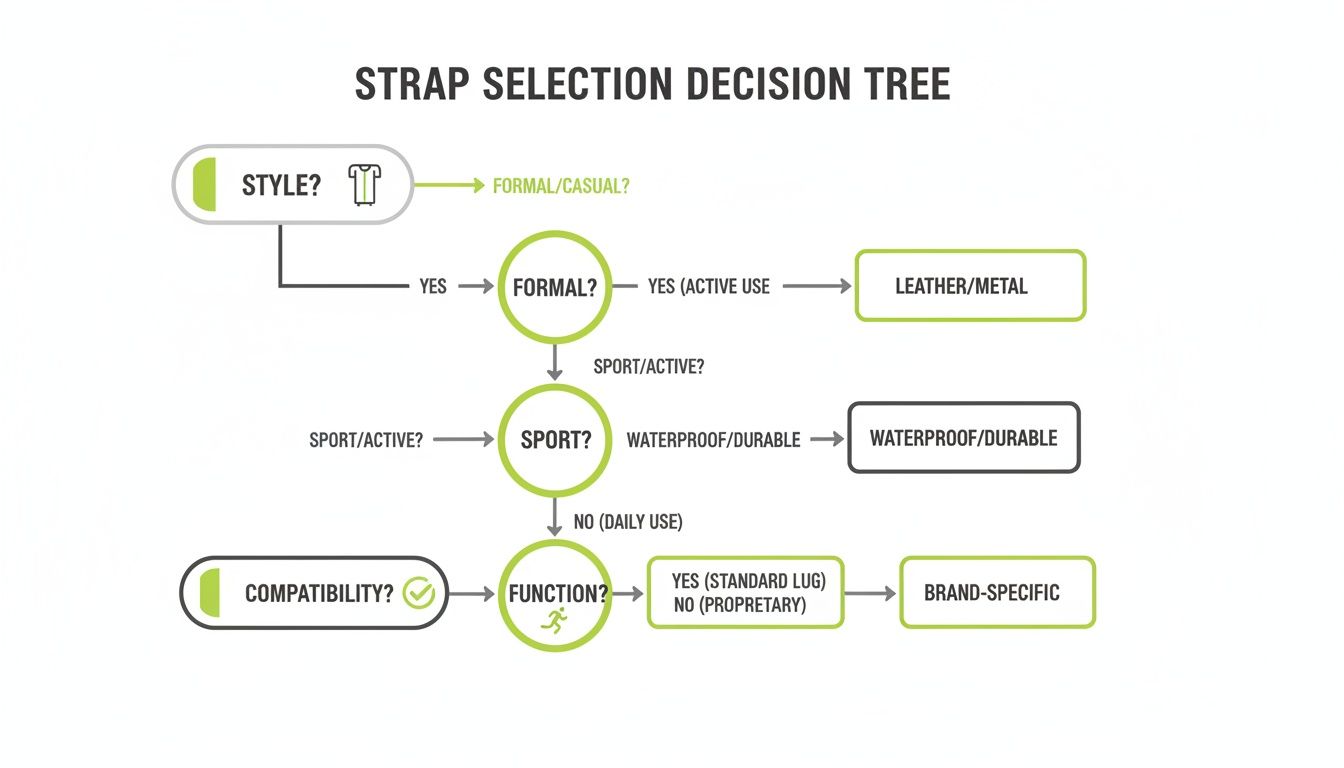
As you can see, the best way to narrow things down is to think about your primary activity—whether that’s a hardcore workout, a day at the office, or just kicking back.
For Intense Workouts and Active Days
When your heart rate is pumping and the sweat starts to drip, your watch strap needs to keep up. It has to be tough, a breeze to clean, and—most importantly—feel good against your skin when you’re on the move.
Silicone is the undisputed champion of the fitness world. It's essentially the technical sportswear of watch straps. It's totally waterproof, incredibly resilient, and you can just wash it under the tap after a hard session. Modern, high-grade silicone is also soft and flexible, so you won't get any of that nasty chafing that stiffer materials can cause.
For an even better experience, look out for perforated silicone sport bands. Those little holes make a huge difference, allowing air to flow freely. It's a game-changer during long runs or intense HIIT workouts, helping to minimise sweat and keep your wrist cool and comfortable.
For the Office and Formal Occasions
In a professional setting, you want your Fitbit to look like a stylish watch, not a piece of gym gear. This is where more sophisticated materials step in, instantly transforming your tracker into an elegant accessory.
- Stainless Steel: For a timeless, premium feel, you can't go wrong with a classic stainless steel link bracelet. They’re robust, have a satisfying weight, and look fantastic with a business suit or smart-casual outfit.
- Milanese Loop: This is a brilliant modern take on metal straps. Made from a finely woven stainless steel mesh, it’s much lighter and more flexible than a traditional link bracelet. The best part is the magnetic clasp, which lets you adjust it to the perfect fit.
- Leather: A classic leather strap adds an undeniable touch of traditional class. It’s soft, moulds to your wrist over time, and develops a beautiful, unique patina. It’s the perfect choice for an understated, professional look.
Just a word of warning: while these materials look the part, they aren't built for the gym. Sweat can damage leather, and metal bands can feel heavy and uncomfortable during vigorous exercise.
For Everyday Comfort and Casual Wear
For those days when you just want a strap that feels like it’s barely there—from running errands to tracking your sleep—you need something light and breathable.
Nylon and woven fabric straps are the clear winners here. They are exceptionally lightweight, incredibly soft, and let your skin breathe. This makes them perfect for wearing all day and even all night. The material feels gentle and you'll completely avoid that clammy feeling you can get from less breathable bands.
With more people focused on continuous health monitoring, including NHS virtual ward programmes in the UK, the demand for comfortable, long-wear straps has shot up. With many Fitbit users aiming for 7,000–10,000 steps a day, a comfy yet durable strap is a must-have. You can discover more UK fitness watch insights on Fitstraps.co.uk to see how people's daily habits are shaping their strap choices.
Fitbit Sense Strap Material Comparison
To make the choice crystal clear, here’s a quick-reference table comparing the most popular Fitbit Sense strap materials at a glance.
| Material | Best For | Comfort & Breathability | Durability | Water Resistance |
|---|---|---|---|---|
| Silicone | Workouts, swimming, daily wear | High comfort, low breathability | Very High | Excellent |
| Nylon | Everyday comfort, sleep tracking | Excellent comfort & breathability | High | Good (dries slowly) |
| Leather | Work, formal events, smart casual | High (softens over time) | Medium | Low (avoid water) |
| Stainless Steel | Work, formal events, premium look | Medium comfort, low breathability | Excellent | Excellent |
| Milanese Loop | Smart casual, office wear | Good comfort, good breathability | High | Excellent |
By matching the material directly to your main activities, you can make sure your Fitbit Sense is always perfectly equipped for whatever your day throws at you. Having two or three different types of Fitbit Sense straps means you can adapt in seconds, guaranteeing you always have the right tool for the job.
How to Get the Perfect Fit for Your Wrist
Getting the right fit for your watch strap is more than just a matter of comfort—it actually affects how well your Fitbit Sense works. If a band is too tight, it's uncomfortable and can irritate your skin. But if it's too loose, the sensors on the back of the watch can't get a consistent read, leading to dodgy heart rate data. Nailing the size from the get-go means your new Fitbit Sense strap will feel great and perform perfectly.
Think of it like buying a pair of shoes. The right size feels like it was made for you, while the wrong one is a constant, nagging annoyance. The good news? You don't need to be a pro to find your perfect fit. A couple of minutes and some basic household items are all it takes.

This simple process takes all the guesswork out of the equation. You can order with total confidence and skip the hassle of sending a strap back because it doesn't fit.
A Simple Guide to Measuring Your Wrist
You don’t need any fancy tools for this. A flexible sewing tape measure is perfect, but if you don't have one, a bit of string (or even your phone's charging cable) and a regular ruler will do the job just fine.
Here’s a dead-simple, four-step guide to getting an accurate measurement:
- Wrap Your Wrist: Take your string or tape measure and wrap it around your wrist, right where you'd normally wear a watch (just above the wrist bone). It should be snug, but not strangling your wrist. A good rule of thumb is being able to slip one finger underneath.
- Mark the Spot: If you're using string, pinch it where the end meets the loop to mark the point of overlap. With a tape measure, you can just read the number directly.
- Measure the Length: Now, lay the string flat against your ruler and measure from the end to the point you marked. That number is your wrist circumference. Simple as that.
- Check the Sizing Chart: Compare your measurement with the sizing chart below to see if a small or a large strap is the right choice for you.
Pro Tip: For materials with less give, like leather or metal, it's a good idea to add about 0.5 cm to your wrist measurement. This little bit of wiggle room ensures the band doesn't feel too restrictive, especially since our wrists can swell a tiny bit throughout the day.
Fitbit Sense Strap Sizing Chart
Most straps you'll find, whether from Fitbit or third-party sellers, come in two standard sizes: small and large. While the exact lengths might differ slightly from one brand to another, this chart is a solid guide for picking the right size for your Fitbit Sense strap.
| Strap Size | Fits Wrist Circumference |
|---|---|
| Small | 14 cm – 18 cm (5.5" – 7.1") |
| Large | 18 cm – 22 cm (7.1" – 8.7") |
By matching your measurement to this chart, you can avoid the frustration of ordering a band that’s either too short to even buckle or has a ridiculously long tail flapping about. Knowing your wrist size is also key for adjustable bands like metal link bracelets. If you've got one of those, you can learn more about how to adjust a metal watch strap in our guide.
Universal Connector: One Size Fits All Models
While wrist sizes vary, the actual connection mechanism is wonderfully universal. Fitbit designed the Sense, Sense 2, Versa 3, and Versa 4 to all use the exact same quick-release connector.
This is a fantastic bit of user-friendly design. It means you never have to worry about model compatibility when you're out shopping for a new look. Any strap made for one of these four models will click right into place on any of the others.
- No adaptors needed: The connection is direct, seamless, and secure.
- Massive selection: This cross-compatibility opens up a huge world of bands from countless makers.
- Easy to swap: The quick-release latch lets you change your strap in seconds, completely tool-free.
So, by taking a quick measurement and keeping that universal connector in mind, you're all set to find a strap that not only looks brilliant but also delivers that perfect blend of all-day comfort and spot-on sensor accuracy.
How to Change and Care for Your Fitbit Straps
Once you’ve started building a small collection of Fitbit Sense straps, you'll want to know how to swap them out quickly and keep them in great shape. A fresh, clean strap doesn't just look better; it feels more comfortable on your skin and helps prevent any unwanted odours or irritation. The good news? Both changing and cleaning your bands are incredibly simple.
Think of it like looking after a good pair of shoes. You wouldn't wear muddy trainers to the office, and you’d certainly give them a clean after a long run. Adopting that same mindset for your watch straps will do wonders for their lifespan, keeping your Fitbit looking and feeling brand new.
Swapping Your Fitbit Sense Strap in Seconds
Fitbit really nailed it with their quick-release system. You can completely change your look in less time than it takes to tie your shoelaces, with no fiddly tools or tiny pins in sight.
Just follow these simple steps:
- Turn Your Watch Over: Pop your Fitbit Sense face-down on something soft, like a microfibre cloth, to keep the screen from getting scratched.
- Find the Latch: You’ll see a small, flat latch on the inside of the strap, right where it meets the watch body.
- Press and Slide: Use your fingernail to press the latch inwards (towards the strap itself). While holding it down, gently slide the strap away from the watch. It should pop right off.
- Click in the New Strap: Grab your new band and slide it into the slot until you hear a satisfying click. Give it a little tug to make sure it's locked in securely.
And that’s it! This brilliantly simple process makes it a breeze to switch from a silicone band after your morning workout to a smart leather one for a night out.
Keeping Your Straps in Top Condition
How you care for your strap really comes down to what it's made of. A one-size-fits-all approach just won’t cut it here; what works for silicone could be a disaster for leather. Sticking to these material-specific tips will help you avoid damage, discolouration, and wear.
Silicone and Sport Bands
These are by far the easiest to look after. After a sweaty gym session or a swim, just give the band a quick rinse under lukewarm water with a tiny bit of mild, soap-free cleanser. Use your fingers to gently rub off any dirt or grime. For a more detailed walkthrough, you can check out our guide on how to clean silicone watch bands.
Leather Straps
Leather is a natural material that’s sensitive to moisture, so it needs a gentler touch. Never soak a leather strap in water. Instead, just wipe it down with a slightly damp, lint-free cloth to get rid of any surface dirt.
To stop a leather strap from drying out and cracking over time, it’s a great idea to treat it with a specialised leather conditioner every few weeks. This keeps the material nourished, soft, and supple, which will massively extend its life.
Metal Bracelets (Stainless Steel and Milanese)
For metal bands, a quick polish with a soft, dry microfibre cloth is usually all you need to buff away fingerprints and bring back the shine. If it needs a deeper clean, you can use a cloth lightly dampened with water to wipe down the links or mesh. Just be sure to dry it immediately and thoroughly to avoid water spots.
Nylon and Woven Fabric Straps
Like silicone, you can give fabric bands a proper wash. Hand-wash them in cool water with a tiny drop of gentle laundry detergent. Rinse them really well to get all the soap out, as any residue can irritate your skin. Squeeze out the excess water and let them air dry completely before attaching them back to your watch.
Getting into a good maintenance routine is well worth it. It mirrors a wider trend among UK Fitbit owners, where an estimated 20–30% buy at least one replacement strap within 18 months of owning their device. This group often includes "maintenance replacers" who swap out bands every one to three years just to keep things fresh. By looking after your straps, you can make sure each one lasts as long as possible. You can discover more insights about Fitbit statistics on ElectroIQ.com.
How to Style Your Fitbit for Any Occasion
Your Fitbit Sense is more than just a piece of clever tech—it’s on your wrist 24/7. So why not treat it like the versatile accessory it is? By building a small, curated collection of Fitbit Sense straps, you can make your watch look right at home anywhere, whether you're at the gym or a black-tie dinner.
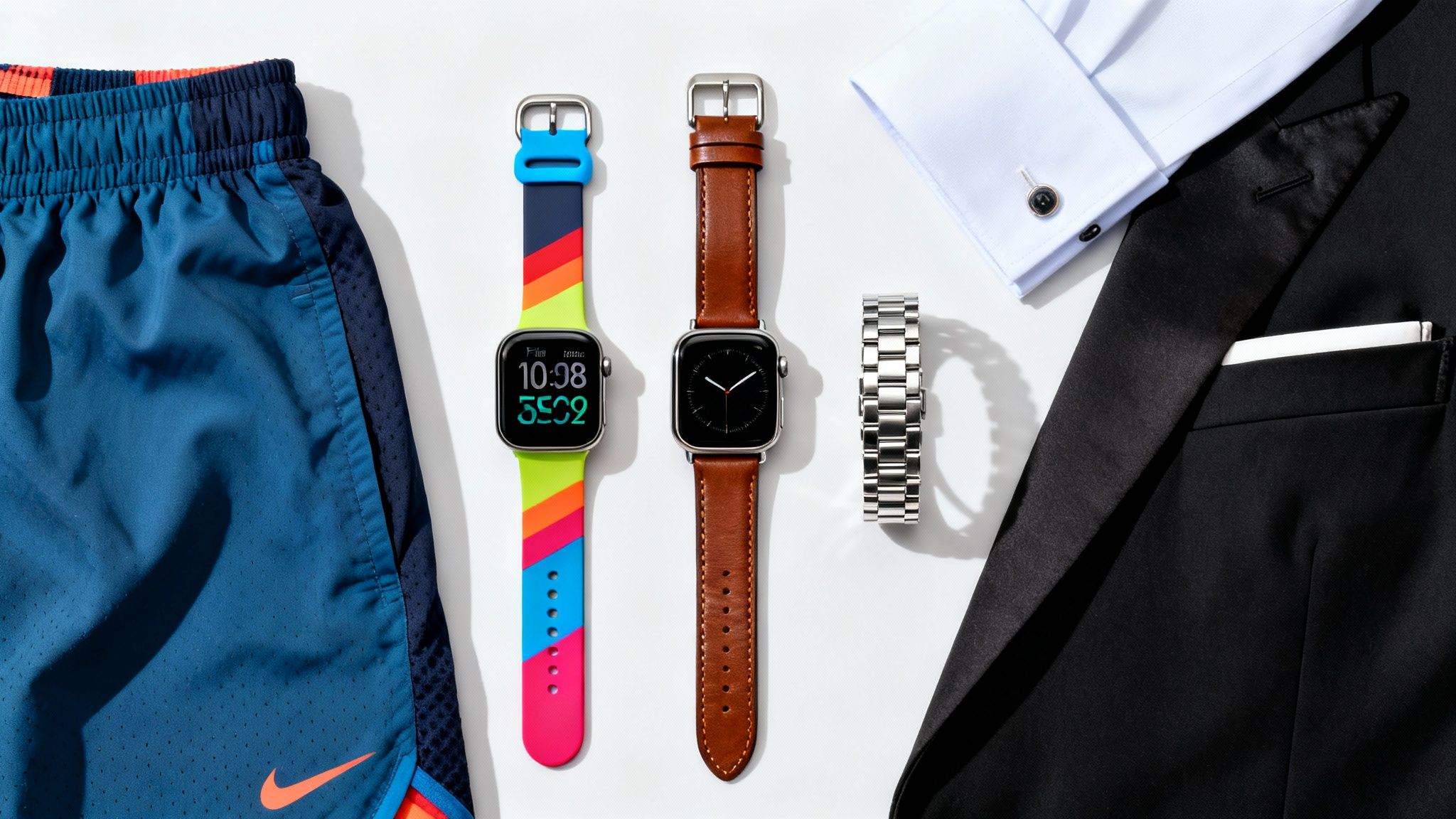
Think of it like building a wardrobe for your watch. You wouldn’t wear your running gear to a business meeting, and the same logic applies here. A quick strap change is all it takes to completely transform the look and feel of your Fitbit, ensuring it always complements your outfit.
Creating Your Strap Wardrobe
You don't need a drawer full of options to be prepared. In my experience, just three or four well-chosen straps can cover pretty much any scenario life throws at you. The trick is to pick materials and colours that genuinely fit your daily life and personal style.
Here’s a simple blueprint for a versatile strap collection:
- The Workout Warrior (Silicone): This one’s non-negotiable. A durable silicone band in a bold colour or a perforated style is your go-to for high-intensity training, swimming, or any time you’re going to break a sweat. It’s tough, a breeze to clean, and built for action.
- The Office Professional (Leather or Metal): To help your Fitbit blend in at work, a classic strap is a must. A timeless brown or black leather band gives off an air of understated elegance, while a sharp stainless steel or Milanese loop offers a more modern, polished finish.
- The Weekend Wanderer (Nylon/Woven Fabric): When you're off the clock, comfort is king. A soft, breathable nylon or woven fabric strap is so lightweight you’ll barely notice it's there, making it perfect for lounging, running errands, or even tracking your sleep.
Having a dedicated strap for different parts of your life doesn't just look better—it also makes each band last longer. You wouldn't wear a beautiful leather strap for a muddy trail run, and a bright silicone band might look a bit out of place at a wedding.
Styling for Specific Events
Once you have a few core straps, dressing your Fitbit up or down is easy. It’s all about matching the formality of the strap to the occasion, just like you would with a pair of shoes or a handbag.
For a Formal Occasion (Weddings, Dinners)
Nothing beats a polished stainless steel link bracelet for a truly formal event. It has the classic weight and presence of a traditional luxury watch, adding a touch of sophistication that looks fantastic with a suit or an elegant dress. For a slightly more modern but equally smart look, a dark-coloured Milanese loop is also a great choice.
For a Smart-Casual Look (Office, Date Night)
This is where leather and Milanese straps really come into their own. A genuine leather strap, perhaps in a rich tan or navy, adds warmth and character. A silver or graphite Milanese loop, on the other hand, gives off a sleek, contemporary vibe that pairs perfectly with smart-casual outfits.
Tying It All Together with Watch Faces
The final piece of the puzzle is coordinating your strap with a custom watch face. The screen on your device is your secret weapon for pulling the whole look together.
Try it out: pair a minimalist analogue watch face with your leather strap for a classic, timeless feel. Or, go with a bold, data-heavy digital display when you’ve got your silicone sport band on. Matching the accent colours on your watch face to your strap creates a cohesive and thoughtful look, turning your tech into a true style statement.
Your Fitbit Sense Strap Questions Answered
When it comes to giving your Fitbit Sense a bit of a personal touch, the strap you pick can make all the difference. But with so many choices out there, it’s completely normal to have questions. This section is all about giving you clear, straightforward answers to the queries we hear most often, helping you find your way around the world of Fitbit Sense straps with confidence.
Think of this as your go-to reference. We’ll cover all those practical little things that pop up, from making sure you buy a compatible band to finding the right material if you’ve got sensitive skin. Let’s clear up any confusion so you can get back to the fun part: choosing a strap you’ll love to wear.
Are Fitbit Sense And Sense 2 Straps The Same?
This is easily the question we get asked the most, and the answer is a simple, resounding yes. The Fitbit Sense, Sense 2, Versa 3, and Versa 4 all use the exact same quick-release strap connector.
That’s fantastic news for anyone with one of these models. It means any band designed for one of them will fit all the others perfectly, opening up a huge range of styles from all sorts of manufacturers. You can shop for any of these models without a second thought about whether the band will click securely into place.
So, if you spot a strap advertised for a Versa 4 but you own the original Sense, you can buy it with complete peace of mind. Fitbit designed it as a unified system to make upgrading your style as simple as possible.
What Is The Best Fitbit Sense Strap For Sensitive Skin?
If you have sensitive skin, finding a comfortable strap is everything. The wrong material can cause irritation, redness, or rashes, especially when you’re wearing it all day. For maximum comfort and minimal risk, a few materials are clear winners.
- Woven Fabric or Nylon: These are brilliant because they’re incredibly soft, lightweight, and breathable. They let air circulate, which helps stop sweat and moisture from getting trapped against your skin.
- High-Grade Silicone: While some people react to cheaper silicone, premium, hypoallergenic silicone is generally very kind to skin. Look for bands that are specifically described as soft-touch or medical-grade.
- Leather (with a little caution): Natural, vegetable-tanned leather can be a good choice. Just be wary of leathers that have been treated with harsh chemicals or dyes, as these can be a source of irritation for some people.
It all comes down to breathability and a lack of harsh chemicals. A strap that lets your skin breathe is far less likely to cause a problem, making fabric and high-quality silicone the safest bets for most.
How Do I Clean A Smelly Fitbit Strap?
When a strap starts to develop an odour, it’s usually a sign that bacteria from sweat and daily grime have built up. Thankfully, cleaning it is easy, but the method really depends on the material.
For silicone or fabric straps, which are the usual suspects when it comes to smells, just follow these steps:
- Pop the strap off your Fitbit device.
- Wash it gently with lukewarm water and a tiny bit of mild, soap-free cleanser (a gentle face wash or hand soap works well).
- Use your fingers or a very soft brush to work the cleanser into the material.
- Rinse it properly under clean water to get all the suds out.
- Pat it dry with a non-abrasive, lint-free cloth and then—this is the important bit—let it air dry completely before reattaching it.
For leather straps, you should never soak them in water. A simple wipe-down with a slightly damp cloth is all you need. If it needs a deeper clean, use a product specifically designed for leather to avoid causing damage or discolouration.
Regular cleaning not only gets rid of odours but also helps your strap last longer. Making it a weekly habit for your everyday bands is a great way to keep them feeling fresh and hygienic.
Are Third-Party Straps As Good As Official Ones?
That’s a great question, especially since the market is flooded with third-party options. While the quality can vary, many third-party makers produce straps that are just as good as the official Fitbit ones—and sometimes even better when it comes to style, material variety, and price.
A typical user in the UK who buys a new strap will spend between £10 and £60 per band, which can add up over the lifetime of their Fitbit. UK retail data from 2023-2024 shows most third-party straps for the Sense series sit comfortably in the £9.99–£49.99 range, often offering brilliant value. You can read more about these Sense 2 features and accessory trends on smartwatch-straps.co.uk.
The trick is to buy from a reputable seller who stands by their products. Look for retailers with plenty of positive customer reviews, clear return policies, and detailed product descriptions. A good third-party strap will use quality materials and have a connector that fits securely, giving you a fantastic alternative to the official options.
Ready to find your perfect match? At Nothing But Bands, we offer a curated collection of premium Fitbit Sense straps designed for comfort, durability, and style. Explore our range and give your smartwatch the upgrade it deserves. https://nothingbutbands.com