

Log in
Reset password
Create an account
Your bag(0)
Your cart is empty
Continue ShoppingSearch

Keeping your Apple Watch band clean is one of those simple maintenance tasks that makes a huge difference. All it really takes is removing the band, giving it a wipe with a soft, lint-free cloth, and occasionally a deeper clean with some mild soap and water (for the right materials, of course). Then, just let it air dry. It’s a small effort that keeps your watch looking sharp and, more importantly, prevents skin irritation.
Why Bother Cleaning Your Watch Band Regularly?
Think about it: your Apple Watch band is right there with you, day in and day out. It’s on your wrist during workouts, through long days at your desk, and even while you’re doing chores. It’s constantly collecting a mix of sweat, dead skin cells, lotion, and all sorts of everyday grime. That build-up isn’t just unsightly; it’s a matter of hygiene and can affect the band's lifespan.
Taking a few minutes to clean it regularly really pays off.
- Avoids Skin Irritation: A grimy band is a perfect breeding ground for bacteria and allergens. When trapped against your skin, it can lead to rashes, redness, and general discomfort.
- Keeps the Material Intact: Over time, the natural oils from your skin, along with chemicals from lotions and perfumes, can degrade the band's material. This is true for everything from a tough Sport Band to the delicate threads of a woven loop.
- Looks So Much Better: Let's be honest, a clean band just looks better. It stops light-coloured straps from looking dingy and keeps the shine on your metal bands.
- Stops Unpleasant Smells: Fabric and silicone bands, in particular, are notorious for absorbing sweat. If you don't wash them, they can start to smell pretty funky.
The Grime You Can't See
It's easy to forget about what you can't see, but the reality is that our watch bands can get pretty gross on a microscopic level. Studies have shown that wrist-worn accessories are hotspots for bacterial growth. One eye-opening analysis found that a staggering 95% of wristbands tested were home to harmful bacteria. Interestingly, porous materials like rubber and plastic tended to harbour more bacteria than metal bands. You can read more about the UK discussions on wearable hygiene to get the full picture.
Your lifestyle is the biggest factor in how often you should clean your band. If you’re hitting the gym every day, you'll need to clean it far more often than someone who mainly wears their watch at a desk. The trick is to get into a routine rather than waiting until it looks dirty.
Here’s a simple way to think about when it’s time for a clean.
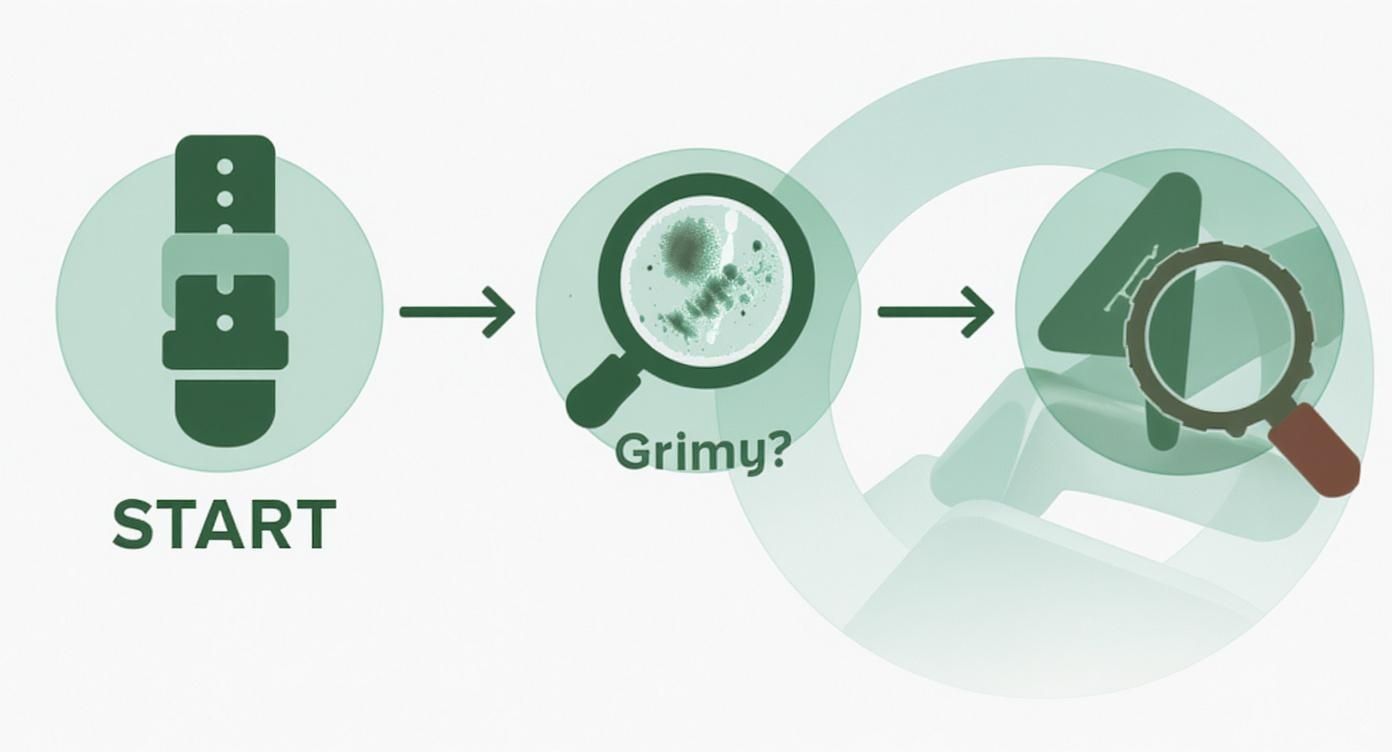
The flowchart just confirms a good rule of thumb: if you can see any dirt, discolouration, or general grubbiness, it’s definitely time for a clean. Making this a regular habit is the best way to keep your Apple Watch looking and feeling as good as new.
How to Clean Silicone and Sport Bands
Silicone and sport bands are the real workhorses of the Apple Watch world. They’re fantastic for everything from a tough gym session to just running errands. But because they're so durable and flexible, they're the ones that get the most use—and that means they quickly pick up sweat, dust, and lotions. Over time, this can leave them with a dull finish or a slightly sticky feel.
Getting them back to looking brand new is simple, but doing it the right way is crucial to avoid damaging the material.
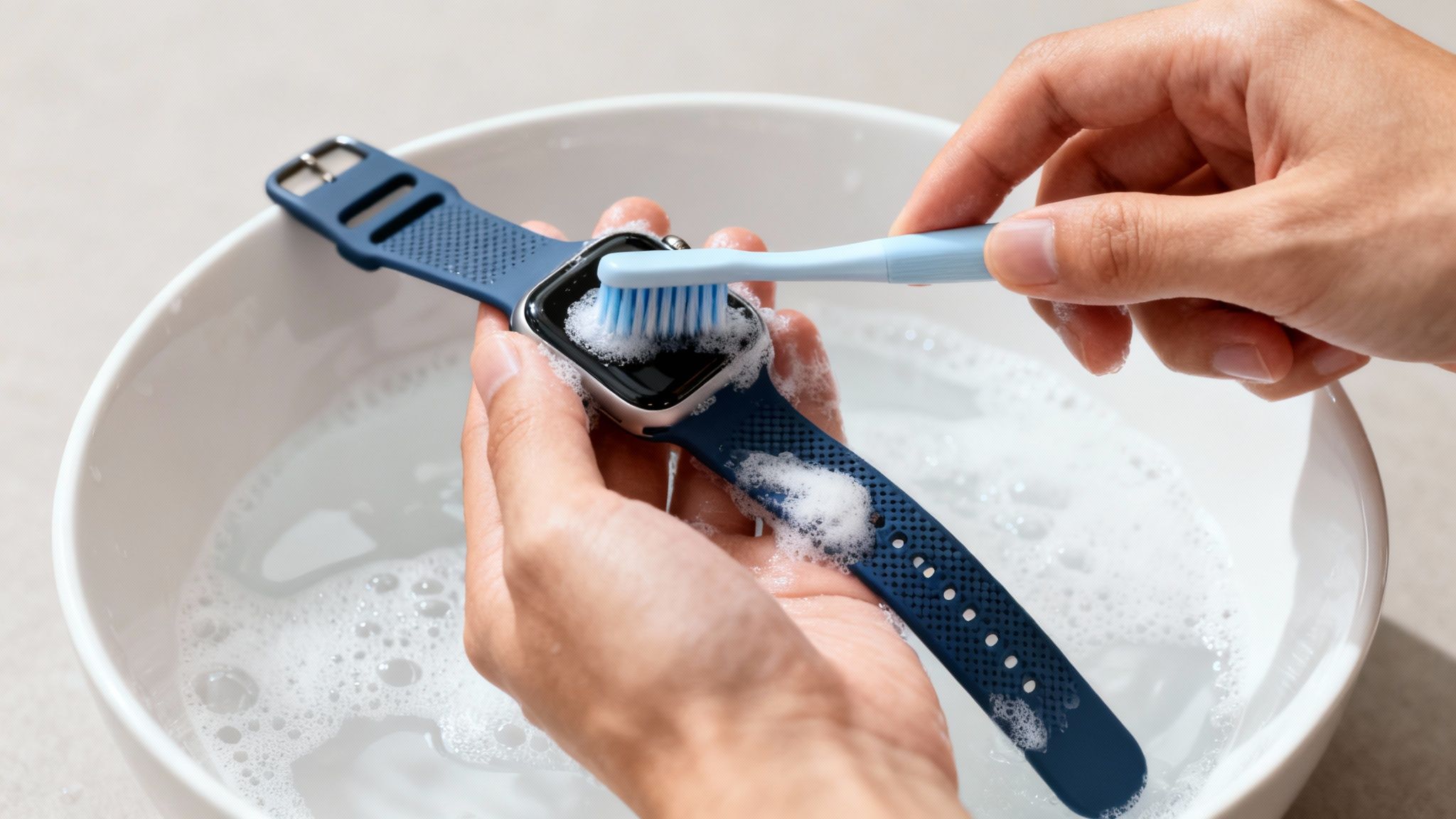
First things first: always take the band off the Apple Watch case before you start. This simple step protects the watch from any accidental water damage and lets you get right into the connection points, which is a prime spot for grime to hide. A quick wipe with a dry, lint-free cloth after a workout helps a lot, but for a proper deep clean, you'll need to go a bit further.
The Gentle Deep Clean Method
For a more thorough clean that gets rid of built-up dirt without harming the fluoroelastomer, you only need a couple of things from around the house. The idea here is to lift the grime away gently.
Here’s what you’ll need:
- A bowl of lukewarm water
- A few drops of mild, non-moisturising hand soap (steer clear of anything with added lotions or harsh chemicals)
- A soft, lint-free cloth
- An old, clean toothbrush with soft bristles
Start by mixing the soap into the water until it's slightly sudsy. Pop the band in and let it soak for a few minutes; this really helps to loosen up any stubborn dirt. Next, take your soft-bristled toothbrush and give the entire surface a gentle scrub. Pay close attention to any textured spots, like the holes in a Nike Sport Band or the edges of a Solo Loop, as that’s exactly where dirt loves to build up.
Once you're done scrubbing, rinse the band well under cool, running water until every trace of soap is gone. This is a vital step—any soap left behind can actually attract more dirt and might even irritate your skin.
Key Takeaway: The secret to a perfectly clean silicone band is using a basic, non-moisturising soap. Soaps with lotions or oils can leave a film that not only feels slick but also becomes a magnet for more grime. Simple is always better.
Drying and Reattaching Your Band
Getting your band dry is just as important as washing it. Give it a good shake to get rid of most of the water, then pat it down with a different clean, non-abrasive, lint-free cloth. To make sure it's completely dry, lay it flat on a towel or hang it up to air dry for at least an hour before you think about reattaching it.
Popping a damp band back on can trap moisture inside the watch’s locking mechanism, which is something you definitely want to avoid. A little patience here will prevent any problems down the road and make sure the band feels comfortable when you wear it again.
Tackling Disinfection and Stubborn Stains
If you feel your band needs a deeper, more hygienic clean—maybe after you've been unwell or in a crowded place—you can safely disinfect it. Apple officially gives the green light to using a 70% isopropyl alcohol wipe or a 75% ethyl alcohol wipe on materials like the Sport Band and Solo Loop. Just give the band a wipe-down and let it air dry. It’s critical that you never use bleach or hydrogen peroxide, as they can cause permanent damage. You can read up on Apple's approved cleaning methods in their official support guide.
For a really stubborn stain, like ink or dye transfer from your jeans, try making a paste with bicarbonate of soda and a little water. Apply the paste to the stain, let it sit for a few minutes, then gently scrub it with your toothbrush before rinsing. This mild abrasive can often lift the stain without scratching the silicone.
Keeping your silicone band in great shape ensures it stays a reliable and stylish accessory. If you’re thinking of adding another sleek, durable option to your rotation, have a look at designs like this popular Velin Magnetic Silicone Band, which offers a modern look with real convenience.
How to Properly Wash Woven and Fabric Bands
Woven fabric bands, like the ever-popular Sport Loop and the braided solo loops, are brilliant for their comfort and breathability. But there's a flip side: that soft, textured weave is a magnet for sweat, dirt, and eventually, odours. After a good hike or a few sessions at the gym, that vibrant band can start looking a bit grubby and feeling less than fresh.

Unlike their silicone counterparts, you can't just give these bands a quick wipe. Their absorbent fibres demand a more thorough, yet delicate, hand-washing to get rid of that ingrained grime without causing any fraying, fading, or stretching. The trick is to treat it like you would a delicate piece of clothing.
Getting Ready for a Gentle Wash
First things first, let's get your supplies together. You won’t need anything fancy or harsh—in fact, aggressive cleaners will do far more harm than good.
Here's your simple toolkit:
- A small bowl filled with cool or lukewarm water.
- A tiny amount of mild liquid soap (like hand soap) or a gentle laundry detergent.
- A soft-bristled toothbrush you can set aside just for cleaning jobs.
- A clean, dry towel for patting the band down later.
That’s honestly all it takes. This gentle approach is the best way to maintain the fabric's integrity and colour, which I know is a big worry for many. I’ve seen this exact method shared in UK-based Apple communities for years, especially from people who've put their bands through their paces hiking in the Peak District and needed a reliable way to clean them. You can find more user-tested cleaning advice from these community discussions.
The Hand-Washing Method
Before you do anything else, take the band off your Apple Watch. It might sound obvious, but it’s a crucial step. You never want to submerge the watch itself, and removing the band lets you get into all the nooks and crannies, including the connectors.
Now, mix a few drops of your soap into the bowl of water until you get some light suds. Pop the band in and let it soak for about five to ten minutes. This little soak is the secret weapon; it starts to loosen up all the dirt and oils that have worked their way deep into the fibres.
Once it's had a good soak, take the band out and put a tiny drop of soap directly onto the wet toothbrush. Gently scrub the entire surface of the band using small, circular motions. The soft bristles are perfect for working the lather into the weave without snagging any threads. Don't forget to do both sides, and maybe give a little extra attention to the parts that sit right against your skin.
When you're done scrubbing, rinse the band thoroughly under cool, running water. Give it a gentle squeeze to help work the soap out, and keep rinsing until the water runs completely clear. Any leftover soap can irritate your skin later or make the band feel stiff when it dries.
A Quick But Crucial Tip: Whatever you do, never wring or twist the band to get the water out. This is a surefire way to stretch the fibres, permanently misshaping your band and ruining the fit. A gentle squeeze is all that's needed.
The Importance of Air Drying
How you dry your woven band is just as important as how you wash it. Rushing this part can lead to shrinking, mildew, or a band that just doesn't fit right anymore.
After gently squeezing out the extra water, lay the band flat on a clean, dry towel. You can also pat it with the towel to soak up a bit more moisture right away.
The golden rule here is to let it air-dry completely. Don't be tempted to use a hairdryer, stick it on a radiator, or leave it in direct sunlight. High heat can shrink the nylon fibres and make the colours fade. Patience is your friend here. Depending on the humidity in your home, it could take several hours for the band to feel properly dry.
Once it's totally dry to the touch, you can reattach it to your Apple Watch. It’ll look, feel, and smell fresh and clean again. If you're looking for a stylish alternative that’s also a breeze to maintain, you might want to check out options like the Mavric Braided Loop.
Caring for Your Leather Apple Watch Bands
Leather bands lend a real touch of class to an Apple Watch, perfect for when you want to look a bit more polished. But unlike the silicone or nylon options you might wear to the gym, leather needs a different kind of care. It's less about scrubbing and more about preserving a beautiful, natural material.
First things first: leather and water are not friends. Because it's a porous material, a good soaking can lead to ugly water stains, stretching, and even cracking once it dries. So, submerging your leather band in water is a definite no-go.
The Right Way to Wipe It Down
For a regular clean-up, all you really need is a soft, non-abrasive cloth. A microfibre one is ideal. Just get a small corner of it slightly damp with fresh water – we're talking barely damp, not dripping wet.
With a light touch, wipe down the entire band, front and back. The idea here is just to lift off any surface dust and oils from the day without saturating the leather. There's no need to apply a lot of pressure; scrubbing can easily wear away the finish.
A Quick Note on Patina: High-quality leather develops a unique patina over time—that lovely sheen and subtle darkening that really gives it character. Many people love this look! Be careful not to over-clean, as you can strip this natural ageing process right off. A little bit of wear tells a story.
Once you've wiped it down, grab a dry part of the cloth and give the band a quick buff to mop up any last bits of moisture. Doing this every week or two is usually enough to keep it looking fantastic.
Handling Marks and Keeping it Supple
Spotted a minor scuff? Often, a quick buff with a dry cloth is all it takes to make it less noticeable. Small imperfections tend to blend into the leather's natural patina as it ages, adding to its charm.
To stop the leather from drying out and cracking, especially if you live somewhere with dry air, conditioning it now and then is a smart move.
- Pick a Good Conditioner: Look for a quality leather conditioner made for watch straps or small accessories, not the heavy-duty stuff you'd use on boots or a sofa.
- A Little Goes a Long Way: Dab a tiny amount onto a clean cloth. Seriously, you need less than you think.
- Massage it In: Gently work the conditioner into the leather using small, circular motions.
- Buff to a Finish: Let it soak in for about 10-15 minutes (or whatever the instructions say), then use a fresh, clean cloth to buff off any excess.
You only need to do this every few months, or if the band starts to feel a bit stiff. It’s a simple preventative step that makes a huge difference to the life of your band.
Why Drying Properly is Crucial
After any cleaning, patience is key. Never, ever click a damp band back onto your watch. Trapped moisture can create musty odours and might even cause issues with the locking mechanism over time.
Just lay the band flat on a towel and let it air dry completely at room temperature. Keep it away from direct heat sources like radiators or a sunny windowsill, which can make the leather shrink and turn brittle. Give it a few hours to be safe. Getting this final step right is what will keep your leather band looking and feeling great for years to come.
Restoring Shine to Metal and Milanese Loop Bands
Metal bands like the Milanese Loop and the Link Bracelet give the Apple Watch a classic, sophisticated feel. They're built to last, but everyday life—think skin oils, lotions, and general dust—can quickly dull their shine and leave them looking a bit tired. Bringing back that original gleam is simple enough, but it does require a gentle touch, especially with the intricate mesh of a Milanese Loop.

Unlike fabric or silicone bands, metal doesn't really absorb grime. The cleaning process is all about polishing the surface. The real trick is using the right tools and techniques to sidestep any potential scratches or damage, keeping your band looking as sharp as the day you got it.
The Basic Cleaning Process for All Metal Bands
The starting point for any metal Apple Watch band is refreshingly simple. First things first, always detach the band from the watch case. This not only prevents any accidental water damage to your watch but also gives you much better access to clean the connectors and hidden spots.
For a quick, routine clean, a soft, non-abrasive, lint-free cloth is all you need. A microfibre cloth, like one you'd use for glasses, is perfect. Just give the entire surface of the band a gentle wipe-down. You'd be surprised how often this alone is enough to clear away fingerprints and light dust, instantly restoring most of its lustre.
If you’re up against something a bit more stubborn, slightly dampen a corner of the cloth with fresh water. Never run the band directly under a tap. A damp cloth provides just enough moisture to lift away grime without leaving water spots or trapping liquid in those tiny crevices.
Deep Cleaning the Milanese Loop
The woven stainless steel mesh of the Milanese Loop is what makes it so unique and comfortable, but it's also a magnet for tiny particles of dust and dirt. Sometimes, a simple wipe just won't cut it.
To get a deeper clean, take your damp microfibre cloth and gently rub along the grain of the mesh. If that doesn't work, a very soft-bristled toothbrush (I find a child's one works best) can be your secret weapon. With the bristles slightly damp, carefully brush the band to dislodge anything trapped in the mesh. Always use light pressure; you don't want to snag the delicate weave.
Expert Tip: For a truly pristine finish on a Milanese Loop, pay close attention to the magnetic clasp. This area always seems to collect the most dirt. A gentle scrub with a soft, damp toothbrush will clear out any debris and help the magnet maintain its strong connection.
Tackling Grime on the Link Bracelet
The Link Bracelet has its own set of challenges, mainly the small gaps between each individual link. These spaces are prime real estate for dirt and skin oils to build up over time.
To clean between the links, I like to wrap a damp cloth around something thin but soft, like a wooden toothpick or a plastic dental pick. Carefully guide it into the gaps to wipe away the grime. It pays to be methodical and patient here, working your way around the entire band. This kind of detailed approach is what will make your bracelet look professionally cleaned.
After any cleaning, you have to dry the band thoroughly with a separate, dry, lint-free cloth. This step is absolutely critical for all metal bands to prevent water spots and potential tarnishing. I recommend laying it flat to air dry for another hour before reattaching it, just to be certain all moisture is gone.
For those who love the timeless elegance of this style, keeping it in top condition is key. You can find similar high-quality options, like the beautifully crafted Lunor Magnetic Milanese band, which offers that same classic look with modern convenience. Proper care will ensure any Milanese band remains a standout accessory for years to come.
Proactive Tips to Keep Your Band Cleaner for Longer
While it’s great to know how to clean your Apple Watch bands properly, prevention is always better than cure. Picking up a few simple habits can make a huge difference in how often you need to do a deep clean, saving you time and helping your bands last longer.
It’s all about minimising exposure to the dirt, oils, and chemicals that cause grime to build up in the first place. Think of your watch bands like different pairs of shoes – you wouldn’t wear your best suede boots on a muddy hike, and the same logic applies here.
Create a Band Rotation System
One of the best things you can do is to rotate your bands based on what you’re doing. This not only keeps individual bands cleaner but also reduces the wear and tear on each one, extending its life significantly.
-
For Workouts: Before you hit the gym or go for a run, swap to a silicone or fluoroelastomer Sport Band. They’re built to handle sweat and are incredibly easy to wipe down when you’re done.
-
For Daily Wear: A woven nylon or fabric loop is a brilliant choice for everyday comfort and breathability, whether you’re at the office or just out and about.
-
For Evenings Out: Keep your premium leather and stainless steel bands for occasions where you want a smarter, more polished look. This simple step protects them from the scratches and scuffs of daily life.
By swapping bands, you’re using each one for its intended purpose, which is the secret to keeping them looking their best.
I always think of it this way: my dedicated workout band takes all the punishment from sweat and friction, which means my fancier bands stay looking brand new. It's a small habit that has a massive impact on the condition of your collection.
Watch Out for Skincare Products
Lotions, sun cream, perfumes, and even insect repellents can be surprisingly harsh on your watch band. The oils and chemicals in these products are notorious for causing build-up and discolouration, especially on lighter-coloured bands. Over time, they can even start to break down materials like leather.
The easiest fix is to apply these products and let them dry completely before you put your watch on. If you need to reapply sun cream later in the day, just take your watch off for a couple of minutes. It’s a tiny adjustment to your routine that prevents a whole lot of cleaning headaches down the line.
Still Got Questions About Cleaning Your Watch Band?
Even with a solid guide, a few questions always pop up. It's those little details that can make a big difference in keeping your bands looking great for years to come. Let's tackle some of the most common things people ask.
One of the biggest questions is how often you should be cleaning your band. The real answer is, it completely depends on how you live. If you’re smashing a workout every day, it’s a good idea to give your band a quick rinse and wipe-down right after. For most of us, a proper clean every week or two is plenty to stop the grime from building up.
A Pro Tip: Don't wait until you can see the dirt. By that point, sweat and oils have already worked their way into the material. A little bit of regular cleaning is much better than a massive deep clean every few months.
Is Hand Sanitiser a Good Idea?
We've all been there – you've got a smudge on your band and a bottle of hand sanitiser in your pocket. It seems like a quick fix, but it's a bit of a gamble. Most sanitisers are packed with alcohol, which can be brutal on certain band materials.
- Silicone or Metal Bands: You can probably get away with a quick wipe. Apple themselves say alcohol wipes are okay on these. Just don't make a habit of it, as it could eventually dry out a silicone band.
- Leather or Woven Fabric Bands: Steer clear. Seriously. Alcohol will suck all the natural oils out of leather, leaving it dry and cracked. For fabric bands, you risk fading the colour and weakening the fibres.
What if My Wrist Gets Irritated?
Noticing a bit of redness under your watch? It's usually a sign that sweat, soap, or lotion is trapped between the band and your skin. The first thing to do is take the watch off and give both your wrist and the band a good, gentle clean using the methods we've already covered. Crucially, make sure the band is 100% dry before you put it back on.
If the irritation just won't go away, it might be an allergy to something in the band itself. Nickel, which is sometimes in the metal clasps, is a common culprit. If a good clean doesn't fix it, try switching to a band made from a different material and see if that helps.
At Nothing But Bands, we reckon your watch band should fit your life, not the other way around. Check out our huge collection of stylish and easy-to-clean bands for any occasion over at https://nothingbutbands.com.